
Atsinganosaurus
Atsinganosaurus is a genus of titanosaurian sauropod dinosaur that lived in what is now France during the Late Cretaceous period. Its well-preserved remains were discovered in the Grès à Reptiles Formation, with the type and only species being *A. velauciensis*. The name "Atsinganosaurus" reflects the possible eastward to westward migration of the species.
Key Facts
- ›Atsinganosaurus was a titanosaurian sauropod dinosaur.
- ›Fossils were discovered in the Grès à Reptiles Formation of France.
- ›The genus name "Atsinganosaurus" means "gypsy dinosaur".
- ›The species name *a. velauciensis* refers to its discovery location.
- ›Estimated adult lengths range from 5.38 to 14 meters.
- ›Estimated adult body mass ranges from 2.46 to 5.5 short tons.
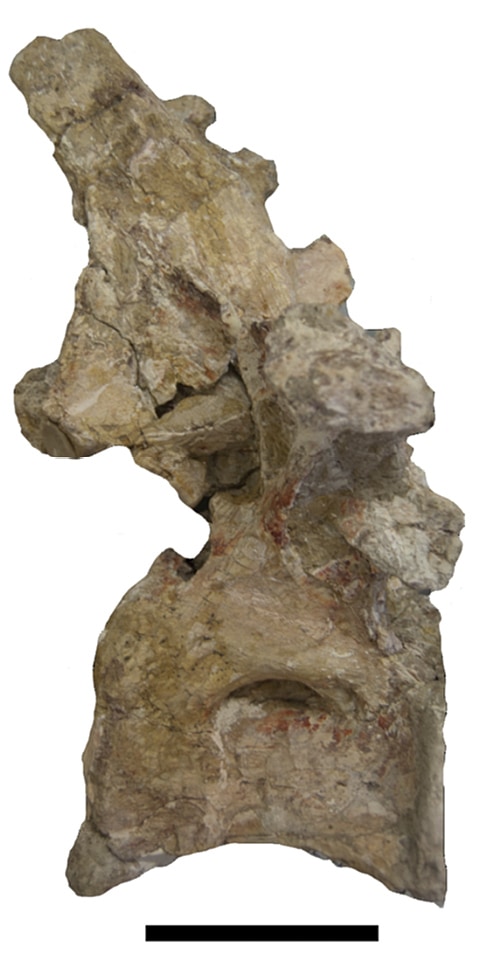
Titanosaurian Sauropod, Estimated Adult Length: 5.38–14 Meters, Estimated Adult Weight: 2.46–5.5 Short Tons
Ampelosaurus, Lirainosaurus
France
About Atsinganosaurus
Atsinganosaurus is a genus of titanosaurian sauropod dinosaur that roamed the Earth during the Late Cretaceous period. Its existence is primarily known from well-preserved fossil remains discovered in what is now France, specifically within the Grès à Reptiles Formation of the Aix-en-Provence Basin. The type and only recognized species within this genus is Atsinganosaurus velauciensis.
Discovery and Naming
The significant fossils of Atsinganosaurus were unearthed between 2009 and 2010 during excavations at Velaux-La Bastide Neuve by the Palaios Association and the University of Poitiers. The holotype, a set of four posterior dorsal vertebrae, was found alongside remains of another titanosaurian, Garrigatitan. The genus and species were formally described by Géraldine Garcia, Sauveur Amico, Francois Fournier, Eudes Thouand, and Xavier Valentin in 2010. The generic name, Atsinganosaurus, is derived from the Greek word for "gypsy," alluding to the potential eastward to westward migration of the species. The specific epithet, velauciensis, directly references its discovery location.
Classification and Physical Characteristics
In terms of classification, Atsinganosaurus is recognized as a titanosaurian sauropod. A 2018 cladistic analysis placed it within the lithostrotian clade Lirainosaurinae, alongside other genera like Ampelosaurus and Lirainosaurus. Estimates regarding its size suggest that adult individuals reached lengths between 8 and 12 meters (26–39 ft), with the largest specimens potentially measuring up to 14 meters (46 ft). Body mass estimations have varied, with initial figures around 3.5–5 metric tons (3.9–5.5 short tons), later revised to between 2.46 and 5.26 metric tons (2.71–5.80 short tons). Further fossil discoveries have included cranial elements such as an occipital condyle and parts of the braincase, as well as teeth, vertebrae, ribs, and elements of the shoulder and pelvic girdles, indicating a relatively substantial fossil record across multiple individuals.
Source: Wikipedia ↗
Frequently Asked Questions
When did Atsinganosaurus live?
Atsinganosaurus lived during the Late Cretaceous period. This geological period represents a significant era in dinosaur evolution before their eventual extinction.
Where were Atsinganosaurus fossils found?
The well-preserved remains of Atsinganosaurus were discovered in the Grès à Reptiles Formation of the Aix-en-Provence Basin, located in what is now France. This area has yielded important fossil discoveries.
What does the name Atsinganosaurus mean?
The generic name Atsinganosaurus is derived from the Greek word for "gypsy." This name was chosen to reflect the possible migration of the species from east to west.
What is the scientific name of Atsinganosaurus?
The type and only known species of Atsinganosaurus is *Atsinganosaurus velauciensis*. The specific name "velauciensis" honors its discovery site, Velaux - La Bastide Neuve.
How large was Atsinganosaurus?
Estimates for adult Atsinganosaurus vary, with some suggesting lengths of 8 to 12 meters, potentially up to 14 meters for the largest individuals. Body mass estimates range from 3.5 to 5 metric tons, with more recent corrections placing it between 2.46 and 5.26 metric tons.
What group of dinosaurs does Atsinganosaurus belong to?
Atsinganosaurus belongs to the titanosaurian sauropod group. Within Titanosauria, it has been placed in the lithostrotian clade Lirainosaurinae, alongside Ampelosaurus and Lirainosaurus.
Related Dinosaur species

Ampelosaurus
Ampelosaurus is a titanosaurian sauropod dinosaur that lived during the Late Cretaceous Period in what is now France. Known for its long neck and tail, it also possessed armor in the form of osteoderms. While initially thought to be a single species, recent studies suggest the presence of at least one other titanosaurian taxon in its discovery sites.
Canardia
Canardia is an extinct genus of lambeosaurine dinosaur that lived in southwestern France during the Late Cretaceous period. Known only from juvenile specimens, its name means "duck" in French, referencing its duck-billed hadrosaur family. Its precise placement within the Lambeosaurinae subfamily is still debated among paleontologists.
Arcovenator
Arcovenator is an extinct genus of abelisaurid theropod dinosaur that lived during the Late Cretaceous period in what is now France and possibly Spain. The sole described species, Arcovenator escotae, is known from fossil remains including a braincase, skull fragments, teeth, and limb bones. Its name, meaning "Arc hunter," refers to the Arc River near its discovery site and its predatory nature.