
Canardia
Canardia is an extinct genus of lambeosaurine dinosaur that lived in southwestern France during the Late Cretaceous period. Known only from juvenile specimens, its name means "duck" in French, referencing its duck-billed hadrosaur family. Its precise placement within the Lambeosaurinae subfamily is still debated among paleontologists.
Key Facts
- ›Canardia lived during the Late Cretaceous period, specifically the late Maastrichtian stage, between 67.5 and 66 million years ago.
- ›Fossils were discovered in southwestern France, in the Haute-Garonne department.
- ›The genus is named after the French word for "duck" due to its hadrosaurid classification.
- ›It is known exclusively from juvenile individuals.
- ›Its exact position within the Lambeosaurinae subfamily is a subject of ongoing scientific discussion.
- ›Canardia was among the last non-avian dinosaurs to exist before the Cretaceous-Paleogene extinction event.
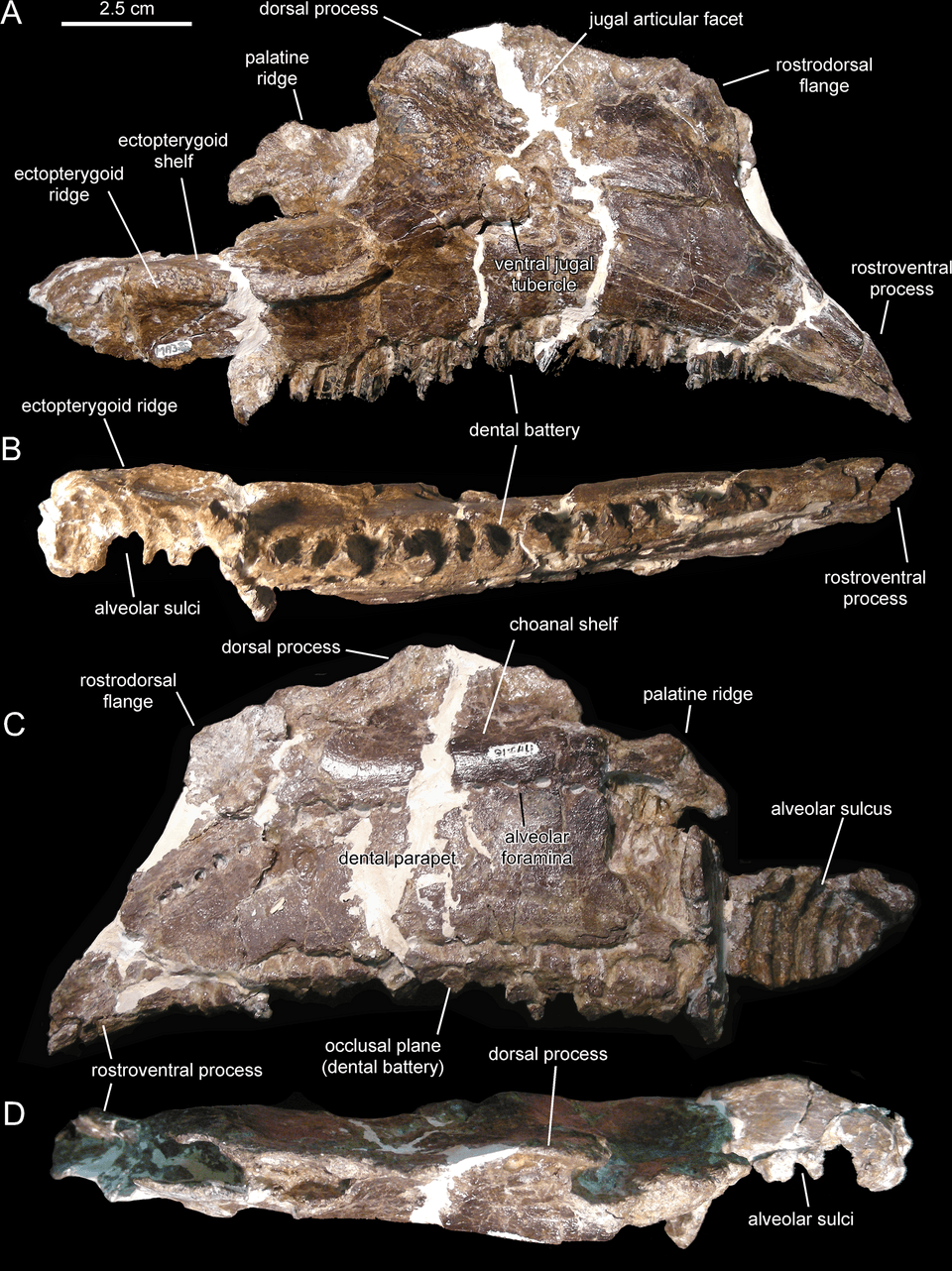
- Known only from juvenile specimens.
- Maxilla characterized by an enlarged rostro-dorsal region forming a prominent subrectangular flange.
- Maxillary teeth have a single median carina.
- Dentary teeth have an accessory ridge in front of the sub-central carina.
- Prefrontal has a rostro-caudally narrow rostro-ventral process and a dorsomedial flange.
Aralosaurus, Pararhabdodon, Tsintaosaurus, Ajnabia, Arenysaurus
Europe
About Canardia
Canardia is an extinct genus of lambeosaurine dinosaur that roamed the Ibero-Armorican Island, a landmass comprising much of modern-day France and Spain, during the Late Cretaceous period. Specifically, it lived in the late Maastrichtian stage, between approximately 67.5 and 66 million years ago, making it one of the last non-avian dinosaurs to exist before the Cretaceous-Paleogene extinction event. The genus is known from various cranial and postcranial remains, primarily discovered in the Haute-Garonne department of southwestern France.
Discovery and Naming
The type species, Canardia garonnensis, was formally described and named in 2013 by Albert Prieto-Márquez and colleagues. The genus name "Canardia" is derived from the French word "canard," meaning "duck," a nod to its classification within the "duck-billed" hadrosaurids. The specific epithet "garonnensis" honors the Haute-Garonne department where its fossils were unearthed. The initial discovery of hadrosaur remains at the Tricouté 3 locality in 1999 led to their provisional attribution to Pararhabdodon sp., a Spanish genus, until their recognition as a new genus.
Physical Characteristics and Classification
Canardia is notable for being known exclusively from juvenile specimens. Key diagnostic features include characteristics of the maxilla, such as an enlarged rostrodorsal region and a subhorizontal ectopterygoid shelf, which distinguish it from related genera like Aralosaurus. Maxillary teeth possess a single median carina, while dentary teeth exhibit an accessory ridge. The precise placement of Canardia within the Lambeosaurinae subfamily remains a subject of scientific debate. Some paleontologists propose it is a close relative of Aralosaurus, forming the tribe Aralosaurini, while others suggest a more derived position within the Arenysaurini clade, which encompasses European and North African lambeosaurines.
Paleoenvironment and Paleobiogeography
The Marnes d'Auzas Formation, where many Canardia fossils were found, indicates a depositional environment that transitioned from coastal lagoons and tidal marshes to more continental alluvial plains. These sites were located on the west coast of the Ibero-Armorican Island, facing the Atlantic Gulf. Paleontologists generally agree on an Asian origin for European lambeosaurines, suggesting that ancestors of Canardia likely reached the Ibero-Armorican Island relatively late in the Maastrichtian, possibly through a series of migrations across islands and temporary land bridges. These hadrosaurs may have later dispersed to North Africa via oceanic dispersal.
Source: Wikipedia ↗
Frequently Asked Questions
When did Canardia live?
Canardia lived during the Late Cretaceous period, specifically the late Maastrichtian stage. This places its existence between approximately 67.5 and 66 million years ago.
Where were the fossils of Canardia found?
The fossils of Canardia were discovered in southwestern France, primarily in the Haute-Garonne department of the Occitanie region.
What does the name Canardia mean?
The name Canardia is derived from the French word "canard," meaning "duck." This name alludes to its belonging to the Hadrosauridae family, also known as duck-billed dinosaurs.
Is Canardia a well-known dinosaur?
Canardia is known from juvenile specimens and its exact classification within the Lambeosaurinae subfamily is still debated. While it is a recognized genus, it is not as widely known as some other dinosaur species.
What type of environment did Canardia inhabit?
Canardia lived on the former Ibero-Armorican Island, which comprised much of modern-day France and Spain. The depositional environment of the Marnes d'Auzas Formation indicates a transition from coastal lagoons and tidal marshes to more continental alluvial plains.
Related Dinosaur species

Ampelosaurus
Ampelosaurus is a titanosaurian sauropod dinosaur that lived during the Late Cretaceous Period in what is now France. Known for its long neck and tail, it also possessed armor in the form of osteoderms. While initially thought to be a single species, recent studies suggest the presence of at least one other titanosaurian taxon in its discovery sites.
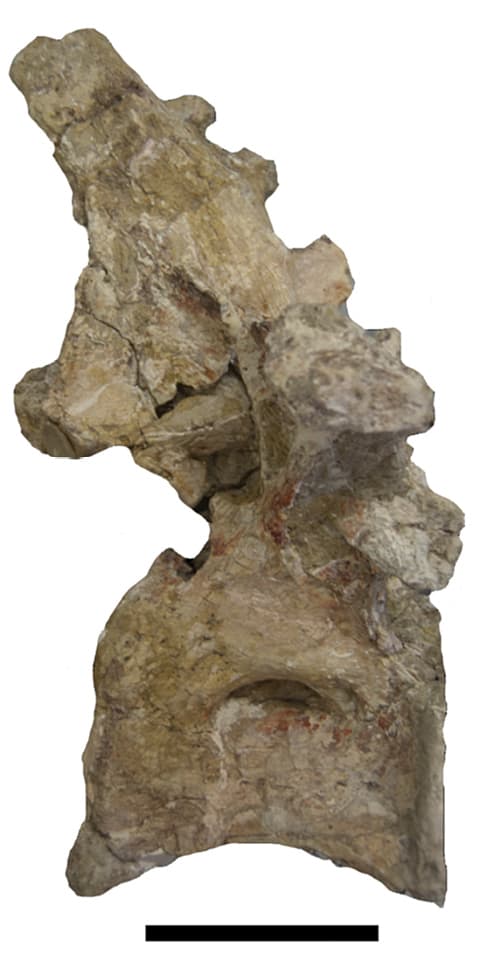
Atsinganosaurus
Atsinganosaurus is a genus of titanosaurian sauropod dinosaur that lived in what is now France during the Late Cretaceous period. Its well-preserved remains were discovered in the Grès à Reptiles Formation, with the type and only species being *A. velauciensis*. The name "Atsinganosaurus" reflects the possible eastward to westward migration of the species.
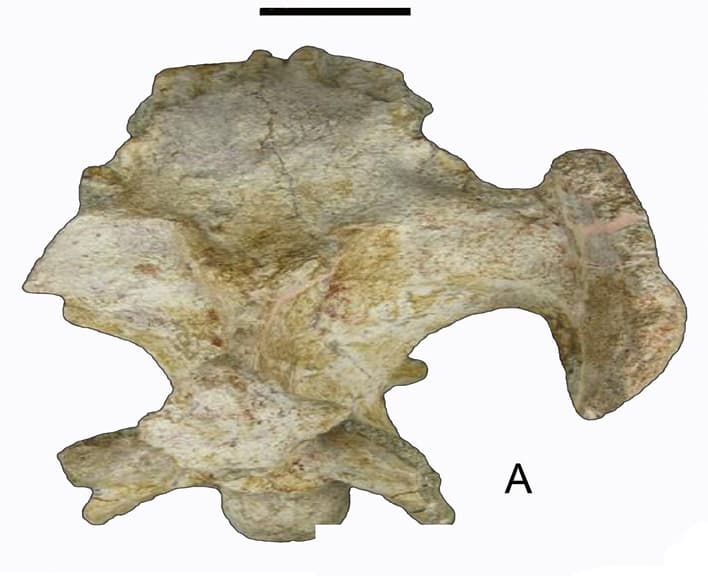
Arcovenator
Arcovenator is an extinct genus of abelisaurid theropod dinosaur that lived during the Late Cretaceous period in what is now France and possibly Spain. The sole described species, Arcovenator escotae, is known from fossil remains including a braincase, skull fragments, teeth, and limb bones. Its name, meaning "Arc hunter," refers to the Arc River near its discovery site and its predatory nature.