
Bagualia
Bagualia is an extinct genus of eusauropod dinosaur that lived during the Early Jurassic period in what is now Argentina. It is significant as the oldest known definitive eusauropod, offering crucial insights into the early evolution of this group. Its robust skull, specialized teeth, and adaptations for quadrupedalism highlight its role in a changing ecosystem.
Key Facts
- ›Bagualia is the oldest known definitive eusauropod dinosaur.
- ›It lived during the Early Jurassic period, approximately 179 million years ago.
- ›Fossils were discovered in the CañADón Asfalto Formation of Chubut Province, Argentina.
- ›Bagualia possessed a robust skull and teeth with exceptionally thick enamel for processing tough vegetation.
- ›It was a quadrupedal herbivore, adapted for a graviportal lifestyle.
- ›The genus name "Bagualia" refers to "wild horse" due to its discovery location.
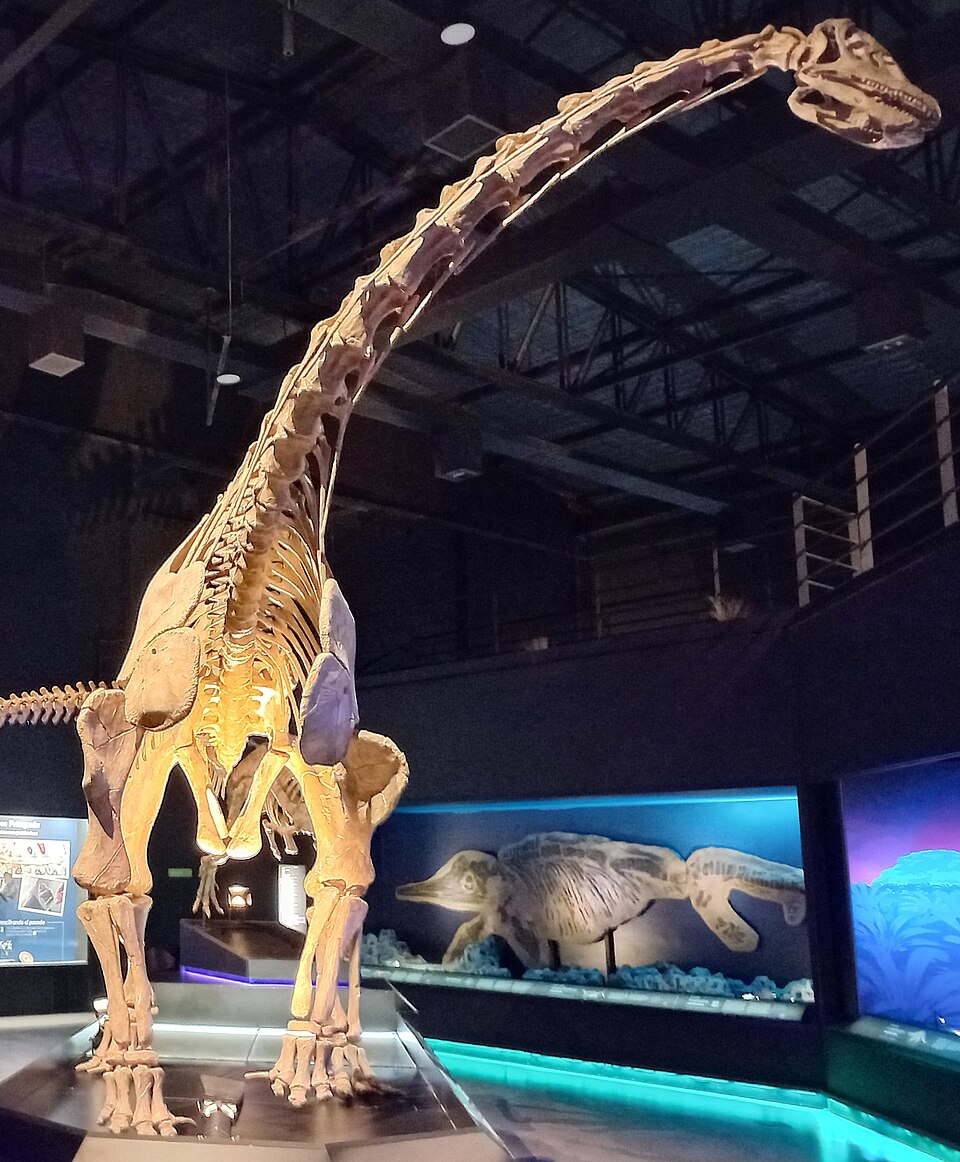
- Robust skull with a beak-like process
- Spoon-shaped teeth with heavily wrinkled enamel and thick enamel layers
- Long neck
- Adaptations for quadrupedal locomotion
- Straight humerus with low deltopectoral crest
- Deep radial fossa in the ulna
- Wedge-shaped astragalus
Nebulasaurus, Patagosaurus, Spinophorosaurus
Argentina
About Bagualia
Bagualia is an extinct genus of eusauropod dinosaur that roamed the Earth during the Early Jurassic period. Its fossils were discovered in the Cañadón Asfalto Formation in Chubut Province, Argentina, and it is scientifically known as Bagualia alba. This dinosaur holds significant importance in paleontology as it represents the oldest known definitive eusauropod, providing invaluable insights into the early evolutionary stages of this prominent group of long-necked herbivores.
Discovery and Naming
The fossil remains of Bagualia were unearthed in Bagual Canyon, within the Early Jurassic deposits of the Cañadón Asfalto Formation. Excavations conducted by the Museo Paleontológico Egidio Feruglio between 2007 and 2009 yielded the holotype specimen, which includes a partial skull and cervical vertebrae, alongside additional material from at least three other individuals. The genus name, Bagualia, is derived from the Spanish word "bagual," meaning "wild horse," a nod to its discovery location. The species name, alba, is the Spanish word for "dawn," signifying its early position within the sauropod lineage.
Physical Characteristics and Adaptations
Bagualia is known from a relatively complete skeletal record, including parts of the skull, vertebrae, and limb bones. Its skull features a robust premaxilla, a beak-like process at its anteroventral end, and maxillae with numerous alveoli containing spoon-shaped teeth. These teeth are characterized by heavily wrinkled enamel, which was notably thicker on the labial side and varied in thickness along the tooth row, particularly thicker in posterior teeth. This dental specialization, along with a long neck, suggests Bagualia was adapted for browsing on tough vegetation, such as conifers, and likely processed fibrous plant material efficiently.
Further anatomical details reveal adaptations for a graviportal, quadrupedal lifestyle. The appendicular skeleton shows features like a well-developed acromion process, a straight humerus, and a wedge-shaped astragalus, all contributing to a robust build suited for supporting significant body mass. The braincase indicates adaptations for low-agility, quadrupedal locomotion, with reduced semicircular canals and a moderate sense of smell. The hypertrophied pituitary gland in the endocranium supports its link to increasing body size, a trend seen in later large-bodied sauropods.
Palaeoecology and Paleoenvironment
The discovery of Bagualia sheds light on the ecosystem of the Early Jurassic in Patagonia. The Cañadón Asfalto Formation, where its fossils were found, represents a lacustrine environment with volcanic activity. This environment, characterized by shallow, saline lakes and palustrine subenvironments, supported diverse life. The presence of conifer remains, turtle fossils, and teeth from theropod dinosaurs alongside Bagualia suggests a complex ecosystem. Bagualia's ability to process tough vegetation, possibly after the Toarcian Oceanic Anoxic Event, may have been crucial for its survival and the success of eusauropods in a changing world. Its broad-crowned teeth and feeding strategies suggest niche partitioning within this ecosystem, allowing it to exploit specific food resources and reduce competition with other herbivores like Patagosaurus.
Source: Wikipedia ↗
Frequently Asked Questions
What does the name Bagualia mean?
The scientific name Bagualia is derived from "bagual," the Spanish word for "wild horse." This name was chosen in reference to the specimens being discovered in Bagual Canyon, also known as "Cañadón Bagual."
When did Bagualia live?
Bagualia lived during the Early Jurassic period, specifically the middle Toarcian stage. This is precisely dated to around 179 million years ago based on the volcanic layers above and below the fossil-bearing strata.
Where were Bagualia fossils found?
Fossils of Bagualia were discovered in the Cañadón Asfalto Formation in Chubut Province, Argentina. The specific discovery site was Bagual Canyon, near Cerro Cóndor.
What did Bagualia eat?
Bagualia was a herbivore, adapted to consuming tough vegetation such as conifers. Its robust skull, broad-crowned teeth with thick enamel, and long neck were suited for processing fibrous plant material.
What makes Bagualia important for dinosaur evolution?
Bagualia is considered the oldest known definitive eusauropod. Its well-preserved fossils provide critical information for understanding the early evolution and diversification of the eusauropod group, which includes the giant long-necked sauropods.
What were the physical characteristics of Bagualia?
Bagualia had a robust skull with a beak-like process on its premaxilla and spoon-shaped teeth with heavily wrinkled enamel. Its skeleton shows adaptations for quadrupedalism, including a straight humerus, deep radial fossa in the ulna, and a wedge-shaped astragalus. Its long neck likely aided in reaching vegetation and possibly heat dissipation.
Related Dinosaur species
Amygdalodon
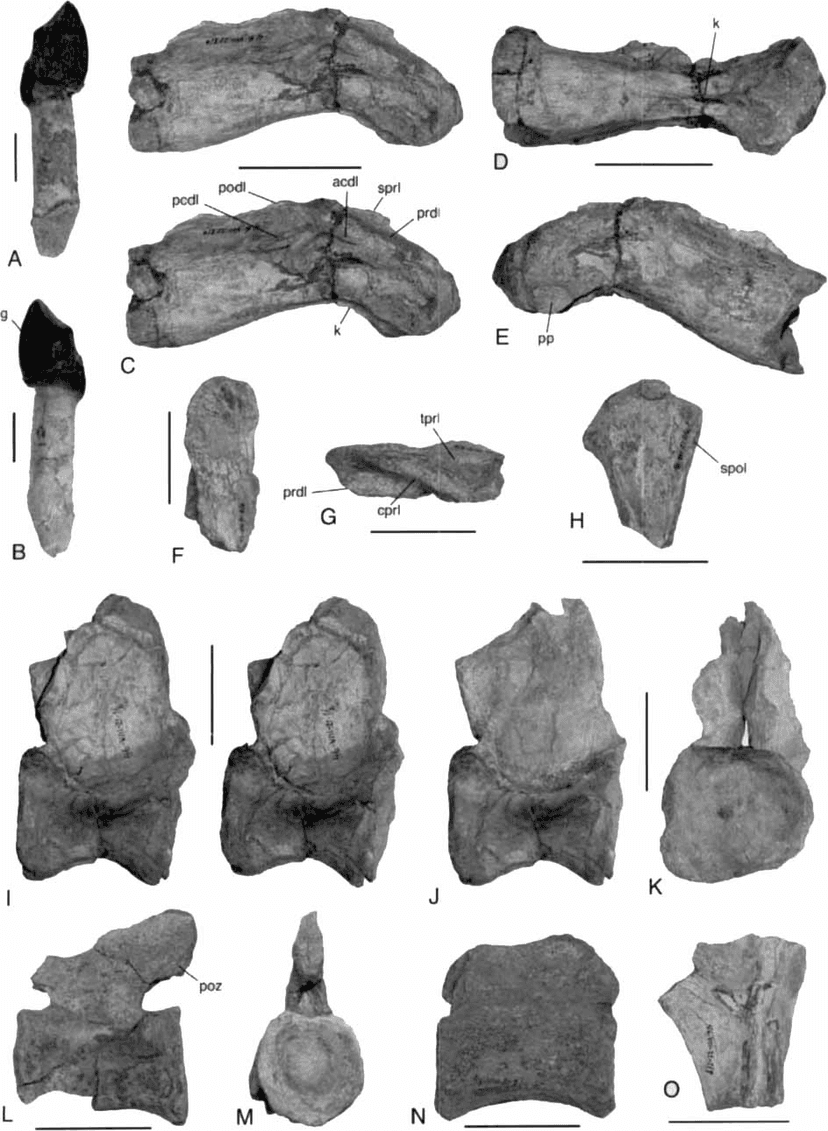
Amygdalodon was a basal sauropod dinosaur that lived in Argentina during the Early Jurassic period. It is known from fragmentary remains, including teeth, vertebrae, ribs, and parts of the pelvis and shoulder blade. Despite its limited fossil record, Amygdalodon provides insights into early sauropod evolution in South America.

Condorraptor
Condorraptor is an extinct genus of theropod dinosaur that lived during the Early Jurassic period in what is now Argentina. It was one of the earliest large South American theropods, characterized by unique anatomical features in its vertebrae and tibia. Its genus name translates to 'robber from Cerro Condor,' reflecting its predatory nature and discovery location.

Aeolosaurus
Aeolosaurus was a genus of titanosaurian sauropod dinosaur that lived in South America during the Late Cretaceous Period. Characterized by a long neck and tail, it was a quadrupedal herbivore. The genus is well-represented, with remains from several individuals belonging to at least two species, though no skull material has been recovered.