
Barosaurus
Barosaurus was an extinct genus of giant, long-necked, plant-eating sauropod dinosaur closely related to Diplodocus, living during the Late Jurassic Period. Its name, derived from Greek words meaning "heavy lizard," reflects its immense size, with some adults estimated to reach lengths of up to 40 meters and weigh around 60 metric tons. Distinguished by its exceptionally long neck and shorter tail compared to its relatives, Barosaurus likely fed by sweeping its neck at ground level.
Key Facts
- ›Barosaurus was a herbivorous sauropod dinosaur from the Late Jurassic Period.
- ›It was closely related to Diplodocus and belonged to the family Diplodocidae.
- ›Estimated lengths range from 25-27 meters for some adults, with one interpretation suggesting up to 48 meters.
- ›It possessed an exceptionally long neck, potentially reaching 15 meters, and a shorter tail than Diplodocus.
- ›Fossils have been primarily found in the Morrison Formation of the western United States.
- ›Barosaurus likely fed by sweeping its long neck at ground level.

- Enormous size, with adults measuring about 25–27 meters in length.
- Estimated weight of 12–20 metric tons for some adults.
- Exceptionally long neck, with some individuals estimated to have necks of 12.07–15.1 meters.
- Shorter tail compared to its close relative Diplodocus.
- Columnar limbs adapted for supporting significant weight.
- Longer forelimbs proportionally than other diplodocids, but still shorter than in many other sauropod groups.
Diplodocus, Apatosaurus, Supersaurus, Tornieria Africana
North America
About Barosaurus
Barosaurus is an extinct genus of giant, long-necked, plant-eating sauropod dinosaur that lived during the Late Jurassic Period, approximately 155 to 148 million years ago. Its name, derived from the Greek words "barys" (heavy) and "sauros" (lizard), reflects its immense size, with some individuals estimated to have reached lengths of up to 40 meters (130 ft) and weighed around 60 metric tons (66 short tons).
Description and Physical Characteristics
Barosaurus was a colossal animal, closely related to the more familiar Diplodocus. While definitive adult lengths are estimated around 25–27 meters (82–89 ft) and weights between 12–20 metric tons (13–22 short tons), some interpretations of exceptionally large vertebrae suggest individuals could have been significantly larger, potentially up to 48 meters (157 ft) long and weighing 66 metric tons (73 short tons). A defining feature of Barosaurus was its proportionally very long neck, which may have reached lengths of 12–15 meters (39–49 ft), coupled with a shorter tail compared to its close relatives like Diplodocus. Its limb bones were robust and columnar, adapted for quadrupedal locomotion to support its immense bulk. Unlike its relatives, Barosaurus had fewer dorsal vertebrae and a different proportion of cervical vertebrae. No skull of Barosaurus has ever been discovered.
Classification and Paleoecology
Barosaurus belongs to the sauropod family Diplodocidae, a group characterized by long tails, relatively short forelimbs, and slender builds. It is often placed within the subfamily Diplodocinae, alongside Diplodocus. Fossils of Barosaurus are primarily found in the Morrison Formation of the western United States, which preserves an ecosystem dominated by large sauropods. This environment was a floodplain bordering the ancient Sundance Sea during a period of high global temperatures and seasonal rainfall. Barosaurus shared its habitat with other dinosaurs like Allosaurus, Stegosaurus, and Camptosaurus, as well as various other vertebrates and flora.
Paleobiology and Feeding
The structure of Barosaurus's cervical vertebrae suggests that while its neck had considerable lateral flexibility, its vertical movement was restricted. This anatomical feature indicates a specific feeding strategy: Barosaurus likely swept its neck in long arcs at ground level to forage on vegetation, rather than reaching for high-growing plants. The long neck may have also aided in thermoregulation by radiating excess body heat or served a role in sexual selection.
Discovery and Naming
The first Barosaurus remains were discovered in 1889 in South Dakota by Ms. Isabella R. Ellerman and excavated by Othniel Charles Marsh and John Bell Hatcher. Marsh formally named the genus Barosaurus in 1890, deriving the name from Greek words meaning "heavy lizard." The type species is Barosaurus lentus. Over the following decades, significant specimens were unearthed from localities like the Carnegie Quarry in Utah, contributing to our understanding of this giant dinosaur, though the lack of a skull has presented challenges in its complete reconstruction.
Source: Wikipedia ↗
Frequently Asked Questions
What does the name Barosaurus mean?
The name Barosaurus comes from the Greek words "barys" meaning "heavy" and "sauros" meaning "lizard." Thus, Barosaurus translates to "heavy lizard."
How large was Barosaurus?
Barosaurus was an enormous animal. Some adult individuals are estimated to have measured about 25–27 meters (82–89 ft) in length and weighed around 12–20 metric tons (13–22 short tons). However, one interpretation of a large vertebra suggests it could have been up to 48 meters (157 ft) long and weighed approximately 66 metric tons (73 short tons).
Where were Barosaurus fossils found?
Definitive remains of Barosaurus have been discovered in the Morrison Formation of the Upper Jurassic Period, specifically in South Dakota, Utah, and Montana. Possible remains have also been found in Colorado, eastern Wyoming, and Oklahoma.
What did Barosaurus eat?
Barosaurus was a plant-eating dinosaur, classified as a herbivore. Its feeding style is thought to have involved sweeping its long neck in arcs at ground level, suggesting it did not primarily feed on vegetation high off the ground.
How does Barosaurus compare to Diplodocus?
Barosaurus was closely related to Diplodocus and shared some physical similarities. However, Barosaurus had a proportionally longer neck and a shorter tail, and its skeleton was less robust than that of Apatosaurus, another related diplodocid.
What geological period did Barosaurus live in?
Barosaurus lived during the Upper Jurassic Period, approximately 155 to 148 million years ago. Its fossils are found in sediments dating from the late Kimmeridgian to early Tithonian stages.
Related Dinosaur species

Dakotadon
Dakotadon, meaning "Dakota tooth," is a genus of iguanodont dinosaur known from a partial skull discovered in South Dakota, USA. First described as *Iguanodon lakotaensis*, its taxonomic classification has been debated, with some researchers suggesting it represents a distinct genus due to its more basal position within the iguanodont lineage.

Adeopapposaurus
Adeopapposaurus is a genus of plateosaurian dinosaur that lived during the Early Jurassic period in what is now Argentina. Its name, meaning "far eating lizard," refers to its long neck. It is known from several partial skeletons, including skulls, and is classified as a massospondylid dinosaur.
Amygdalodon
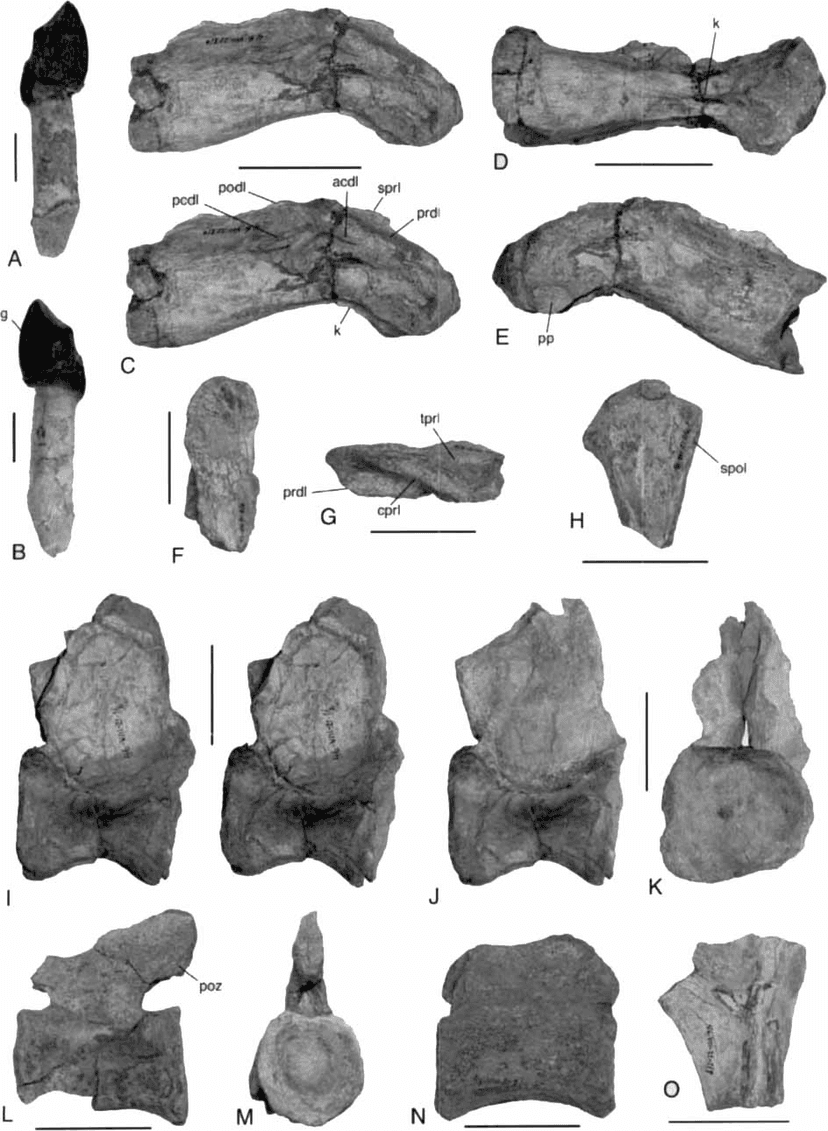
Amygdalodon was a basal sauropod dinosaur that lived in Argentina during the Early Jurassic period. It is known from fragmentary remains, including teeth, vertebrae, ribs, and parts of the pelvis and shoulder blade. Despite its limited fossil record, Amygdalodon provides insights into early sauropod evolution in South America.