
Beipiaosaurus
Likely Herbivore (inferred from therizinosaur group characteristics)·Early Cretaceous·Liaoning Province, China·Bipedal
Beipiaosaurus is a genus of therizinosauroid theropod dinosaur that lived in China during the Early Cretaceous period. Known for its distinctive primitive plumage, Beipiaosaurus was a relatively small dinosaur, measuring about 2.2 meters in length and weighing approximately 27 kilograms. Its classification as a theropod, despite herbivorous-like features, helped solidify the placement of therizinosaurs within the Theropoda.
Key Facts
- ›Lived in China during the Early Cretaceous period, approximately 125 million years ago.
- ›Known from three reported fossil specimens, including significant feather impressions.
- ›Estimated to be around 2.2 meters long and weigh about 27 kilograms.
- ›Possessed primitive, downy, and elongated filamentous feathers, with a brownish coloration.
- ›Had a three-toed foot with a reduced inner toe, differing from more derived therizinosaurs.
- ›Its classification helped confirm therizinosaurs as coelurosaurian theropods.

- Estimated length of 2.2 meters from the largest specimen.
- Estimated body mass of around 27 kg based on femur length.
- Possessed a relatively large head and a shorter neck compared to other therizinosaurs.
- Had a three-toed foot with a reduced inner toe.
- Covered in primitive plumage, including downy feather-like fibers and elongated broad filamentous feathers.
Falcarius, Jianchangosaurus, Segnosaurus, Therizinosaurus, Alxasaurus, Eshanosaurus
China
About Beipiaosaurus
Beipiaosaurus is a genus of therizinosauroid theropod dinosaur that roamed the Earth during the Early Cretaceous period, approximately 125 million years ago. Its fossils have been unearthed in China, specifically within the Yixian Formation. The discovery of Beipiaosaurus has been significant in understanding the evolutionary lineage of theropod dinosaurs, particularly those within the therizinosaur group.
Description and Physical Characteristics
Beipiaosaurus was a relatively small dinosaur, with the largest known specimen estimated to be about 2.2 meters (7.2 feet) in length and weighing around 27 kilograms (60 pounds). This size contrasts sharply with some of its larger, more derived relatives like Segnosaurus and Therizinosaurus. Distinctive physical traits include a head that was proportionally large for a therizinosaur and a neck that appears to have been shorter than in most other members of its group. Its feet were also unique, featuring a generic three-toed pes rather than the four-toed configuration seen in more advanced therizinosaurids, suggesting a reduction in the inner toe over evolutionary time.
Feathers and Appearance
One of the most remarkable aspects of Beipiaosaurus is the exceptional preservation of its feather impressions. These fossils reveal that the dinosaur was covered in a coat of primitive plumage. This included short, downy feather-like fibers across its body and a secondary layer of much longer, simpler feathers known as elongated broad filamentous feathers (EBFFs). These EBFFs were unbranched, unusually broad, and quite long, sometimes reaching half the length of the neck. Analysis of melanosomes within these feather impressions suggests that Beipiaosaurus likely had a brownish coloration. These findings indicate that Beipiaosaurus was among the heaviest dinosaurs known to have been feathered, predating the discovery of Yutyrannus.
Classification and Diet
The classification of therizinosaurs has historically been a subject of debate due to their unique combination of features, including herbivore-like teeth and body structure, which differed from typical theropods. Beipiaosaurus, considered a primitive therizinosauroid, has features that strongly support the placement of all therizinosaurs within the coelurosaurian theropods, rather than as relatives of sauropodomorphs or ornithischians. While therizinosaurs are generally understood to have been herbivorous, the specific dietary habits of Beipiaosaurus are inferred from its group affiliation. The presence of corneocytes in its skin flakes suggests it was a ground-dwelling animal, and these cells were more densely packed with keratin and lacked lipids compared to modern birds, indicating it did not generate as much body heat as flying birds.
Discovery and Naming
The first remains of Beipiaosaurus were discovered in 1996 by a farmer named Li Yinxian near Sihetun, China. The fossils were confirmed to belong to the lower beds of the Yixian Formation. The genus was formally described and named Beipiaosaurus inexpectus in 1999 by paleontologists Xu Xing, Tang Zhilu, and Wang Xiaolin. The genus name honors the nearby city of Beipiao, while the species name 'inexpectus' reflects the surprising anatomical features found in the fossil specimens.
Source: Wikipedia ↗
Frequently Asked Questions
What does the name Beipiaosaurus mean?
The generic name Beipiaosaurus translates to "Beipiao lizard," named after Beipiao, a city in China near where its fossils were discovered. The specific name, inexpectus, means "unexpected" in Latin, referring to the surprising features of the dinosaur.
Where was Beipiaosaurus discovered?
Fossils of Beipiaosaurus were discovered in the Yixian Formation, near the village of Sihetun in Liaoning Province, China. The holotype specimen was recovered from the Jianshangou Beds of this formation.
What did Beipiaosaurus look like?
Beipiaosaurus was a small therizinosaur with a relatively large head and shorter neck compared to other therizinosaurs. It was covered in downy and unusually long, broad filamentous feathers, estimated to be brownish in color. Its feet had a three-toed configuration with a reduced inner toe.
What did Beipiaosaurus eat?
While therizinosaurs generally had features suggesting herbivory, such as prosauropod-like teeth, the specific diet of Beipiaosaurus is not definitively stated. However, its classification as a theropod with these characteristics indicated a departure from typical theropod diets.
How did Beipiaosaurus move?
Beipiaosaurus was a theropod dinosaur, and like most theropods, it was likely bipedal. Its foot structure, with a three-toed pes, is consistent with bipedal locomotion.
What is special about Beipiaosaurus's feathers?
Beipiaosaurus is notable for its extensive feather impressions, which showed it was covered in short, downy fibers and also possessed unique, elongated broad filamentous feathers (EBFFs). These EBFFs were unbranched, much longer than those of other primitive feathered dinosaurs, and likely stiff, possibly used for visual display.
Related Dinosaur species

Chuanqilong
Chuanqilong is a genus of basal ankylosaurid dinosaur that lived during the Early Cretaceous period in what is now Liaoning Province, China. Known from a nearly complete juvenile skeleton, this medium-sized dinosaur was characterized by a triangular skull, osteoderm-covered body, and a tail lacking a club. It is closely related to Liaoningosaurus, with some research suggesting they may represent the same species at different life stages.
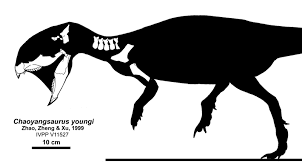
Chaoyangsaurus
Chaoyangsaurus was a genus of marginocephalian dinosaur belonging to the Ceratopsia, meaning "horned faces." This herbivorous dinosaur lived during the Late Jurassic period in what is now northeastern China. Despite a complex naming history, it was officially described in 1999, with its scientific name honoring both its discovery location and a pioneering Chinese paleontologist.

Crichtonsaurus
Crichtonsaurus was a genus of herbivorous ankylosaurid dinosaur that lived in what is now China during the Late Cretaceous period. Named in honor of author Michael Crichton, the genus is now considered dubious, with its type species, Crichtonsaurus bohlini, being a nomen dubium due to a lack of unique diagnostic traits in the holotype and questionable referral of other specimens. A second species, Crichtonsaurus benxiensis, was later renamed Crichtonpelta.