
Brachyceratops
Brachyceratops is a dubious genus of ceratopsian dinosaur that lived during the Late Cretaceous Period in what is now Montana, United States. It is primarily known from the incomplete remains of juvenile individuals, making its exact classification challenging. One of its specimens has since been reclassified as Rubeosaurus ovatus.
Key Facts
- ›Brachyceratops means 'short horned face' in reference to its snout.
- ›It lived in Montana during the Late Cretaceous Period, approximately 74 million years ago.
- ›Fossils consist of disarticulated remains of five juvenile individuals, plus one larger subadult specimen.
- ›The skull possessed small bumps over the eyes instead of full horns and a low nasal horn.
- ›It belonged to the Centrosaurinae subfamily of ceratopsian dinosaurs.
- ›Due to being known only from juveniles, it is considered a dubious name (nomen dubium).
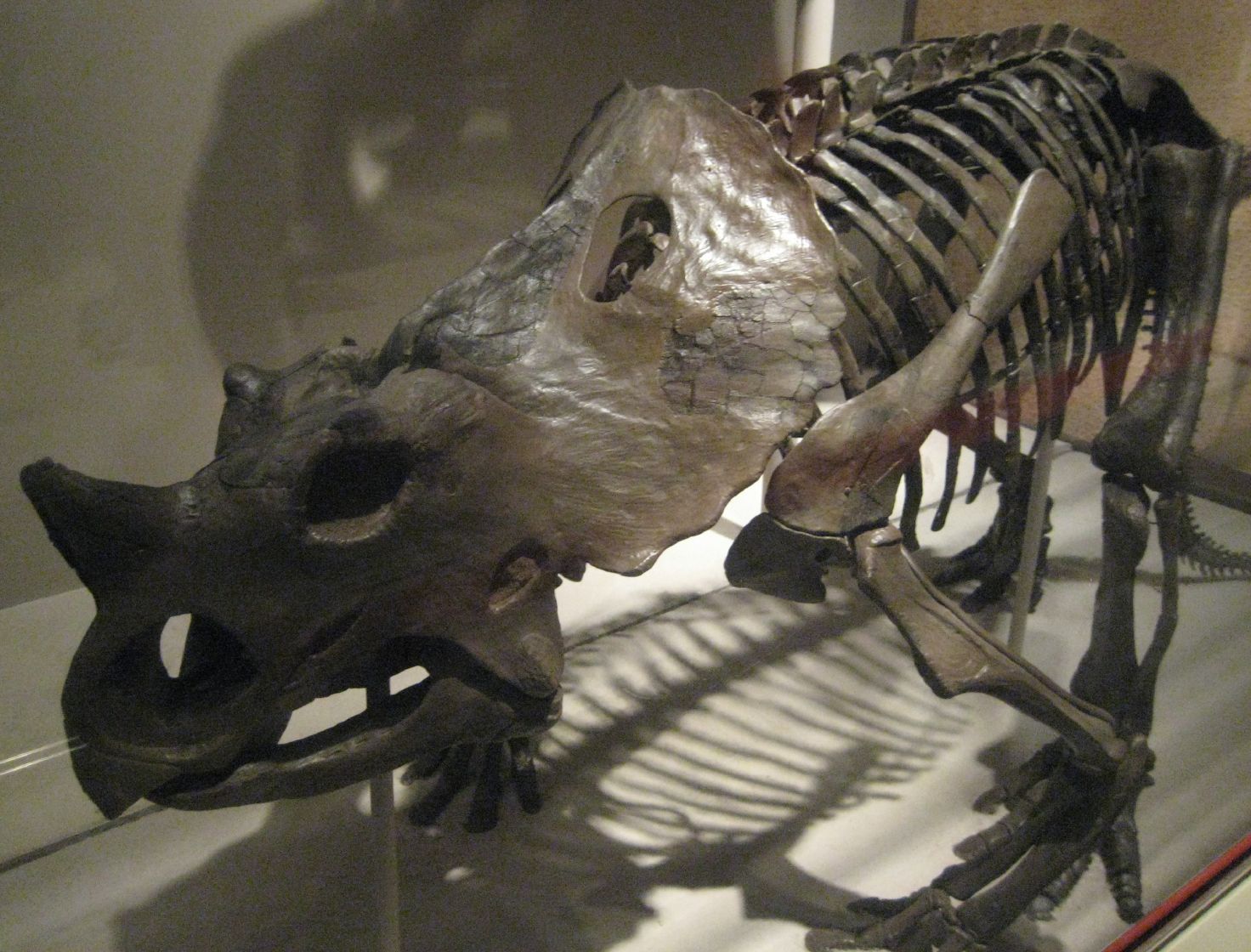
Small Bumps Over the Eyes, Thick and Low Nasal Horn, Moderately Large Neck Frill, Estimated Juvenile Length of 1.5 Meters
Rubeosaurus Ovatus, Styracosaurus Ovatus, Monoclonius
North America
About Brachyceratops
Brachyceratops: A Dubious Horned Dinosaur
Brachyceratops is a genus of ceratopsian dinosaur that roamed the Earth during the Late Cretaceous Period, approximately 74 million years ago. Its fossils have been discovered in the Two Medicine Formation of Montana, United States. The name Brachyceratops translates to 'short horned face,' a descriptor reflecting its relatively short snout and the small bony bumps that adorned its brow region, rather than the prominent horns seen in more famous ceratopsians like Triceratops. The genus is considered dubious by paleontologists due to the nature and completeness of its fossil record.
Discovery and Classification
First unearthed in August 1913 by C. W. Gilmore and his assistant John Floyd Strayer, Brachyceratops was formally named and described by Gilmore in 1914. The initial discovery yielded incomplete and jumbled remains of five juvenile individuals, each estimated to be around 1.5 meters (5 feet) in length. These juvenile specimens, along with a larger subadult individual found later, are housed at the Smithsonian Institution. Historically, it was widely speculated that Brachyceratops represented the immature form of another known centrosaurine ceratopsian, with Monoclonius often suggested as a possibility. However, more recent studies have indicated that the most mature specimen previously assigned to Brachyceratops is likely the juvenile form of Rubeosaurus ovatus. Due to the scarcity of adult diagnostic features in the holotype specimen, Brachyceratops remains classified as a nomen dubium, or dubious name, meaning its distinctiveness as a genus cannot be definitively confirmed from the available evidence.
Physical Characteristics and Paleoecology
The skull fragments of Brachyceratops revealed a creature with small orbital bumps and a thick, low nasal horn. While its neck frill was moderately sized, the presence of parietal openings, common in other ceratopsians, cannot be determined from the incomplete fossils. Brachyceratops lived in a diverse ecosystem alongside various other dinosaurs. Its contemporaries included basal ornithopods like Orodromeus, several hadrosaurids such as Hypacrosaurus and Maiasaura, and other centrosaurines like Stellasaurus and Einiosaurus. Armored ankylosaurs, including Edmontonia and Euoplocephalus, also shared this environment. Predatory theropods, such as the tyrannosaurid Daspletosaurus, which may have specialized in hunting ceratopsians, and smaller raptors like Troodon and Bambiraptor, were also present.
Source: Wikipedia ↗
Frequently Asked Questions
What does the name Brachyceratops mean?
The name Brachyceratops is derived from Greek words meaning 'short', 'horn', and 'face'. This name refers to the dinosaur's relatively short snout.
When and where did Brachyceratops live?
Brachyceratops lived during the Late Cretaceous Period, approximately 74 million years ago. Its fossils were discovered in the Two Medicine Formation of Montana, United States.
What kind of dinosaur was Brachyceratops?
Brachyceratops was a ceratopsian dinosaur, belonging to the Centrosaurinae subfamily. This group is known for its horned and frilled head ornamentation.
Why is Brachyceratops considered a dubious genus?
Brachyceratops is considered a dubious genus because it is known only from juvenile remains. Many distinguishing features of ceratopsians develop in adulthood, making definitive classification difficult.
What did Brachyceratops look like?
Based on the juvenile skulls found, Brachyceratops had small bumps over its eyes rather than developed horns and a thick, low nasal horn. Its neck frill was moderately large, though the presence of parietal openings is unknown due to incomplete fossils.
What other dinosaurs lived alongside Brachyceratops?
Brachyceratops shared its ecosystem with various dinosaurs, including ornithopods like Orodromeus and hadrosaurids, ankylosaurs such as Edmontonia and Euoplocephalus, and tyrannosaurids like Daspletosaurus. Smaller theropods like Troodon and Bambiraptor were also present.
Related Dinosaur species
Avaceratops
Avaceratops is a genus of small herbivorous ceratopsian dinosaurs that lived during the late Campanian stage of the Cretaceous Period in what is now the Northwestern United States. Its fossils are primarily found in the Judith River Formation. The genus is named after Ava Cole, wife of the discoverer Eddie Cole, and the specific epithet honors the Lammers family.

Acheroraptor
Acheroraptor is an extinct genus of dromaeosaurid theropod dinosaur that lived in North America during the Late Cretaceous period. It is known from fossil remains discovered in the Hell Creek Formation of Montana, United States. Acheroraptor is notable for being one of the geologically youngest dromaeosaurids, existing just before the Cretaceous-Paleogene extinction event.

Bambiraptor
Bambiraptor is a genus of bird-like theropod dinosaur that lived approximately 72 million years ago during the Late Cretaceous period in Montana, USA. Named for its small size and resemblance to the Disney character Bambi, this dinosaur is known from a remarkably complete juvenile specimen, which has been crucial in understanding the relationship between dinosaurs and birds.