
Brighstoneus
Brighstoneus is a genus of hadrosauriform dinosaur that lived during the Early Cretaceous period. Fossils of Brighstoneus have been discovered on the Isle of Wight, England, within the Wessex Formation. This dinosaur is known from a partial skeleton and is notable for its unique skull morphology, including a bulging nasal bone.
Key Facts
- ›Lived during the Early Cretaceous period, approximately 125 million years ago.
- ›Fossils were found in the Wessex Formation on the Isle of Wight, England.
- ›Known from a partial skeleton, including skull elements and postcranial remains.
- ›Distinguished by a unique, dorsally bulging nasal bone, forming a nasal bulla.
- ›Estimated to be about 6 meters (20 feet) long and weigh around 1 ton (2,200 lb).
- ›Belongs to the Iguanodontia, more specifically within the Hadrosauriformes.

- Large size, estimated at 6 meters in length.
- Estimated body mass of about 1 tonne.
- Unique skull morphology with a dorsally bulging nasal bone forming a nasal bulla.
- Robust maxilla, thinner dorsally or ventrally than in Mantellisaurus.
- Straighter and narrower jugal bones than in Mantellisaurus.
- Predentary bone with a bilobed, heart-shaped process ventrally and large denticles dorsally.
- Dentary row with up to 28 alveoli.
- Relatively high ridge along the vertebral column, with neural spines over 370% the height of vertebral centra at the tail base.
Mantellisaurus, Altirhinus, Gryposaurus, Muttaburrasaurus, Ouranosaurus, Barilium, Hypselospinus, Iguanodon, Comptonatus, Cariocaeus Bocagei
Isle of Wight, England
About Brighstoneus
Brighstoneus is a genus of hadrosauriform dinosaur that roamed the Earth during the Early Cretaceous period. Its name honors the village of Brighstone on the Isle of Wight, England, and its discovery site. This dinosaur is known from a partial skeleton, providing valuable insights into its anatomy and evolutionary relationships.
Discovery and Naming
The holotype specimen of Brighstoneus was discovered in 1978 following a storm that caused coastal erosion on the Isle of Wight, revealing fossil-bearing rocks from the Wessex Formation. These rocks date back to the Barremian stage of the Early Cretaceous, approximately 125 million years ago. The bones, initially found intermingled with those of another dinosaur, Neovenator, were collected by amateur paleontologists and geology students. The genus Brighstoneus and its type species, Brighstoneus simmondsi, were formally named and described in 2021 by Jeremy Lockwood and colleagues, distinguishing it from previously known iguanodontian dinosaurs.
Anatomy and Characteristics
Brighstoneus is characterized by several unique anatomical features, particularly in its skull. It possessed a distinct nasal bone that bulged dorsally, forming a structure known as a nasal bulla, a trait shared with some other hadrosauriforms but with a unique morphology in Brighstoneus. The maxilla was robust, and the jugal bones were straighter and narrower compared to those of its relative, Mantellisaurus. The predentary bone, part of the lower beak, featured a bilobed, heart-shaped process. Postcranial remains indicate a relatively high ridge along the vertebral column, with significantly tall neural spines at the base of the tail.
Recent estimations suggest Brighstoneus reached lengths of around 6 meters (20 feet) and weighed approximately 1 metric ton (2,200 pounds). Its dentary bone contained a high number of alveoli (tooth sockets), indicative of a sophisticated dental battery for processing plant matter.
Classification and Paleoenvironment
Phylogenetic analyses place Brighstoneus within the Iguanodontia, more specifically as an early-diverging member of the Hadrosauroidea, a subgroup of Hadrosauriformes. This suggests it was a close relative to other iguanodontian dinosaurs found in Europe and beyond.
Brighstoneus inhabited a floodplain environment characterized by river and lake deposits. The climate was likely marked by high evaporation and frequent storms, leading to debris flows that would have buried organisms. The flora consisted of dense gymnosperms and low-lying pteridophytes, with evidence of frequent wildfires. The Isle of Wight during this period was home to a diverse fauna, including various theropods, sauropods, thyreophorans, and other ornithopods, as well as pterosaurs, crocodyliforms, and early mammals.
Source: Wikipedia ↗
Frequently Asked Questions
When did Brighstoneus live?
Brighstoneus lived during the Early Cretaceous period, with its fossils dating to at least 125 million years ago, specifically from the Barremian stage. This places it in a time before many more derived hadrosaurids evolved.
Where were Brighstoneus fossils found?
The fossils of Brighstoneus were discovered on the Isle of Wight, England. They were found in strata belonging to the Wessex Formation, a geological unit known for its Early Cretaceous dinosaur remains.
What are the distinctive physical features of Brighstoneus?
Brighstoneus is notable for a unique skull feature where the nasal bone bulged upwards, creating a nasal bulla. The maxilla was robust, and the jugal bones were straighter and narrower than in some related species. It also possessed a relatively high ridge along its vertebral column.
What is the estimated size of Brighstoneus?
Recent estimates suggest Brighstoneus was approximately 6 meters (20 feet) in length and weighed around 1 metric ton (2,200 pounds). These dimensions indicate it was a medium-sized dinosaur for its time.
What group of dinosaurs does Brighstoneus belong to?
Brighstoneus is classified as a hadrosauriform dinosaur, belonging to the larger group Iguanodontia. Phylogenetic analyses have placed it as an early-diverging member of the Hadrosauroidea within the Hadrosauriformes.
Related Dinosaur species

Aristosuchus
Aristosuchus was a small, bipedal, carnivorous theropod dinosaur that lived during the Early Cretaceous period. Its fossils were discovered on the Isle of Wight, England. Initially misidentified, it was later recognized as a distinct genus and is now generally placed within the Compsognathidae family.

Chondrosteosaurus
Chondrosteosaurus was a dubious genus of sauropod dinosaur from the Early Cretaceous Wessex Formation of England. Named for its "cartilage and bone" vertebrae, the genus is now considered a nomen dubium due to a lack of diagnostic features in its fossil remains.
Calamosaurus
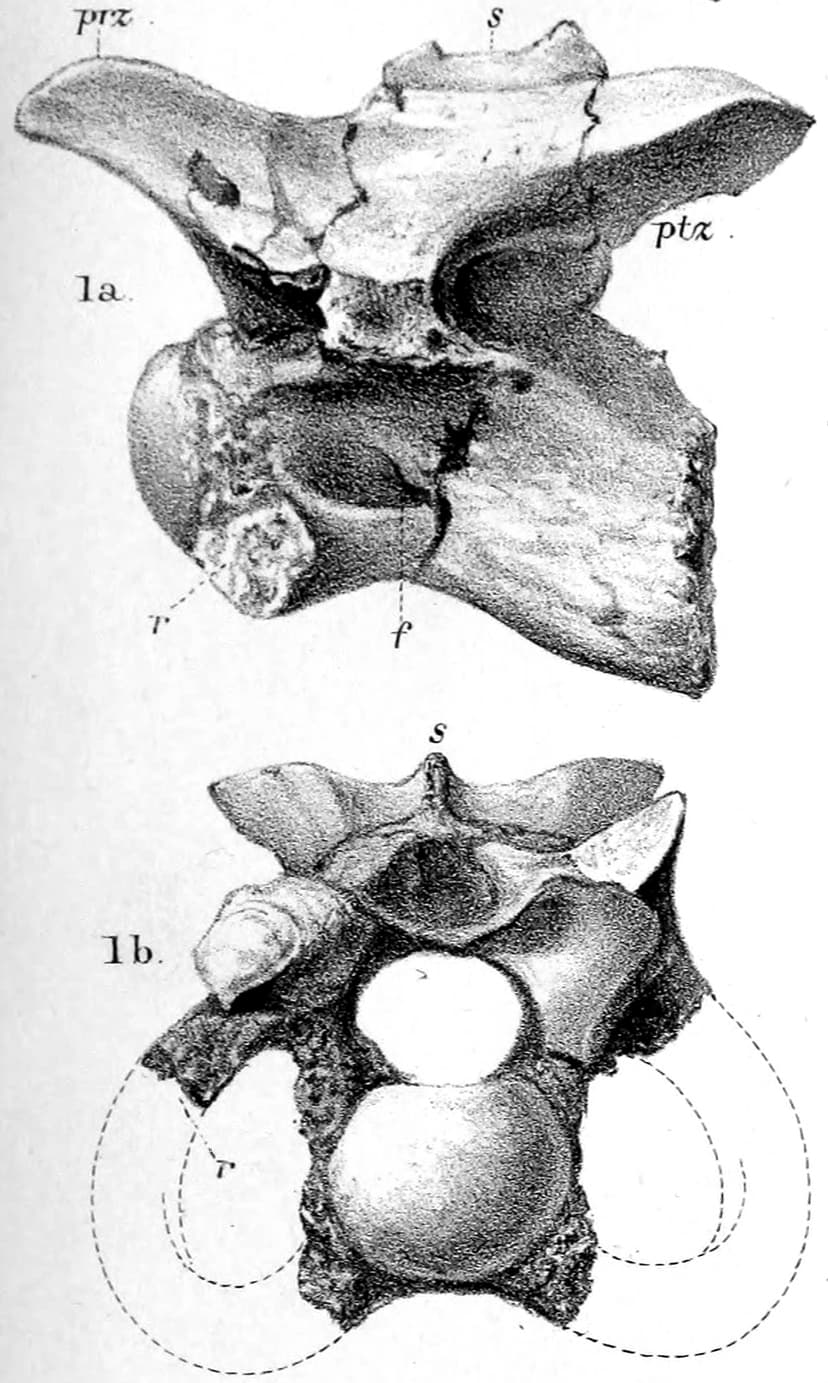
Calamosaurus is a genus of small theropod dinosaur that lived during the Early Cretaceous period on the Isle of Wight, England. Based on two cervical vertebrae, its exact classification has been debated, with suggestions ranging from Compsognathidae and Ornithomimosauria to Tyrannosauroidea and Alvarezsauroidea. Its name, meaning "reed lizard," reflects the slender nature of its discovered remains.