
Caenagnathasia
Caenagnathasia is a genus of small oviraptorosaurian theropod dinosaurs that lived in present-day Uzbekistan during the Late Cretaceous period. It is notable for being one of the smallest non-avian dinosaurs known, characterized by its beaked skull and bird-like features.
Key Facts
- ›Caenagnathasia is a genus of small caenagnathid oviraptorosaurian theropod dinosaur.
- ›It lived in what is now Uzbekistan during the Late Cretaceous period, approximately 90 million years ago.
- ›The genus is known from jaw fragments and other skeletal elements, with an estimated skull length of only 3 inches.
- ›Gregory S. Paul estimated its length at 2 feet (0.61 m) and weight at 3 pounds (1.4 kg) in 2010.
- ›Caenagnathasia is considered one of the most primitive members of the Caenagnathidae family.
- ›It represents the oldest known caenagnathoid, dating back to the Turonian-Coniacian stages.

Small, Bird-Like Dinosaur, Beaked Skull, Estimated Skull Length of 3 Inches, Feathered Appearance Presumed
Caenagnathidae
Asia
About Caenagnathasia
Caenagnathasia is a genus of small caenagnathid oviraptorosaurian theropod dinosaurs that inhabited what is now Uzbekistan during the Late Cretaceous period. The genus is recognized as representing one of the smallest non-avian dinosaurs discovered, with its distinctive features primarily known from jaw fragments.
Discovery and Naming
The type species, Caenagnathasia martinsoni, was formally named and described in 1994. Its generic name, a combination of 'recent jaw' and 'Asia', reflects its familial classification and geographic origin. The specific epithet honors Gerbert Genrikhovich Martinson. The holotype consists of a pair of fused lower jaw bones (dentaries), found in the Bissekty Formation near Dzharakuduk. This formation dates to the Turonian-Coniacian stages, approximately 90 million years ago, making Caenagnathasia the oldest known caenagnathoid.
Description and Characteristics
Caenagnathasia is notable for its diminutive size. The fossilized jaw fragments measure only a few centimeters in length, leading to an estimated total skull length of around 3 inches (7.6 cm). In 2010, Gregory S. Paul estimated its body length at approximately 2 feet (0.61 m) and its weight at about 3 pounds (1.4 kg). Like other oviraptorosaurs, it is presumed to have possessed a feathered, bird-like body with a beaked skull, a long neck, and elongated limbs.
Classification
Initially assigned to the Caenagnathidae family, Caenagnathasia has been the subject of some debate regarding its precise position within the Oviraptorosauria. While some studies have suggested a more basal placement outside of the Caenagnathoidea, more recent analyses, particularly following the description of new fossil material in 2015, have confidently referred it back to the Caenagnathidae. It is considered one of the more primitive members of this family.
Source: Wikipedia ↗
Frequently Asked Questions
What does the name Caenagnathasia mean?
The name Caenagnathasia means 'recent jaw from Asia'. It combines a reference to the Caenagnathidae family with 'Asia', indicating the continent where its fossils were found.
When did Caenagnathasia live?
Caenagnathasia lived during the Late Cretaceous period, specifically in the Turonian-Coniacian stages, approximately 90 million years ago.
Where were Caenagnathasia fossils discovered?
Fossils of Caenagnathasia were discovered near Dzharakuduk in Uzbekistan, within the Bissekty Formation.
How large was Caenagnathasia?
Caenagnathasia was a very small dinosaur, considered one of the smallest non-avian dinosaurs. Its jaw fragments are only a few centimeters long, with an estimated total skull length of about 3 inches (7.6 cm).
What did Caenagnathasia likely look like?
Based on its relatives, Caenagnathasia is presumed to have resembled other oviraptorosaurs, featuring feathered, bird-like bodies with beaked skulls, long necks, and long limbs.
What is the significance of Caenagnathasia in dinosaur classification?
Caenagnathasia is significant as it is the oldest known caenagnathoid and is considered one of the more primitive members of the Caenagnathidae family.
Related Dinosaur species

Asiaceratops
Asiaceratops was a genus of herbivorous ceratopsian dinosaur that lived during the Early to Late Cretaceous period. Its name, meaning "Asian horned face," reflects its geographic origin and characteristic features. While often considered a nomen dubium due to limited fossil material, phylogenetic analyses suggest it was a basal neoceratopsian.

Archaeornithomimus
Archaeornithomimus was a medium-sized ornithomimosaurian theropod dinosaur that lived in what is now Inner Mongolia, China, during the Late Cretaceous period, approximately 96 million years ago. Named "ancient bird mimic," this dinosaur is thought to have been an omnivore, potentially feeding on plants, fruits, eggs, and small animals, and it likely possessed feathers and a keratinous beak.
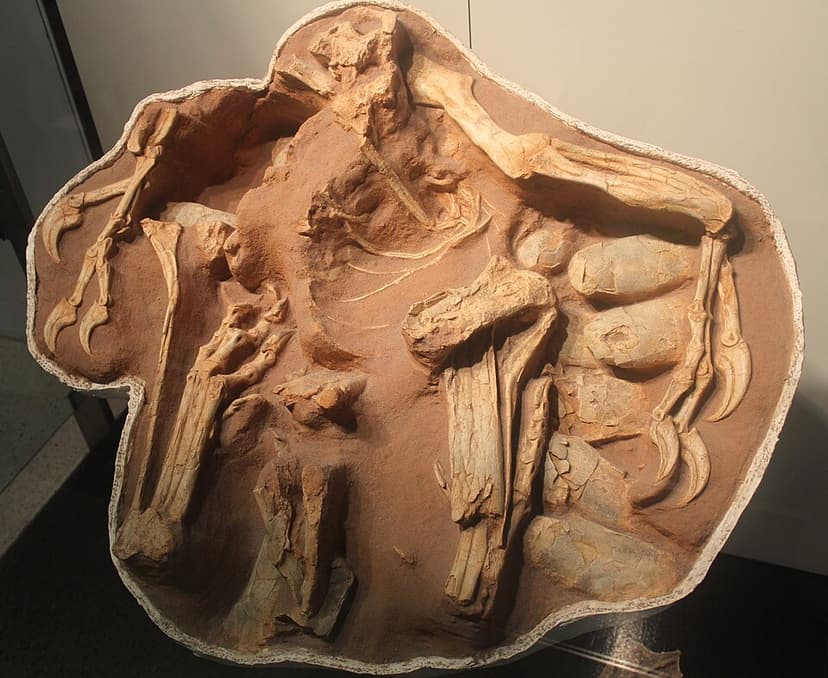
Citipati
Citipati is a genus of large oviraptorid dinosaur that lived in Asia during the Late Cretaceous period. Known for its distinctive crest and toothless beak, Citipati is famous for specimens found in brooding positions on nests, providing crucial evidence for the link between non-avian dinosaurs and birds. Its diet may have been omnivorous, with evidence suggesting it possibly preyed on smaller animals to feed its young.