
Citipati
Omnivore·Late Cretaceous·Gobi Desert, Asia·Bipedal
Citipati is a genus of large oviraptorid dinosaur that lived in Asia during the Late Cretaceous period. Known for its distinctive crest and toothless beak, Citipati is famous for specimens found in brooding positions on nests, providing crucial evidence for the link between non-avian dinosaurs and birds. Its diet may have been omnivorous, with evidence suggesting it possibly preyed on smaller animals to feed its young.
Key Facts
- ›Lived in Asia during the Late Cretaceous period, approximately 75 to 71 million years ago.
- ›Estimated to be 2.5–2.9 meters (8.2–9.5 ft) in length and weigh 75–110 kg (165–243 lb).
- ›Possessed a short, highly pneumatized skull with a characteristic crest formed by the premaxilla and nasal bones.
- ›Had a toothless beak and a tail ending in a pygostyle, which supported large tail feathers.
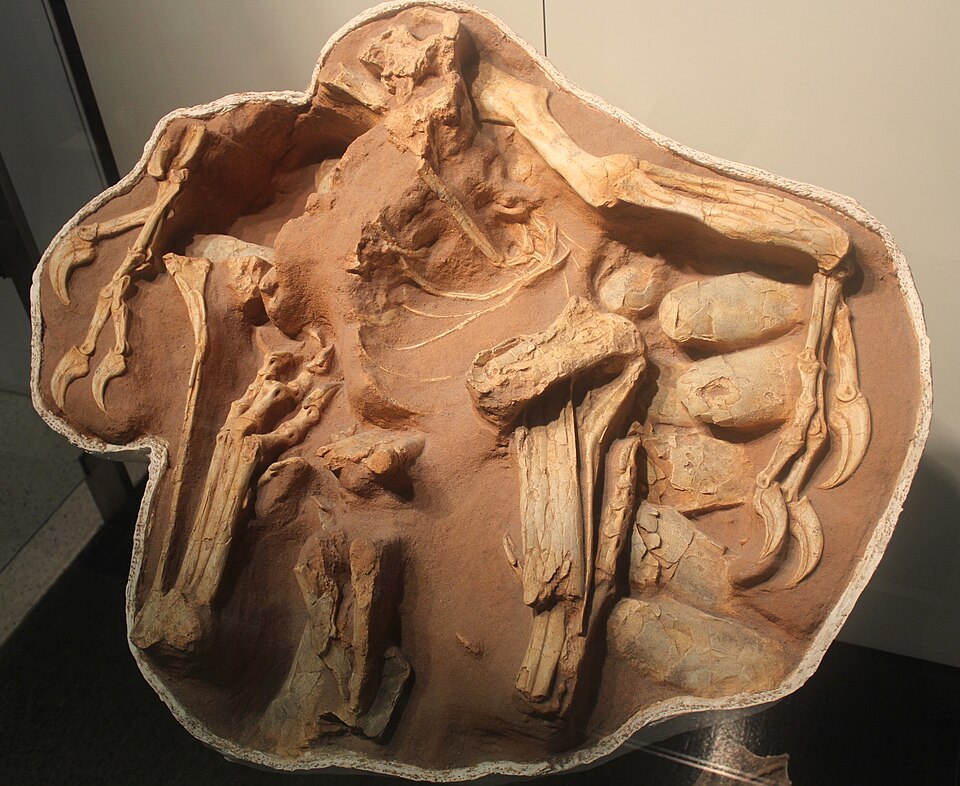
- ›Specimens have been found in brooding positions on nests, indicating parental care and a link to avian behavior.
- ›May have been omnivorous, with evidence suggesting it preyed on young troodontids.
- Estimated length: 2.5–2.9 m
- Estimated weight: 75–110 kg
- Short, highly pneumatized skull
- Characteristic crest formed by premaxilla and nasal bones
- Toothless beak
- Tail ending in a pygostyle supporting large feathers
Oviraptor, Khaan, Conchoraptor
Asia
About Citipati
Citipati: A Feathered Dinosaur of the Late Cretaceous
Citipati is a genus of oviraptorid dinosaur that roamed Asia during the Late Cretaceous period, approximately 75 to 71 million years ago. It is recognized for its distinctive physical traits, including a short, crested skull, a toothless beak, and a tail that ended in a pygostyle, which supported large feathers. Citipati was among the larger oviraptorids, with estimated lengths of 2.5 to 2.9 meters and weights between 75 and 110 kilograms.
Discovery and Significance
The most significant discoveries of Citipati have come from the Ukhaa Tolgod locality in the Djadochta Formation of the Gobi Desert. A key aspect of Citipati's scientific importance lies in the discovery of numerous specimens found in brooding positions atop their nests. These fossils, often showcasing the dinosaur with forelimbs covering the eggs, provide compelling evidence for parental care and highlight the behavioral links between non-avian dinosaurs and modern birds. The genus and type species, Citipati osmolskae, were formally named and described in 2001.
Diet and Reproduction
Evidence suggests Citipati was an omnivore. While capable of processing tough vegetation with a strong bite force, findings in nests have also indicated potential predation. The discovery of young troodontid skulls within a Citipati nest has led to hypotheses that adult Citipati may have brought prey to their hatchlings. Citipati laid elongatoolithid eggs, typically arranged in concentric circles within a circular mound-shaped nest. The brooding posture of Citipati specimens, with their arms extended over the nest, is a behavior observed today only in birds, further solidifying its evolutionary connection to avian species.
Source: Wikipedia ↗
Frequently Asked Questions
What does the name Citipati mean?
The name Citipati is derived from Sanskrit words 'citi' (funeral pyre) and 'pati' (lord). This refers to the lord of cemeteries in Tibetan Buddhist folklore, who is often depicted as a skeletal figure.
Where were Citipati fossils found?
Citipati fossils are primarily known from the Ukhaa Tolgod locality in the Djadochta Formation of the Gobi Desert, located in Asia. Remains were first collected in the 1990s.
What did Citipati look like?
Citipati was characterized by a short, crested skull with a horny, toothless beak. It had an unusually long neck and a tail ending in a pygostyle, suggesting the presence of large tail feathers. Its body was covered in feathers, including its arms, which likely aided in brooding.
What was Citipati's diet?
Citipati is believed to have been an omnivore. Evidence includes its powerful bite force suitable for tough vegetation and the discovery of young troodontids within a Citipati nest, suggesting it may have preyed on them to feed its own hatchlings.
What is the significance of Citipati's nesting behavior?
Several Citipati specimens have been discovered in a brooding posture atop their nests. This behavior, along with the presence of large feathers on their forelimbs, provides strong evidence for the close evolutionary relationship and behavioral similarities between non-avian dinosaurs and modern birds.
How large was Citipati?
Citipati was one of the larger oviraptorids, estimated to be around 2.5 to 2.9 meters (8.2 to 9.5 feet) in length. Its weight is estimated to have been between 75 to 110 kilograms (165 to 243 pounds).
What is the relationship between Citipati and Oviraptor?
Citipati is closely related to Oviraptor and belongs to the same family, Oviraptoridae. Initially, some specimens now identified as Citipati were referred to Oviraptor before the genus Citipati was formally described.
Related Dinosaur species

Archaeornithomimus
Archaeornithomimus was a medium-sized ornithomimosaurian theropod dinosaur that lived in what is now Inner Mongolia, China, during the Late Cretaceous period, approximately 96 million years ago. Named "ancient bird mimic," this dinosaur is thought to have been an omnivore, potentially feeding on plants, fruits, eggs, and small animals, and it likely possessed feathers and a keratinous beak.

Caenagnathasia
Caenagnathasia is a genus of small oviraptorosaurian theropod dinosaurs that lived in present-day Uzbekistan during the Late Cretaceous period. It is notable for being one of the smallest non-avian dinosaurs known, characterized by its beaked skull and bird-like features.

Citipes
Citipes is an extinct genus of small-bodied caenagnathid theropod dinosaur that lived during the Late Cretaceous period in what is now Alberta, Canada. Its scientific name, meaning "fleet-footed" and "elegant," reflects its slender build and presumed agility. The genus has a complex taxonomic history, having been previously assigned to several other genera before being recognized as distinct in 2020.