
Carcharodontosaurus
Carnivore·Cretaceous·Northwest Africa (Algeria, Egypt, Morocco, Niger)·Bipedal
Carcharodontosaurus is a genus of large theropod dinosaurs that roamed Northwest Africa during the Late Cretaceous period, approximately 100 to 94 million years ago. Characterized by its massive size and distinctive "shark-toothed" dentition, it was one of the largest terrestrial carnivores of its time. While its exact appearance is not fully known due to incomplete fossil remains, it is understood to have possessed a large, lightly built skull and powerful limbs.
Key Facts
- ›Lived in Northwest Africa during the Cenomanian age of the Cretaceous period (100 to 94 million years ago).
- ›The name Carcharodontosaurus means "shark-toothed lizard."
- ›Estimated to be one of the largest theropod dinosaurs, reaching lengths of around 12 meters (39 ft).
- ›Possessed sharp, recurved, and serrated teeth resembling those of a great white shark.
- ›Had a large, lightly built skull with a triangular snout, but it was more fragile than that of tyrannosaurids.
- ›Its bite force was relatively low compared to other large theropods.

- Large theropod dinosaur
- Estimated length of up to 12 meters
- Estimated weight of 5-7 metric tons
- Large, lightly built skull with a triangular snout
- Sharp, recurved, serrated teeth
- Relatively fragile skull compared to tyrannosaurids
- Likely had small forelimbs, powerful hind limbs, and a long tail
Megalosaurus Saharicus, Tameryraptor, Carcharodontosaurus Iguidensis, Sauroniops Pachytholus, Mapusaurus, Giganotosaurus
Africa
About Carcharodontosaurus
Carcharodontosaurus is a genus of large theropod dinosaur that lived in Northwest Africa during the Cenomanian age of the Cretaceous period, approximately 100 to 94 million years ago. The name "Carcharodontosaurus" translates to "shark-toothed lizard," a moniker inspired by the sharp, serrated, and recurved nature of its teeth, which bore a striking resemblance to those of the modern great white shark.
Discovery and Naming
The first fossils attributed to Carcharodontosaurus were two teeth discovered in Algeria in 1924, described by Charles Depéret and Justin Savornin in 1925 as Megalosaurus saharicus. These initial specimens are now lost. A more substantial partial skeleton was found in Egypt in 1914 by Ernst Stromer, who established the genus Carcharodontosaurus in 1931, using C. saharicus as the type species. Unfortunately, this Egyptian skeleton was destroyed during World War II. A significant incomplete skull found in the Kem Kem Beds of Morocco in 1995 later served as the neotype for C. saharicus, solidifying its taxonomic status.
Physical Characteristics and Size
Carcharodontosaurus was among the largest theropod dinosaurs. The species C. saharicus is estimated to have reached lengths of around 12 meters (39 feet) and weighed approximately 5 to 7 metric tons (5.5 to 7.7 short tons). Its skull, while large, was lightly built with a triangular snout, featuring greatly expanded fossae and fenestrae that made it more fragile than that of tyrannosaurids. Studies suggest it had a relatively low bite force compared to other large theropods. Based on limited fossil evidence, it is believed to have possessed small forelimbs, powerful hind limbs, and a long tail for balance.
Paleobiological Context
During the time of Carcharodontosaurus, North Africa was a diverse ecosystem characterized by mangrove forests and wetlands, supporting a rich variety of fish, crocodyliforms, and pterosaurs. This environment likely provided ample prey for large predators like Carcharodontosaurus, which coexisted with other giant theropods such as Spinosaurus and Deltadromeus. The discovery of Carcharodontosaurus has contributed significantly to our understanding of the diversity and evolution of large predatory dinosaurs in the Southern Hemisphere during the Cretaceous period.
Source: Wikipedia ↗
Frequently Asked Questions
What does the name Carcharodontosaurus mean?
The name Carcharodontosaurus is derived from Ancient Greek words: "karcharos" meaning "sharp, jagged," "odous" meaning "tooth," and "sauros" meaning "lizard." Thus, it translates to "shark-toothed lizard."
When and where did Carcharodontosaurus live?
Carcharodontosaurus lived in Northwest Africa during the Cenomanian age of the Cretaceous period, approximately 100 to 94 million years ago. This region was characterized by mangrove forests and wetlands.
How large was Carcharodontosaurus?
Carcharodontosaurus saharicus is estimated to have reached around 12 meters (39 ft) in length and weighed approximately 5 to 7 metric tons (5.5 to 7.7 short tons), making it one of the largest known theropod dinosaurs.
What were the teeth of Carcharodontosaurus like?
Its jaws were lined with sharp, recurved, and serrated teeth that bore a striking resemblance to those of the great white shark, which inspired the genus's name.
How did Carcharodontosaurus's skull compare to Tyrannosaurus Rex?
While Carcharodontosaurus had a large skull, comparable in size to the largest Tyrannosaurus rex skulls, it was more lightly built and fragile due to expanded fossae and fenestrae. Its bite force was also estimated to be relatively low compared to tyrannosaurids.
What is known about Carcharodontosaurus's physical characteristics?
Based on incomplete fossil evidence, Carcharodontosaurus is thought to have had small forelimbs, powerful hind limbs, and a long tail for balance, in addition to its distinctive skull and teeth.
Related Dinosaur species
Acrocanthosaurus
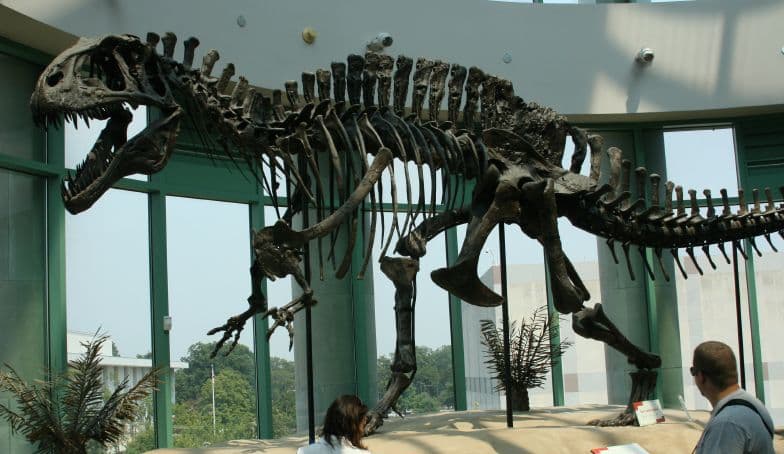
Acrocanthosaurus is a genus of large theropod dinosaurs that roamed North America during the Early and Late Cretaceous periods. Known for its distinctive high neural spines along its back, it was one of the largest predators in its ecosystem, likely preying on large herbivores.

Afromimus
Afromimus tenerensis is a genus of theropod dinosaur from the Early Cretaceous period, discovered in Niger. Initially classified as an ornithomimosaur, later analyses suggest it belongs to the Abelisauroidea superfamily, possibly within the Noasauridae family. Its fossils indicate an adult size of approximately 4.14 meters in length.
Alashansaurus
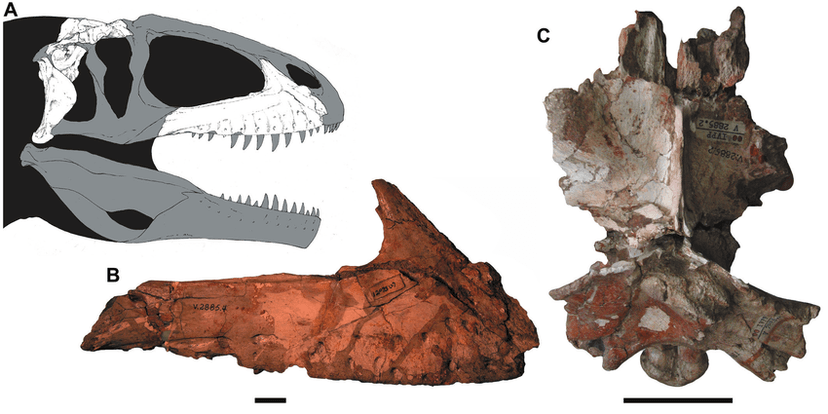
Shaočilong (meaning "shark toothed dragon") was an extinct genus of theropod dinosaur that lived during the Early Cretaceous period in what is now China. Initially classified as a carcharodontosaurid, its exact phylogenetic placement has been subject to debate, with some studies suggesting it may be a tyrannosauroid or a member of the polytomic allosauroid group. Shaochilong was a relatively small carnosaur, estimated to be around 5 to 6 meters in length and weighing approximately 500 kilograms.