
Caudipteryx
Caudipteryx was a genus of small, feathered oviraptorosaurian dinosaurs that inhabited China during the Early Cretaceous period. Known for its bird-like appearance, it featured a stout trunk, long legs, and a beak-like snout, with some paleontologists even suggesting it was a bird. Its discovery provided significant evidence for the evolutionary link between birds and dinosaurs.
Key Facts
- ›Caudipteryx means 'tail feather' and refers to the prominent feather fans found on its tail.
- ›Fossils of Caudipteryx have been found exclusively in the Yixian Formation of Liaoning, China.
- ›It possessed symmetrical, pennaceous feathers on its hands and tail, indicating it was secondarily flightless.
- ›Gastroliths found in its gizzard suggest an omnivorous diet.
- ›Caudipteryx had a short, stiffened tail and a beak-like snout with only a few teeth.
- ›Its discovery significantly contributed to the debate and evidence supporting the evolution of birds from dinosaurs.

- Small theropod dinosaur
- Stout trunk
- Long legs
- Short, boxy skull with a beak-like snout
- Retained a few tapered teeth in the front of the upper jaw
- Short tail stiffened toward the tip
- Possessed symmetrical, pennaceous feathers on hands and tail
- Body covered in feathers, with banding patterns observed on tail feathers
Protarchaeopteryx, Incisivosaurus, Heyuannia
Asia
About Caudipteryx
Caudipteryx: A Feathered Enigma of the Early Cretaceous
Caudipteryx, a genus of small oviraptorosaurian dinosaurs, roamed the Earth during the Early Cretaceous period, approximately 124.6 million years ago. Its fossils have been exclusively unearthed from the Yixian Formation in Liaoning, China. The name Caudipteryx, meaning "tail feather," aptly describes one of its most striking features: prominent feather fans on its tail and hands, which were symmetrical and pennaceous, similar to those of modern birds.
Physical Characteristics and Lifestyle
These dinosaurs were characterized by their bird-like appearance, possessing a stout trunk, long legs, and an estimated length of around 0.8 meters, with a weight of approximately 5 kilograms. Their skulls were short and boxy, featuring a beak-like snout that retained only a few teeth at the front of the upper jaw. The tail was notably short and stiffened towards the tip. Evidence from gastroliths found within fossilized digestive tracts indicates that Caudipteryx was an omnivore, likely using these stones to aid in digestion.
The Bird-Dinosaur Connection
Caudipteryx's discovery has been pivotal in the ongoing scientific discussion about the evolutionary relationship between birds and dinosaurs. Its unambiguous pennaceous feathers, found on a clearly non-avian theropod dinosaur, provided compelling evidence for the theropod origin of birds. While some paleontologists have suggested Caudipteryx itself was a bird that had become secondarily flightless, the prevailing scientific consensus classifies it as a basal oviraptorosaurian, a group of theropod dinosaurs.
Naming and Species
The genus Caudipteryx was first described in 1998 with the type species Caudipteryx zoui, honoring Zou Jiahua for his support of the scientific community. A second species, Caudipteryx dongi, was described in 2000, named after the renowned Chinese paleontologist Zhiming Dong. Both species are known from well-preserved specimens that showcase exquisite feather impressions, further cementing Caudipteryx's importance in understanding dinosaur paleobiology and the evolution of flightless birds.
Source: Wikipedia ↗
Frequently Asked Questions
What does the name Caudipteryx mean?
The name Caudipteryx means 'tail feather'. This name was chosen due to the prominent feather fans found on the tail of this dinosaur.
Where were Caudipteryx fossils found?
All known fossils of Caudipteryx have been recovered from the Yixian Formation in Liaoning, China. They are particularly concentrated in the Jianshangou bed near Zhangjiakou.
What did Caudipteryx eat?
Evidence from gastroliths found in its gizzard suggests that Caudipteryx was an omnivore. These stones likely aided in grinding food.
Did Caudipteryx have feathers?
Yes, Caudipteryx possessed clear and unambiguously pennaceous feathers. These were found on its hands, arranged in wing-like fans, and also on its tail.
What is the significance of Caudipteryx in the study of bird evolution?
The discovery of Caudipteryx, with its unambiguous feathers and classification as a non-avian theropod, provided strong evidence that birds evolved from dinosaurs. This finding was crucial in solidifying the theropod origin of birds.
How large was Caudipteryx?
Caudipteryx was a small dinosaur, measuring approximately 72.5 to 89 centimeters (about 2.5 to 3 feet) in length and weighing around 5 kilograms (about 11 pounds).
Related Dinosaur species

Archaeornithomimus
Archaeornithomimus was a medium-sized ornithomimosaurian theropod dinosaur that lived in what is now Inner Mongolia, China, during the Late Cretaceous period, approximately 96 million years ago. Named "ancient bird mimic," this dinosaur is thought to have been an omnivore, potentially feeding on plants, fruits, eggs, and small animals, and it likely possessed feathers and a keratinous beak.

Caenagnathasia
Caenagnathasia is a genus of small oviraptorosaurian theropod dinosaurs that lived in present-day Uzbekistan during the Late Cretaceous period. It is notable for being one of the smallest non-avian dinosaurs known, characterized by its beaked skull and bird-like features.
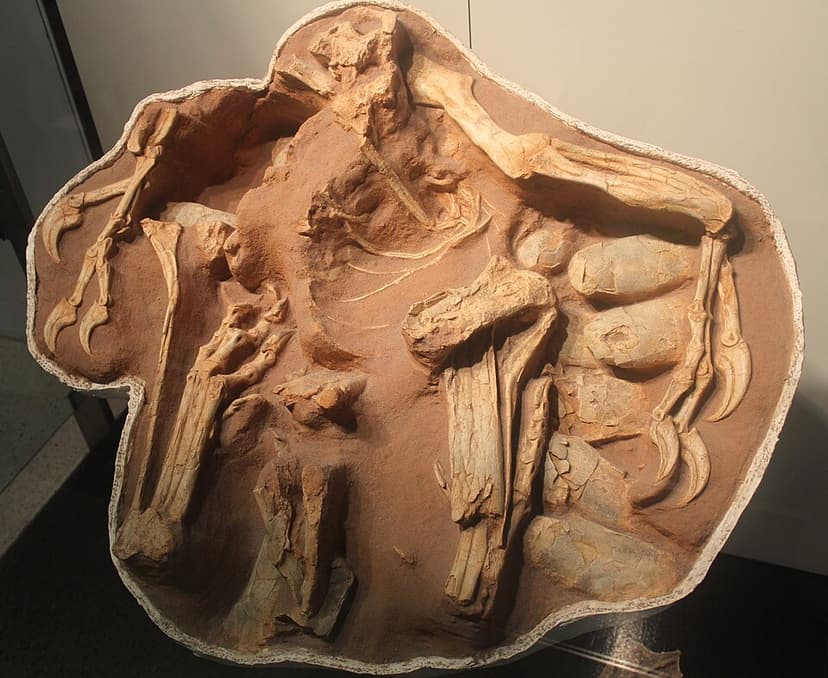
Citipati
Citipati is a genus of large oviraptorid dinosaur that lived in Asia during the Late Cretaceous period. Known for its distinctive crest and toothless beak, Citipati is famous for specimens found in brooding positions on nests, providing crucial evidence for the link between non-avian dinosaurs and birds. Its diet may have been omnivorous, with evidence suggesting it possibly preyed on smaller animals to feed its young.