
Ceratosuchops
Carnivore·Early Cretaceous·Isle of Wight, Britain·Unknown
Ceratosuchops is a genus of spinosaurid dinosaur that lived during the Early Cretaceous period in what is now Britain. Distinguished by bony bosses on its postorbital bones, likely used for signaling or combat, its exact size is unknown but may have been similar to Baryonyx. Analysis of its braincase suggests adaptations for hunting aquatic prey without significant changes to its neuroanatomy.
Key Facts
- ›Ceratosuchops means "horned crocodile face", referring to its postorbital bosses.
- ›Fossils were discovered in the Wessex Formation of the Isle of Wight, Britain.
- ›It lived during the Early Cretaceous period, specifically the Barremian stage.
- ›The genus name was given in 2021 by Chris Tijani Barker and colleagues.
- ›Its diet likely included fish, small turtles, young crocodiles, baby dinosaurs, and mammals.
- ›Its brain anatomy was similar to other basal theropods, suggesting no major cognitive shift for aquatic hunting.
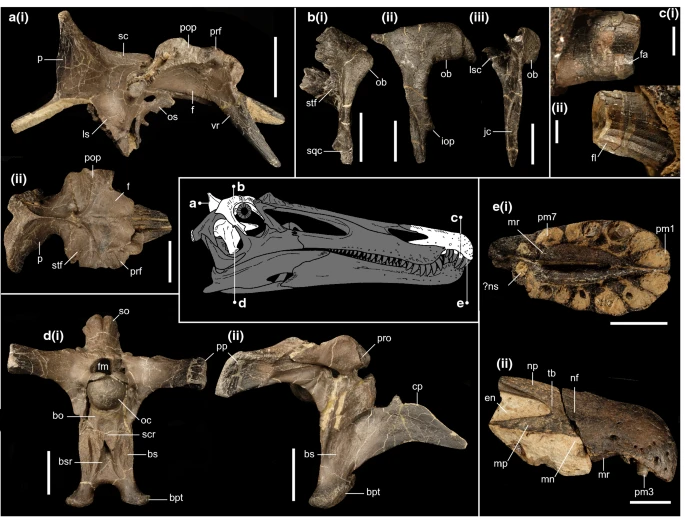
- Possesses a bony boss on each postorbital bone.
- Skull fragments include a snout tip and partial braincase.
- Premaxillae have short subnarial processes.
- Narial fossae are present, resembling cf. Suchomimus.
- Subcondylar recess of the basioccipital is narrow and lacks lateral crests.
Riparovenator Milnerae, Suchomimus, Baryonyx
Britain
About Ceratosuchops
Ceratosuchops is a genus of spinosaurid dinosaur that roamed the Earth during the Early Cretaceous period, specifically the Barremian stage. Its name, meaning "horned crocodile face," directly references a distinctive feature: prominent bony bosses that extended from each postorbital bone. These cranial ornaments likely served a purpose in social signaling or possibly in aggressive interactions within the species.
The fossil remains of Ceratosuchops were discovered in the Wessex Formation of the Isle of Wight, Britain. These fossils, consisting primarily of skull fragments such as a snout tip and a partial braincase, were recovered between 2013 and 2017. The genus was formally described and named in 2021 by a team of paleontologists including Chris Tijani Barker, Darren Naish, and David W. E. Hone.
Due to the fragmentary nature of its remains, the exact size and weight of Ceratosuchops are difficult to ascertain. However, researchers estimate that it may have been similar in size to Baryonyx, another well-known spinosaurid. Analysis of Ceratosuchops' braincase suggests that its neuroanatomy was comparable to other basal theropods, indicating that its transition to a semi-aquatic lifestyle and predation on aquatic prey did not necessitate significant changes in its brain or sensory systems. This implies that spinosaurids were either pre-adapted for aquatic hunting or that their adaptation required only minor modifications to their oral structures.
Ceratosuchops is classified within the Baryonychinae subfamily and forms part of the tribe Ceratosuchopsini, alongside Riparovenator and Suchomimus. The presence of multiple ecologically similar spinosaurids, including Baryonyx, in the same environment has led to speculation about niche partitioning. While some researchers have tentatively suggested that Ceratosuchops and Riparovenator might represent the same taxon due to individual variation, the distinct anatomical features have led to their separate classification. The paleoenvironment of Ceratosuchops was characterized by floodplains with rivers and lakes, experiencing significant storm events and wildfires, supporting a diverse ecosystem.
Source: Wikipedia ↗
Frequently Asked Questions
What does the name Ceratosuchops mean?
The name Ceratosuchops is derived from Greek and Latin, meaning "horned crocodile face." This name refers to the prominent bony bosses present on the postorbital bones of the skull, a distinctive feature of this dinosaur.
Where were the fossils of Ceratosuchops found?
Fossils of Ceratosuchops were discovered in the Wessex Formation on the Isle of Wight, Britain. Specifically, skull fragments were recovered from Chilton Chine. These remains are housed at the Dinosaur Isle Museum in Sandown.
When did Ceratosuchops live?
Ceratosuchops lived during the Early Cretaceous period. The geological stage is specified as Barremian, placing it in a specific timeframe within the Early Cretaceous.
What did Ceratosuchops eat?
Like other spinosaurs, Ceratosuchops was likely a predator that fed on a variety of prey. Its diet probably included fish, small turtles, young crocodiles, baby dinosaurs, and mammals found in its environment.
What are the distinctive physical features of Ceratosuchops?
The most notable physical characteristic of Ceratosuchops is the presence of a bony boss, or lump, on each postorbital bone. These structures may have been used for visual signaling within the species or for combat behaviors.
How large was Ceratosuchops?
The exact size of Ceratosuchops cannot be reliably determined due to the fragmentary nature of its fossil remains, which are limited to skull material. However, its body mass is estimated to have been similar to that of Baryonyx.
Related Dinosaur species
Bannykus
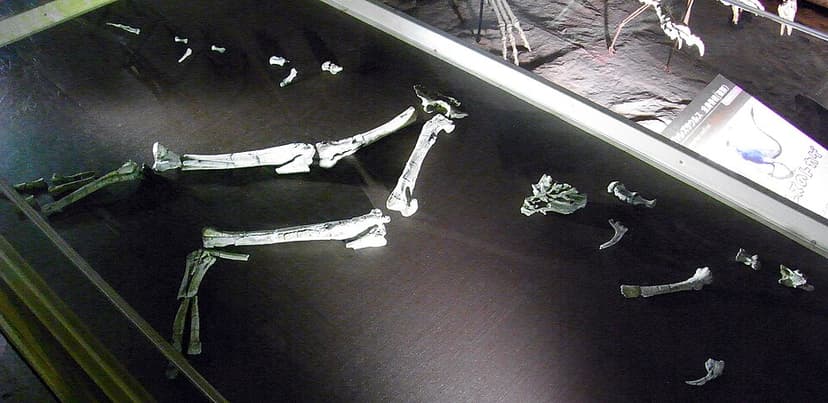
Bannykus is an extinct genus of alvarezsauroid dinosaur that lived during the Early Cretaceous period. Discovered in Inner Mongolia, China, this theropod is notable for its transitional forelimb morphology, which showed significant reduction but was less specialized than later alvarezsauroids. Evidence suggests Bannykus was a carnivore, likely using its forelimbs for digging.
Altispinax
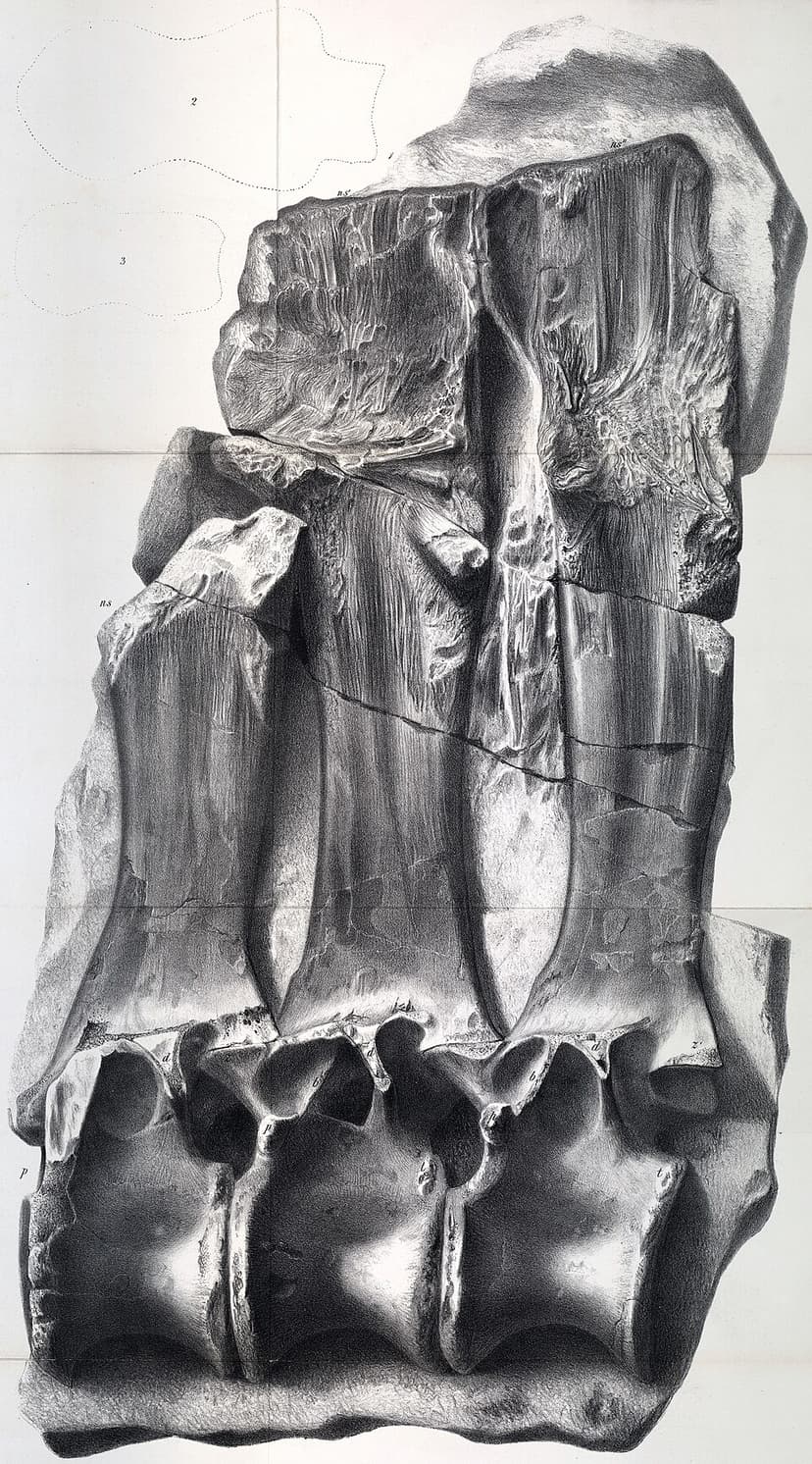
Altispinax was a large predatory theropod dinosaur that lived during the Early Cretaceous period in what is now England. It is known from a series of distinctive vertebrae featuring unusually tall spines, which gave the dinosaur its name. The classification and naming history of Altispinax have been complex, with several genera and species proposed over time.

Aratasaurus
Aratasaurus museunacionali is an extinct genus of basal coelurosaurian theropod dinosaur discovered in Brazil. Known from a partial right leg, it is the only tetrapod fossil found in the lower levels of the Romualdo Formation, dating to the Early Cretaceous period. The dinosaur's name commemorates its discovery during the preparation of fossils for the National Museum of Brazil, which was later damaged by a fire.