
Changmiania
Changmiania is a genus of basal ornithopod dinosaur discovered in China, living during the Early Cretaceous period. Known from two near-complete articulated skeletons, it is distinguished by unique anatomical features and a short neck. Its fossils suggest it may have been a burrowing animal, potentially buried alive during a volcanic eruption.
Key Facts
- ›Lived in China during the Early Cretaceous, approximately 123.2 million years ago.
- ›Named "eternal sleep" due to the life-like position of its fossilized remains.
- ›Possesses a very short neck with only six vertebrae, unusual for ornithischians.
- ›Anatomical features suggest adaptations for burrowing, such as enlarged shoulder bones.
- ›Represented by two near-complete articulated skeletons, indicating good fossil preservation.
- ›Considered the basalmost ornithopod in phylogenetic analyses.

- Preserved length of 117 cm for the holotype specimen.
- Elongated frontal bones, over four times longer than wide.
- Short neck with only six vertebrae.
- Enlarged shoulder bones, possibly for digging.
- Sinuous profile for the lower jaw.
- Fused sacral vertebrae forming a continuous plate.
China
About Changmiania
Changmiania is a genus of basal ornithopod dinosaur that inhabited what is now China during the Early Cretaceous period. The genus is known from a single species, Changmiania liaoningensis, represented by two remarkably complete and articulated skeletons. These fossils were discovered in the Lujiatun Beds of the Yixian Formation and date back to the Barremian age, approximately 123.2 million years ago. The genus name, derived from the Chinese "changmian" meaning "eternal sleep," reflects the life-like posture of the fossilized individuals, which suggests they may have been buried alive, possibly in their own burrows due to a volcanic eruption.
Discovery and Naming
The holotype specimen, PMOL AD00114, and a referred specimen, PMOL LFV022, were found by local farmers and later prepared at the Paleontological Museum of Liaoning. The fossils showed no signs of tampering by fossil thieves. In 2020, Yang Yuqing and colleagues formally named and described Changmiania liaoningensis. The specific name honors the discovery location in Liaoning Province.
Description and Paleobiology
Changmiania possessed several distinguishing anatomical traits, including autapomorphies such as elongated frontal bones, a straight and elongated front branch of the squamosal bone, and a distinctive boss on the upper rear corner of the squamosal. Its lower jaw had a sinuous profile, and the neural spines of its sacral vertebrae were fused into a continuous plate. A notable characteristic was its very short neck, featuring only six vertebrae, unlike the usual nine found in other ornithischians. Anatomical features like its short neck, short forelimbs and hands, and enlarged shoulder bones are interpreted as adaptations for burrowing, a behavior inferred from the fossil preservation and comparison with other small ornithischians like Oryctodromeus.
Source: Wikipedia ↗
Frequently Asked Questions
What does the name Changmiania mean?
The name Changmiania comes from the Chinese words "changmian," meaning "eternal sleep." This name was chosen because the fossils were found in a life-like posture, suggesting they may have been buried alive.
When and where did Changmiania live?
Changmiania lived in what is now China during the Early Cretaceous period. The fossils date to approximately 123.2 million years ago.
What are some unique physical characteristics of Changmiania?
Changmiania had a notably short neck, possessing only six vertebrae compared to the usual nine in other ornithischians. It also had elongated frontal bones and enlarged shoulder bones, which may have been adaptations for digging.
What does the fossil record suggest about Changmiania's behavior?
The perfect life-like positions of the discovered skeletons suggest that Changmiania may have been buried alive, possibly in their own burrows during a volcanic eruption. Anatomical features also point to burrowing behavior.
How complete is the fossil record for Changmiania?
The fossil record for Changmiania is considered to be very good, with two near-complete articulated skeletons discovered. These specimens were found in the Lujiatun Beds of the Yixian Formation.
Related Dinosaur species
Anomalipes
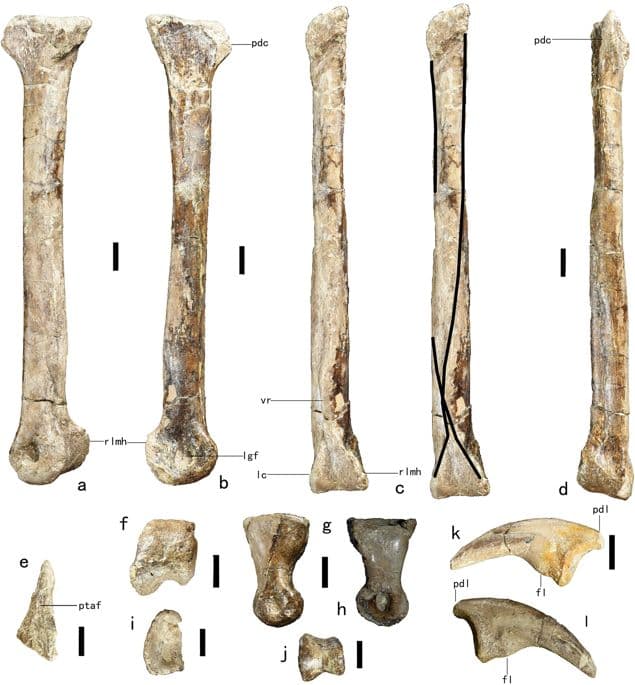
Anomalipes is an extinct genus of oviraptorosaurian dinosaurs from the Late Cretaceous period of China. Known from a partial hindlimb, its name, meaning "unusual foot," reflects the peculiar shape of its foot bones. The only known species, Anomalipes zhaoi, was named in honor of Zhao Xijin.
Aurornis
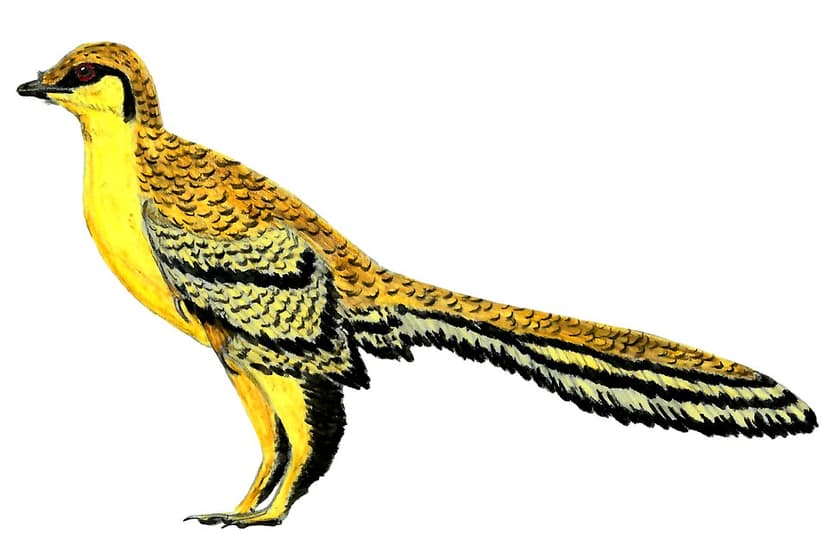
Aurornis is an extinct genus of theropod dinosaur from the Jurassic Period of China, notable for its potential classification as a very early avialan or bird. With an estimated length of 50 cm and resembling a pheasant, it possessed clawed wings and a long bony tail, with fossil evidence suggesting it lived approximately 160 million years ago, predating Archaeopteryx.

Archaeoraptor
Archaeoraptor is the informal name given to a fossil specimen from China that was presented as a transitional fossil between birds and dinosaurs. Scientific investigation revealed it to be a chimera, a fraudulent composite made from pieces of different, genuine fossils. This discovery led to significant controversy and highlighted issues within the illegal fossil trade.