
Changyuraptor
Carnivore·Cretaceous·Liaoning Province, China·Volant (likely gliding)
Changyuraptor is a genus of "four-winged," predatory dromaeosaurid theropod dinosaurs. The single known fossil specimen, Changyuraptor yangi, was discovered in Early Cretaceous deposits in Liaoning Province, China. At the time of its discovery, it was the largest four-winged dinosaur known and among the largest Mesozoic flying paravians.
Key Facts
- ›Changyuraptor yangi was approximately 1.2 meters (3.9 feet) long and weighed an estimated 4 kilograms (8.8 lb).
- ›It possessed feathers on all four limbs, creating the appearance of two pairs of wings.
- ›The dinosaur had a long, feathered tail with end feathers up to 29.27 cm (11.52 in) long.
- ›These elongated tail feathers may have aided in softer landings and controlled pitch during flight.
- ›Changyuraptor belonged to the Microraptoria group of dromaeosaurid theropod dinosaurs.
- ›Its discovery contradicted the hypothesis that miniaturization was essential for flight in early bird-like dinosaurs.
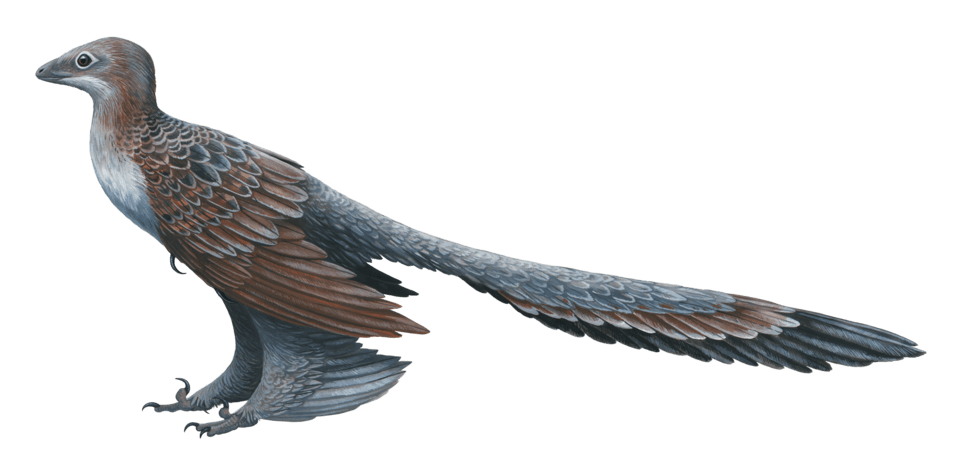
- Approximately 1.2 meters long.
- Estimated weight of 4 kilograms.
- Feathers on forelimbs and hindlimbs, giving the appearance of four wings.
- Long, feathered tail with end feathers up to 29.27 cm long.
Microraptor, Anchiornis, Xiaotingia
China
About Changyuraptor
Changyuraptor is a genus of "four-winged," predatory dinosaurs that lived during the Early Cretaceous period. The only known species, Changyuraptor yangi, is distinguished by its extensive feathering on all four limbs, giving it the appearance of having two pairs of wings. This remarkable feature, along with its size, made it a significant discovery in understanding the evolution of flight in dinosaurs.
Description and Physical Characteristics
The single fossil specimen of Changyuraptor yangi represents a fully grown adult, measuring approximately 1.2 meters (3.9 feet) in length and weighing an estimated 4 kilograms (8.8 lb), comparable in size to a modern turkey. It was the largest four-winged dinosaur known at the time of its description, exceeding previously discovered specimens by a considerable margin. Like other microraptorines, Changyuraptor possessed feathers all over its body, including long, pennaceous feathers on its forelimbs and hindlimbs. Its tail was also long and feathered, with end feathers measuring up to 29.27 centimeters (11.52 inches), accounting for about 30% of the animal's skeletal length. These elongated tail feathers are thought to have played a role in providing stability and control during flight or gliding, potentially assisting in softer and safer landings.
Discovery and Significance
The holotype fossil of Changyuraptor yangi was unearthed by farmers near Xijianchang, within the Early Cretaceous fossil deposits of the Yixian Formation in Liaoning Province, China. This region is renowned for its rich fossil beds of feathered dinosaurs, part of the Jehol Biota. The specimen was studied by an international team of scientists and formally described in 2014. The discovery of Changyuraptor was particularly important as its larger size and weight challenged the prevailing hypothesis that miniaturization was a prerequisite for the evolution of flight in early bird-like dinosaurs. It provided further evidence that dinosaurs had developed numerous features and behaviors, such as feathers and possibly flight, before they appeared in birds.
Habitat and Diet
Changyuraptor yangi is believed to have inhabited moist temperate forests characterized by ginkgos and conifers. Its ecosystem, the Jehol Biota, also supported a diverse range of other dinosaurs. As a predatory dinosaur, Changyuraptor's diet likely consisted of small animals within its environment.
Source: Wikipedia ↗
Frequently Asked Questions
What is Changyuraptor?
Changyuraptor is a genus of "four-winged," predatory dinosaurs belonging to the dromaeosaurid theropod family. It is known for its extensive feathering on all four limbs.
How large was Changyuraptor?
The single known specimen, Changyuraptor yangi, was an adult measuring about 1.2 meters (3.9 feet) in length and estimated to weigh 4 kilograms (8.8 lb). This made it the largest four-winged dinosaur discovered at the time.
What kind of feathers did Changyuraptor have?
Changyuraptor had feathers covering its entire body, including its forelimbs and hindlimbs. It also possessed exceptionally long tail feathers, which may have aided in controlling its flight and ensuring softer landings.
Where was Changyuraptor discovered?
The fossil of Changyuraptor yangi was discovered in Early Cretaceous deposits, specifically the Yixian Formation of the Jehol Biota, in Liaoning Province, China.
What does the name Changyuraptor mean?
The generic name "Changyuraptor" combines the Chinese words for "long feather" (cháng yǔ) with the Latin word "raptor," meaning "robber" or "seizer." The specific name, "yangi," honors Professor Yang Yandong.
What was Changyuraptor's diet?
Changyuraptor is described as a predatory dinosaur, indicating a carnivorous diet. It hunted other small animals within its ecosystem.
Related Dinosaur species

Ambopteryx
Ambopteryx was a genus of scansoriopterygid dinosaur that lived in China during the Late Jurassic period. It is notable for being one of the few dinosaurs discovered with both feather coverings and bat-like membranous wings, a feature it shared with its close relative, Yi. Ambopteryx possessed a short head, a hyper-elongate third finger likely used for wing support, and a short tail ending in a pygostyle.

Beipiaosaurus
Beipiaosaurus is a genus of therizinosauroid theropod dinosaur that lived in China during the Early Cretaceous period. Known for its distinctive primitive plumage, Beipiaosaurus was a relatively small dinosaur, measuring about 2.2 meters in length and weighing approximately 27 kilograms. Its classification as a theropod, despite herbivorous-like features, helped solidify the placement of therizinosaurs within the Theropoda.
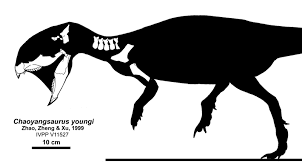
Chaoyangsaurus
Chaoyangsaurus was a genus of marginocephalian dinosaur belonging to the Ceratopsia, meaning "horned faces." This herbivorous dinosaur lived during the Late Jurassic period in what is now northeastern China. Despite a complex naming history, it was officially described in 1999, with its scientific name honoring both its discovery location and a pioneering Chinese paleontologist.