
Compsognathus
Compsognathus was a small, bipedal, carnivorous theropod dinosaur that lived approximately 150 million years ago during the late Jurassic period. Known for its chicken-like size, it is famous for being one of the first non-avialan dinosaurs discovered with a nearly complete skeleton. Its diet consisted of small vertebrates, evidenced by the remains of lizards found within its fossilized stomach.
Key Facts
- ›Compsognathus lived about 150 million years ago in the late Jurassic period.
- ›It was a small, bipedal, carnivorous theropod dinosaur.
- ›It is known from two well-preserved fossils, one found in Germany and the other in France.
- ›The diet of Compsognathus is known with certainty, consisting of small, agile lizards.
- ›Compsognathus was one of the earliest non-avialan dinosaurs known from a relatively complete fossil skeleton.
- ›It was once considered the smallest known non-avialan dinosaur.
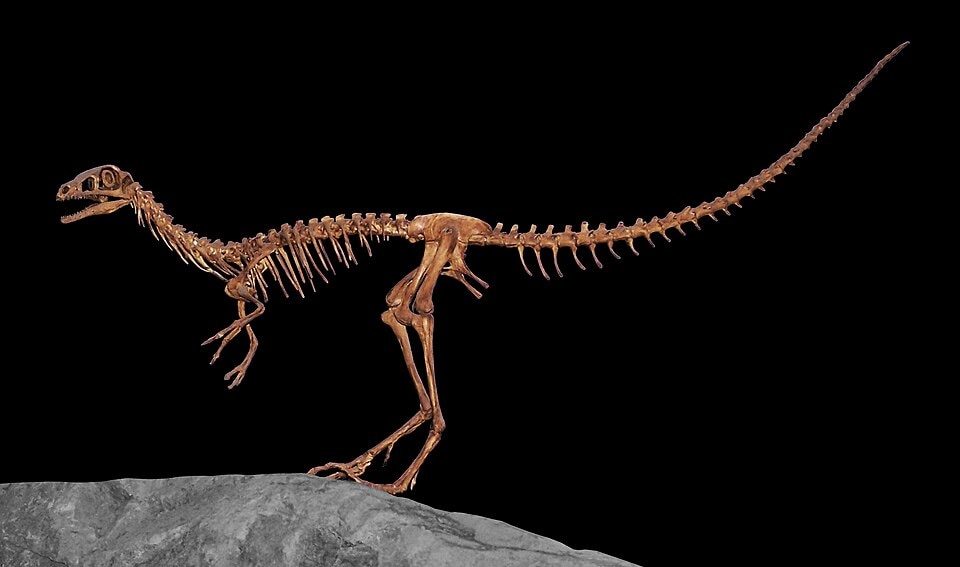
- Small, bipedal body
- Long legs and tail for balance
- Forelimbs shorter than hindlimbs
- Delicate, narrow, and long skulls with tapered snouts
- Large eye sockets
- Small, pointed teeth
- Two large, clawed digits and a potentially non-functional third digit on the hand
Aristosuchus, Huaxiagnathus, Mirischia, Sinosauropteryx, Juravenator, Scipionyx
Europe
About Compsognathus
Compsognathus is a genus of small, bipedal, carnivorous theropod dinosaurs that roamed the Earth approximately 150 million years ago during the late Jurassic period. Named from Greek words meaning "elegant jaw," this dinosaur is notable for its diminutive size, often compared to that of a chicken, and for being one of the first non-avialan dinosaurs discovered with a remarkably complete fossil skeleton. Its existence is primarily known from two well-preserved specimens, one unearthed in Germany in the 1850s and another discovered in France over a century later.
Discovery and Significance
The German specimen, discovered in Bavaria, was initially described by Johann A. Wagner in 1859 and later formally named Compsognathus longipes. Initially mistaken for a type of lizard, its dinosaurian affinities were recognized by paleontologists like Thomas Huxley, who used it in discussions about the evolution of birds due to its bird-like proportions. The French specimen, found near Nice, is larger and was once considered a separate species, Compsognathus corallestris, but is now generally accepted as another example of C. longipes, possibly an adult. The discovery of these fossils significantly advanced the understanding of small theropod dinosaurs and their relationship to early birds.
Physical Characteristics and Diet
Compsognathus was characterized by its slender build, long legs, and a tail used for balance. It possessed a delicate skull with large eye sockets, and its forelimbs were shorter than its hindlimbs, featuring hands with two large, clawed digits. The teeth were small and pointed, adapted for its diet. The diet of Compsognathus is known with a high degree of certainty, as the fossilized remains of small, agile lizards, such as Bavarisaurus, have been found within the stomach cavities of both primary specimens. This indicates that Compsognathus was an active predator capable of hunting and consuming small vertebrates.
Habitat and Paleontology
Fossils of Compsognathus have been found in lithographic limestone deposits that were once part of a tropical archipelago in the Tethys Sea. These ancient environments were lagoons situated between coral reefs and beaches, suggesting Compsognathus inhabited coastal areas. Its contemporaries included other Jurassic fauna such as Archaeopteryx and various pterosaurs. While direct evidence of feathers remains elusive for Compsognathus itself, some of its relatives possessed simple feathers, leading to speculation about its own integument. The excellent preservation of its fossils, including stomach contents and skin impressions, has made Compsognathus a valuable subject for paleobiological and taphonomic studies.
Source: Wikipedia ↗
Frequently Asked Questions
What does the name Compsognathus mean?
The name Compsognathus comes from Greek words 'kompsos' meaning 'elegant' or 'dainty', and 'gnathos' meaning 'jaw'. This name reflects its delicate build and refined features.
How big was Compsognathus?
Compsognathus was a small dinosaur, often described as chicken-sized. The German specimen, likely a juvenile, was around 70-75 cm in length, while the larger French specimen reached about 1.25 to 1.4 meters.
What did Compsognathus eat?
The diet of Compsognathus is well-documented. The fossilized remains of small, agile lizards have been found in the stomach cavities of both major specimens, confirming that it preyed on small vertebrates.
Where were Compsognathus fossils found?
Fossils of Compsognathus have been discovered in Europe. The first well-preserved specimen was found in Germany, and a second, larger specimen was later discovered in France.
Was Compsognathus feathered?
While some relatives of Compsognathus, like Sinosauropteryx, are known to have had simple feathers, no direct evidence of feathers has been found with Compsognathus fossils. However, some depictions show it with downy proto-feathers based on its relatives.
What period did Compsognathus live in?
Compsognathus lived approximately 150 million years ago, during the Tithonian age of the late Jurassic period.
Related Dinosaur species

Belodon
Belodon is considered a dubious genus of phytosaur, a group of crocodile-like reptiles that inhabited the Earth during the Triassic period. Fossils attributed to Belodon have been discovered across Europe, North America, and India. Due to the lack of taxonomic utility in phytosaur teeth, the genus is now regarded as invalid, with many specimens reassigned to other genera.

Afrovenator
Afrovenator, meaning "African hunter," was a large theropod dinosaur that roamed Africa during the Middle to Late Jurassic period. Known from a single, relatively complete skeleton, it is distinguished by several unique anatomical features and is considered the only definitive Gondwanan megalosaur.

Alpkarakush
Alpkarakush is an extinct genus of theropod dinosaur that lived during the Jurassic period in what is now Kyrgyzstan. Known from a partial skeleton, this large predator is characterized by its high, arched skull and slender hindlimbs, with a prominent bony structure over its eyes.