
Craterosaurus
Herbivore·Early Cretaceous·Woburn Sands Formation, England·Quadrupedal
Craterosaurus is a dubious genus of stegosaurian dinosaur from the Early Cretaceous of England. Known from a single partial vertebra, its classification is uncertain, with some paleontologists considering it a nomen dubium due to its fragmentary remains. It may be a junior synonym of Regnosaurus.
Key Facts
- ›Lived during the Early Cretaceous period, possibly the Aptian stage.
- ›Fossils were discovered in the Woburn Sands Formation of England.
- ›Estimated to be around 4 meters (13 feet) in length and weigh approximately 560 kg (1,230 lb).
- ›Known from only one fossil specimen, a partial vertebra.
- ›Considered a dubious genus (nomen dubium) due to its incomplete fossil record.
- ›May be a junior synonym of the stegosaurian dinosaur Regnosaurus.
Estimated Length: 4 Meters, Estimated Weight: 560 kg, Known From A Partial Vertebra
Regnosaurus, Stegosaurus
England
About Craterosaurus
Craterosaurus is a genus of stegosaurian dinosaur that lived during the Early Cretaceous period, with its fossils originating from the Woburn Sands Formation in England. The genus is considered dubious, or a "nomen dubium," due to the extreme incompleteness of its fossil remains. Only a single partial vertebra has ever been recovered, making definitive classification challenging.
Naming and Classification
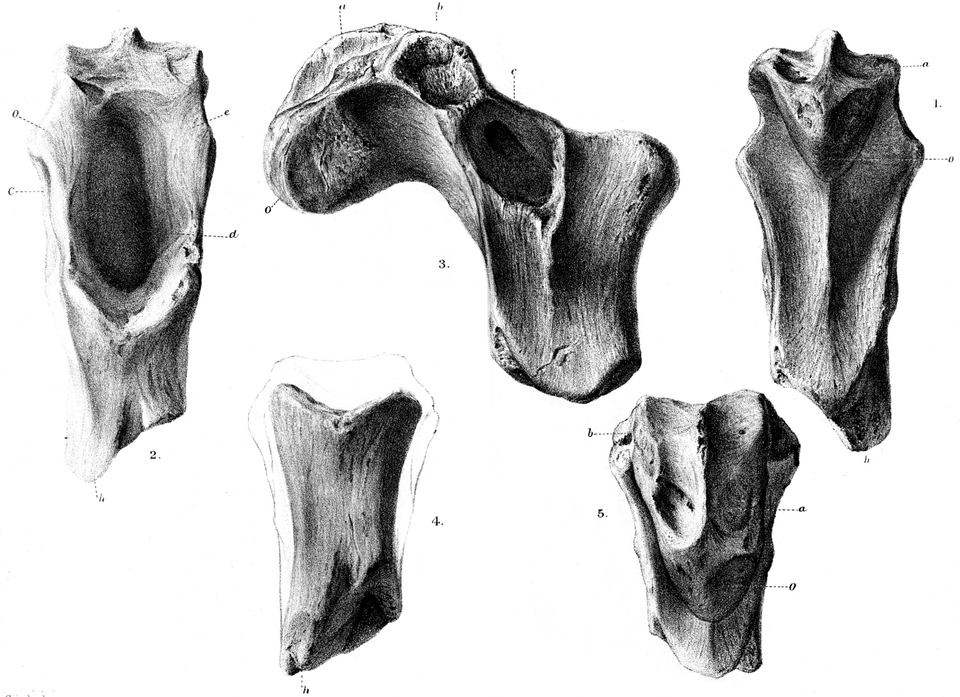
The fossil was discovered in a brown sandstone layer near Potton, Bedfordshire, and was described by palaeontologist Harry Govier Seeley in 1874 as Craterosaurus pottonensis. Initially, Seeley interpreted the fossil as part of a braincase and suggested uncertain relationships within Dinosauria, possibly aligning with Ceteosauria or Iguanodon. Later, in 1912, Franz Nopcsa re-evaluated the specimen, correctly identifying it as part of the neural arch of a dorsal vertebra. This allowed Nopcsa to tentatively place Craterosaurus within Stegosauria, noting its similarity to Stegosaurus. However, subsequent reviews, including those by Susannah Maidment and colleagues, have concluded that the fossil lacks diagnostic features, solidifying its status as a dubious genus.
Physical Characteristics and Time Period
Based on the limited fossil evidence, Craterosaurus is estimated to have measured around 4 meters (13 feet) in length and weighed approximately 560 kilograms (1,230 pounds). It is believed to have been a quadrupedal herbivore, characteristic of stegosaurian dinosaurs. The precise temporal range is thought to be the Aptian stage of the Early Cretaceous, though it is possible the fossil material has been reworked from older sediments. Its anatomical features, while incomplete, show characteristics consistent with the Stegosauria group. Due to its fragmentary nature, Craterosaurus is sometimes considered a potential junior synonym of the related stegosaurian Regnosaurus.
Source: Wikipedia ↗
Frequently Asked Questions
What does Craterosaurus mean?
The name Craterosaurus means "krater reptile" or "bowl reptile," likely referring to the shape of a fossilized feature.
When did Craterosaurus live?
Craterosaurus lived during the Early Cretaceous period, with its fossils found in strata possibly dating to the Aptian stage.
Where were Craterosaurus fossils found?
Fossils of Craterosaurus were discovered in the Woburn Sands Formation near Potton, Bedfordshire, England.
How large was Craterosaurus?
Craterosaurus is estimated to have been around 4 meters (13 feet) in length and weighed approximately 560 kilograms (1,230 pounds).
Why is Craterosaurus considered dubious?
Craterosaurus is considered a dubious genus, or nomen dubium, because the fossil material is too incomplete to be definitively diagnostic. Only a single partial vertebra has been recovered.
What is the relationship between Craterosaurus and Regnosaurus?
It is possible that Craterosaurus is a junior synonym of Regnosaurus, another stegosaurian dinosaur. However, due to the limited fossil evidence for Craterosaurus, this remains uncertain.
Related Dinosaur species

Amargasaurus
Amargasaurus is a genus of sauropod dinosaur that lived in what is now Argentina during the Early Cretaceous epoch. It is distinguished by two parallel rows of tall spines running down its neck and back, a feature unique among known sauropods. While relatively small for a sauropod, Amargasaurus was a herbivore with a body plan typical of its group, characterized by a long tail, short neck, and barrel-shaped trunk.

Aragosaurus
Aragosaurus was a large, quadrupedal, herbivorous sauropod dinosaur that lived during the Early Cretaceous period in what is now Spain. With an estimated length of 18 meters and a weight of 25 tonnes, it possessed a long neck, a powerful tail, and a bulky body, similar in build to Camarasaurus. Its large, wide teeth were adapted for slicing leaves and branches from tall conifer trees.
Asiatosaurus
Asiatosaurus is an extinct genus of herbivorous sauropod dinosaur that lived during the Early Cretaceous period in what is now Mongolia and China. The genus is known primarily from teeth, with the type species, Asiatosaurus mongoliensis, and another species, Asiatosaurus kwangshiensis, both being classified as nomina dubia due to the scant nature of their fossil remains. Despite its limited fossil evidence, Asiatosaurus holds significance as the first sauropod genus named from East Asia.