
Cristatusaurus
Cristatusaurus is a genus of theropod dinosaur that lived in what is now Niger during the Early Cretaceous period, approximately 112 million years ago. Belonging to the Spinosauridae family, it was a large, bipedal carnivore characterized by an elongated, crocodile-like skull and a distinctive sagittal crest on its snout. The exact taxonomic placement of Cristatusaurus remains a subject of scientific debate, with some researchers considering it a synonym of Suchomimus.
Key Facts
- ›Cristatusaurus lived during the Early Cretaceous period, 112 million years ago.
- ›It was a baryonychine member of the Spinosauridae family.
- ›The name "Cristatusaurus" means "crested reptile" and refers to a crest on its snout.
- ›Fossils have been found in the Elrhaz Formation of Niger.
- ›It coexisted with other dinosaurs like sauropods and iguanodontians, as well as crocodylomorphs.
- ›Its exact identity is debated, with some considering it synonymous with Suchomimus.

Elongated, Crocodile-Like Skull, Sagittal Crest On the Snout, Well-Built Forelimbs, Estimated Length of Around 10 m, Estimated Weight of 1-4 Tonnes, Finely Serrated Teeth With Flutes
Suchomimus Tenerensis, Baryonyx Walkeri, Spinosaurus Aegyptiacus
Niger, Algeria
About Cristatusaurus
Cristatusaurus is a genus of theropod dinosaur that roamed the Earth during the Early Cretaceous period, approximately 112 million years ago. Fossils of this dinosaur have been unearthed in what is now Niger, specifically within the Elrhaz Formation. As a member of the Spinosauridae family, Cristatusaurus was a large, bipedal carnivore distinguished by its long, crocodile-like skull and a prominent sagittal crest adorning the top of its snout. The genus name itself, meaning "crested reptile," directly references this distinctive cranial feature.
Taxonomy and Debate
The exact classification of Cristatusaurus has been a subject of ongoing scientific discussion, largely due to the incomplete nature of the fossil material. Initially, its jaw bones and vertebrae were described, leading to its formal naming by Philippe Taquet and Dale Russell in 1998. However, some paleontologists suggest that Cristatusaurus may be synonymous with Suchomimus, another spinosaurid found in the same region and geological layers. The argument for synonymy stems from perceived similarities between the fossils, though potential distinguishing features have also been noted. The genus Cristatusaurus holds priority if it is indeed recognized as distinct from Suchomimus, as it was named earlier.
Physical Characteristics and Lifestyle
Estimates suggest Cristatusaurus reached lengths of around 10 meters (33 feet) and weighed between 1 to 4 tonnes. Its skull featured an elongated snout with closely spaced teeth, adapted for gripping prey rather than slicing flesh, indicating a diet likely rich in fish. The retracted nostrils and a reinforced bony secondary palate suggest adaptations for a semi-aquatic lifestyle, allowing it to submerge its snout while hunting and withstanding stresses during feeding. The animal also possessed robust forelimbs equipped with large manual unguals, or claws, though their precise function remains debated, with possibilities ranging from gaffing prey to digging.
Paleoecology
Cristatusaurus inhabited an environment characterized by extensive freshwater floodplains and fast-moving rivers in a tropical climate. This ecosystem was diverse, supporting a variety of fauna including other dinosaurs like sauropods and iguanodontians, as well as numerous crocodylomorphs, fish, and marine reptiles. The Elrhaz Formation, where its remains were found, provides a window into this ancient wetland environment, with Cristatusaurus likely playing a role as a significant predator within its ecological niche.
Source: Wikipedia ↗
Frequently Asked Questions
What does the name Cristatusaurus mean?
The name Cristatusaurus means "crested reptile." This name alludes to a prominent sagittal crest, a bony ridge, located on the top of its snout.
When and where did Cristatusaurus live?
Cristatusaurus lived during the Early Cretaceous period, approximately 112 million years ago. Its fossils have been discovered in what is now Niger, specifically within the Elrhaz Formation.
What kind of dinosaur was Cristatusaurus?
Cristatusaurus was a theropod dinosaur, belonging to the Spinosauridae family. These were large, bipedal carnivores known for their elongated, crocodile-like skulls and well-built forelimbs.
Is Cristatusaurus a valid dinosaur genus?
The taxonomic status of Cristatusaurus is debated among paleontologists. Due to the fragmentary nature of its fossils, some scientists consider it a nomen dubium (a name of uncertain application) or a junior synonym of Suchomimus.
What did Cristatusaurus eat?
As a member of the Spinosauridae family, Cristatusaurus was a carnivore. Its teeth were adapted for piercing and gripping prey, likely including fish, given its skull shape and habitat.
What are the physical characteristics of Cristatusaurus?
Cristatusaurus is estimated to have been around 10 meters (33 feet) in length and weighed between 1 to 4 tonnes. It possessed an elongated, crocodile-like skull with a sagittal crest and likely had robust arms with large claws.
Related Dinosaur species

Afromimus
Afromimus tenerensis is a genus of theropod dinosaur from the Early Cretaceous period, discovered in Niger. Initially classified as an ornithomimosaur, later analyses suggest it belongs to the Abelisauroidea superfamily, possibly within the Noasauridae family. Its fossils indicate an adult size of approximately 4.14 meters in length.
Acrocanthosaurus
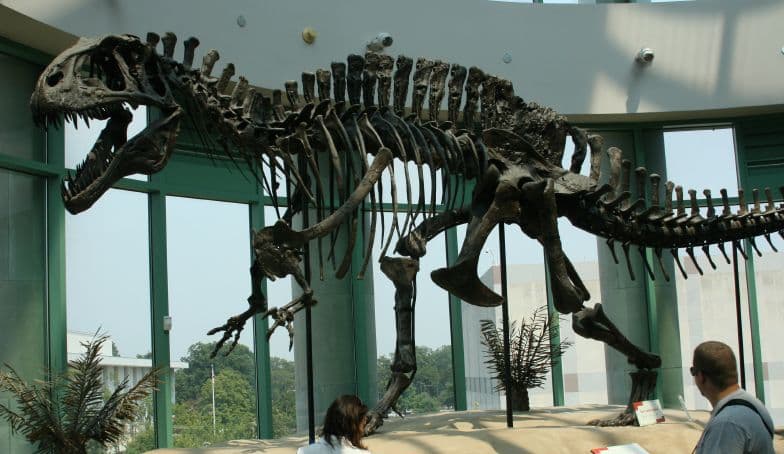
Acrocanthosaurus is a genus of large theropod dinosaurs that roamed North America during the Early and Late Cretaceous periods. Known for its distinctive high neural spines along its back, it was one of the largest predators in its ecosystem, likely preying on large herbivores.
Alashansaurus
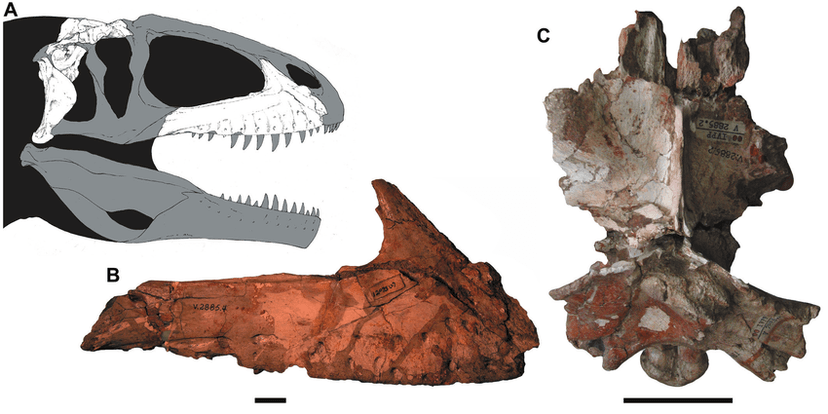
Shaočilong (meaning "shark toothed dragon") was an extinct genus of theropod dinosaur that lived during the Early Cretaceous period in what is now China. Initially classified as a carcharodontosaurid, its exact phylogenetic placement has been subject to debate, with some studies suggesting it may be a tyrannosauroid or a member of the polytomic allosauroid group. Shaochilong was a relatively small carnosaur, estimated to be around 5 to 6 meters in length and weighing approximately 500 kilograms.