
Daxiatitan
Daxiatitan was a large sauropod dinosaur that lived during the Lower Cretaceous period in what is now Gansu, China. It is known from a partial skeleton that includes vertebrae, ribs, a shoulder blade, and a thigh bone. At the time of its discovery, it was considered one of the largest dinosaurs found in China.
Key Facts
- ›Daxiatitan is known from a single species, Daxiatitan binglingi.
- ›Fossils were discovered in Gansu Province, China.
- ›Estimated length ranges from 23 to 30 meters.
- ›Estimated mass is around 23 tonnes.
- ›Its neck was exceptionally long, approximately 12 meters.
- ›It is classified as a basal titanosaur or a somphospondylan.
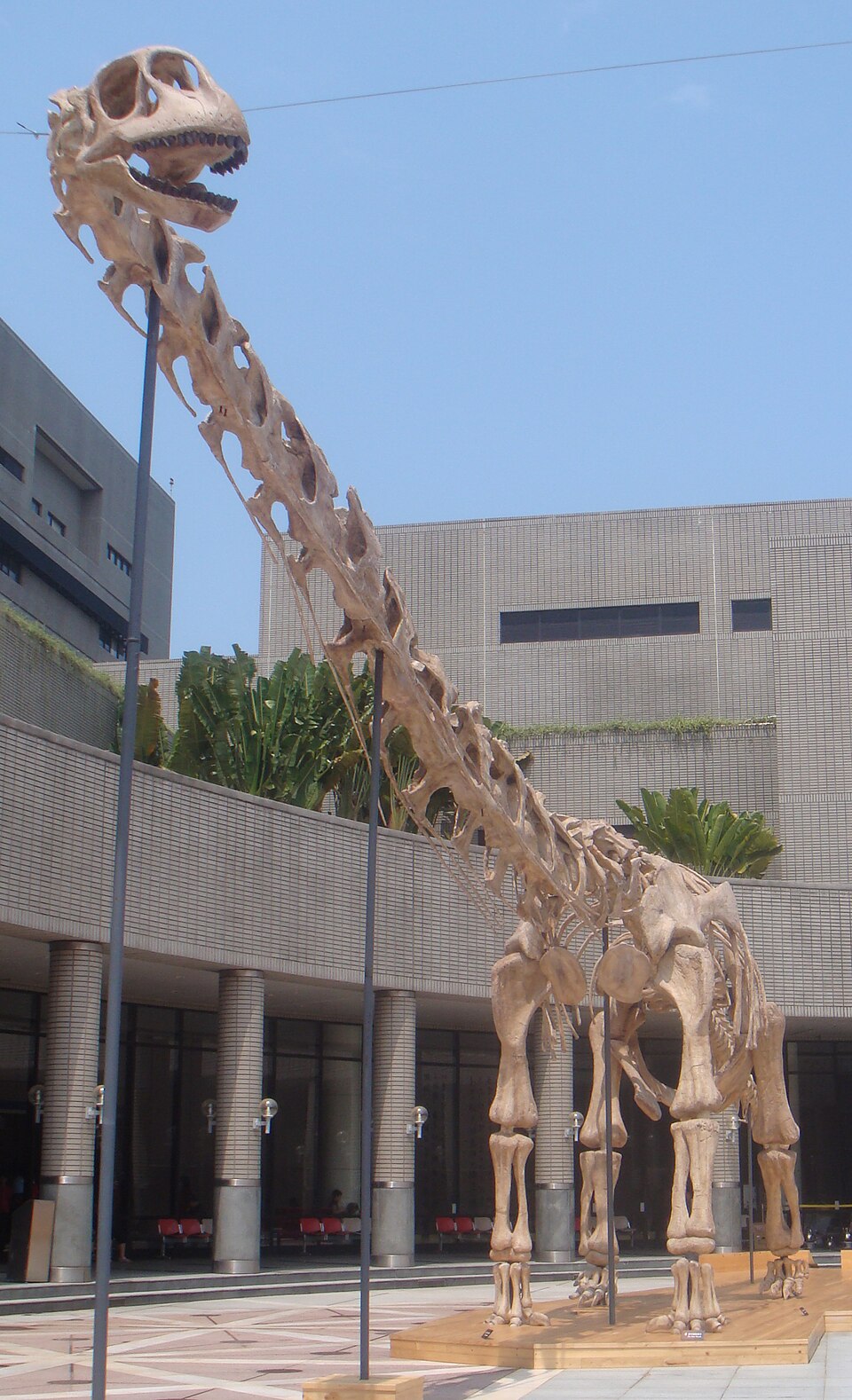
- Exceptionally Large Sauropod
- Estimated Length: 23–30 Meters
- Estimated Mass: 23 Tonnes
- Estimated Neck Length: Approximately 12 Meters
Euhelopus, Mamenchisaurids, Diplodocids
China
About Daxiatitan
Daxiatitan is a genus of sauropod dinosaur identified from fossils discovered in Gansu Province, China. Its sole known species, Daxiatitan binglingi, lived during the Lower Cretaceous period. The genus and species were formally described in 2008 by You Hailu and colleagues. At the time of its initial description, Daxiatitan was considered potentially the largest dinosaur known from China.
Anatomy and Size
The known fossil remains of Daxiatitan consist of a partial skeleton, including a significant portion of the neck and back vertebrae, two tail vertebrae, a shoulder blade, and a thigh bone. This dinosaur was exceptionally large, with estimates for its length ranging from 23 to 30 meters (75 to 98 feet) and its mass estimated at around 23 tonnes. A notable feature was its exceptionally long neck, estimated to be approximately 12 meters (39 feet) in length, placing it among sauropods with elongated necks, though still shorter than some of the largest mamenchisaurids and diplodocids.
Taxonomy and Classification
Daxiatitan has been taxonomically classified in various ways. It was initially described as a basal titanosaur. Subsequent studies have generally regarded it as either a basal titanosaur or a somphospondylan situated close to Titanosauria, potentially within the family Euhelopodidae. A 2020 phylogenetic analysis suggested that Daxiatitan and Euhelopus might form a clade with mamenchisaurids, indicating a complex evolutionary relationship within the sauropod lineage.
Source: Wikipedia ↗
Frequently Asked Questions
What does the name Daxiatitan mean?
The genus name Daxiatitan refers to the Daxia River, a tributary of the Yellow River, near where its fossils were found. The species name, binglingi, honors Bingling Temple, also located in the region.
When did Daxiatitan live?
Daxiatitan lived during the Lower Cretaceous period.
How large was Daxiatitan?
Daxiatitan was an exceptionally large dinosaur, with estimated lengths between 23 and 30 meters and a mass of approximately 23 tonnes. Its neck alone was estimated to be around 12 meters long.
What fossils have been found of Daxiatitan?
The known fossil remains of Daxiatitan include most of the neck and back vertebrae, two tail vertebrae, a shoulder blade, and a thigh bone. Ribs and a haemal arch have also been recovered.
What group of dinosaurs does Daxiatitan belong to?
Daxiatitan was initially described as a basal titanosaur. Subsequent studies have placed it as either a basal titanosaur or a somphospondylan closely related to Titanosauria, potentially within Euhelopodidae.
Related Dinosaur species

Beishanlong
Beishanlong is a genus of giant ornithomimosaurian theropod dinosaur that lived in China during the Early Cretaceous period. It is notable for its considerable size, making it the second-largest ornithomimosaur discovered, surpassed only by Deinocheirus. Despite its large stature, the holotype individual was still growing when it died.
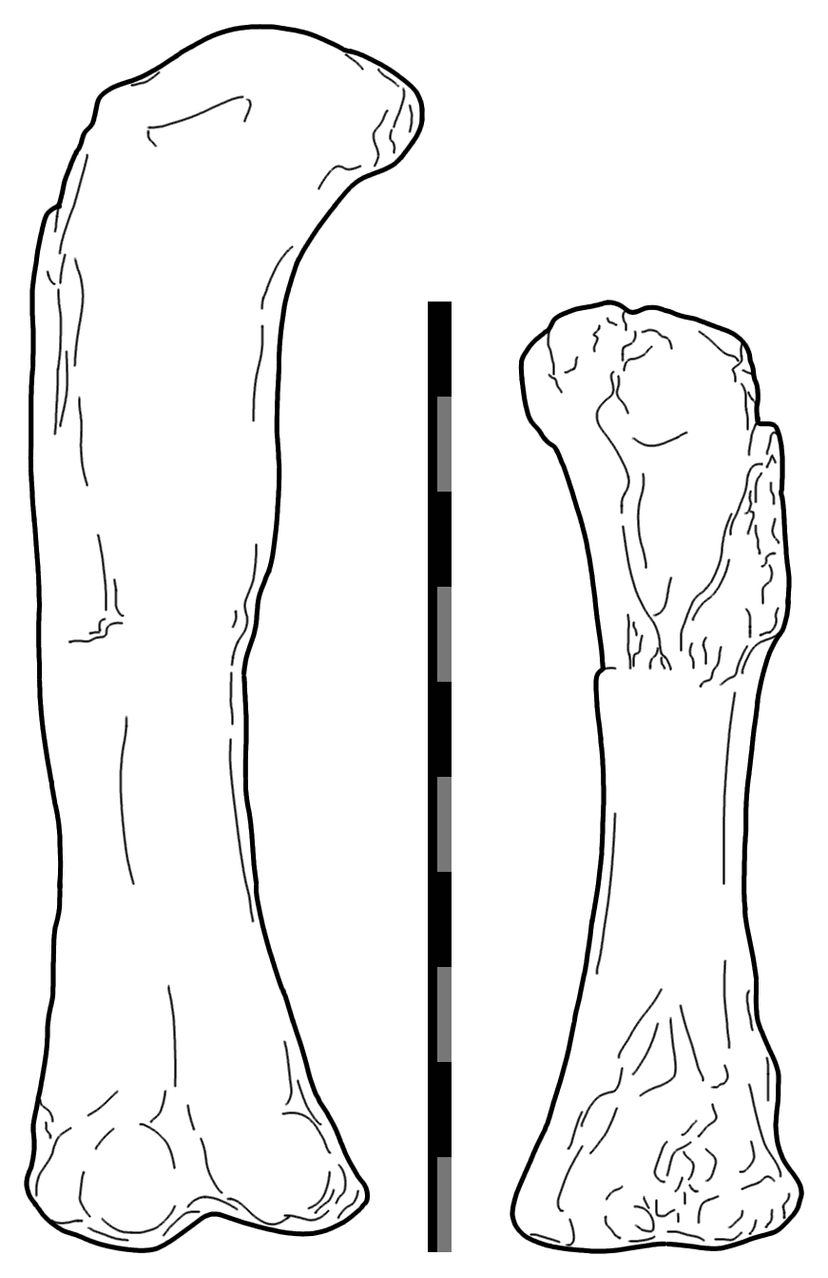
Aegyptosaurus
Aegyptosaurus was a genus of sauropod dinosaur that lived in Africa approximately 95 million years ago during the Late Cretaceous Period. Its fossils, though largely destroyed during World War II, were first discovered in Egypt and have also been found in Niger. The dinosaur is estimated to have been around 15 meters long and weighed about 7 tonnes.
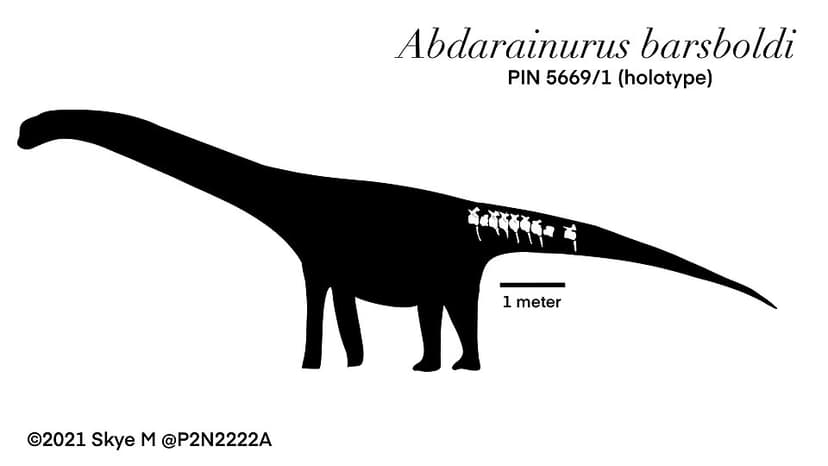
Abdarainurus
Abdarainurus is a genus of titanosaur dinosaur known from the Alagteeg Formation in Mongolia. The only known species, A. barsboldi, is currently considered an indeterminate titanosaur and might represent a previously undocumented lineage of Asian macronarians. Its existence is primarily evidenced by a limited number of tail vertebrae.