
Deinonychus
Deinonychus was a raptorial dinosaur that lived during the Early and Late Cretaceous periods, approximately 115 to 98 million years ago. Known for its "terrible claw" – a large, sickle-shaped talon on its second toe – Deinonychus was an active, agile predator that likely hunted in groups. Its study by John Ostrom in the late 1960s significantly altered scientific understanding of dinosaurs, contributing to the "dinosaur renaissance" and the debate on dinosaur metabolism.
Key Facts
- ›Deinonychus means "terrible claw" in reference to its enlarged sickle-shaped talon on the second toe.
- ›It lived during the Early and Late Cretaceous Period, roughly 115–98 million years ago.
- ›Fossils have been found in Montana, Utah, Wyoming, and Oklahoma in the United States.
- ›John Ostrom's research on Deinonychus was pivotal in the "dinosaur renaissance," challenging previous views of dinosaurs as slow and unintelligent.
- ›Deinonychus is believed to have been covered in feathers, though direct fossil evidence for this species is lacking.
- ›Fossil evidence suggests Deinonychus may have hunted or scavenged Tenontosaurus.

- Grew up to 3.4 meters long.
- Possessed a large, sickle-shaped talon on the second toe of each hind foot.
- Had powerful jaws lined with approximately seventy curved, blade-like teeth.
- Likely had large "hands" with three claws on each forelimb.
- Estimated body mass between 60–100 kg.
Velociraptor, Dromaeosaurus, Tsaagan, Saurornitholestes
North America
About Deinonychus
Overview
Deinonychus, a genus of dromaeosaurid theropod dinosaur, is known for its distinctive, enlarged sickle-shaped claw on the second toe of each hind foot, a feature that earned it the name "terrible claw." This species, Deinonychus antirrhopus, roamed North America during the Early and Late Cretaceous Period, approximately 115 to 98 million years ago. Fossils have been unearthed in states such as Montana, Utah, Wyoming, and Oklahoma, primarily from the Cloverly and Antlers Formations.
Discovery and Scientific Impact
The study of Deinonychus by paleontologist John Ostrom in the late 1960s profoundly impacted the scientific understanding of dinosaurs. Prior to Ostrom's work, dinosaurs were largely perceived as slow, primitive reptiles. Deinonychus, with its agile build, horizontal posture, and predatory adaptations, suggested a more active and dynamic animal. This re-evaluation contributed significantly to the "dinosaur renaissance," a period of renewed scientific interest and research that led to a re-examination of dinosaur physiology, including the debate on whether they were warm-blooded.
Physical Characteristics and Behavior
Deinonychus could reach lengths of up to 3.4 meters (11 ft). It possessed powerful jaws equipped with numerous sharp, blade-like teeth and large "hands" with three-clawed digits. While direct fossil evidence of feathers for Deinonychus is absent, its close relationship to other feathered dromaeosaurids like Velociraptor and Microraptor leads paleontologists to hypothesize that Deinonychus was also covered in feathers. Evidence suggests Deinonychus was a carnivore, and fossils found in association with the ornithopod Tenontosaurus indicate that it may have hunted or scavenged this larger dinosaur, potentially in groups, though not necessarily in mammal-like packs.
Source: Wikipedia ↗
Frequently Asked Questions
What does Deinonychus mean?
Deinonychus translates from Ancient Greek as "terrible claw." This name refers to the unusually large, sickle-shaped talon found on the second toe of each hind foot.
When did Deinonychus live?
Deinonychus lived during the Early and Late Cretaceous Period, with fossils dating from approximately 115 to 98 million years ago. This spans the mid-Aptian to Cenomanian stages.
Where were Deinonychus fossils found?
The primary fossil discoveries of Deinonychus have been made in the United States, specifically in Montana, Utah, Wyoming, and Oklahoma. Teeth possibly belonging to Deinonychus have also been found as far east as Maryland.
What was significant about Deinonychus's discovery?
John Ostrom's study of Deinonychus in the late 1960s revolutionized scientific thought about dinosaurs. It challenged the popular image of dinosaurs as sluggish reptiles and fueled the debate about whether they were warm-blooded or cold-blooded, initiating the "dinosaur renaissance."
Did Deinonychus have feathers?
While no direct fossil evidence of feathers has been found for Deinonychus itself, paleontologists hypothesize that it was likely covered in feathers. This is based on the known presence of feathers in closely related dromaeosaurids like Velociraptor and Microraptor.
What did Deinonychus eat?
Deinonychus was a carnivore. Evidence, including associated fossils and tooth marks, suggests it may have hunted or scavenged on other dinosaurs, such as the ornithopod Tenontosaurus.
Related Dinosaur species
Aublysodon
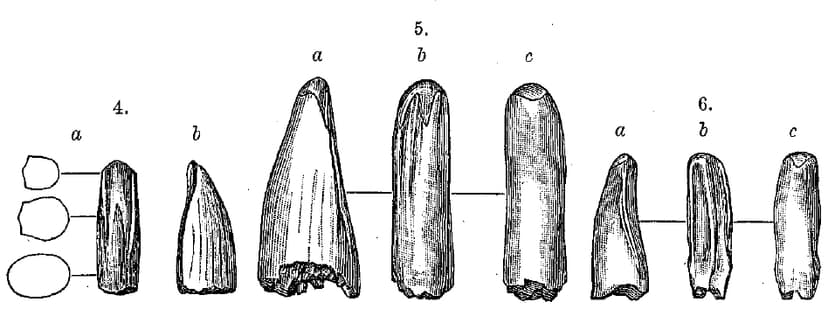
Aublysodon is a dubious genus of carnivorous dinosaurs known from isolated teeth discovered in the Judith River Formation of Montana, dating to the late Campanian stage of the Late Cretaceous period. The type species, Aublysodon mirandus, was named by Joseph Leidy in 1868, but its classification is uncertain as the primary fossil evidence is a single lost tooth. Similar teeth are often attributed to juvenile tyrannosaurids, potentially belonging to genera like Daspletosaurus.
Avisaurus
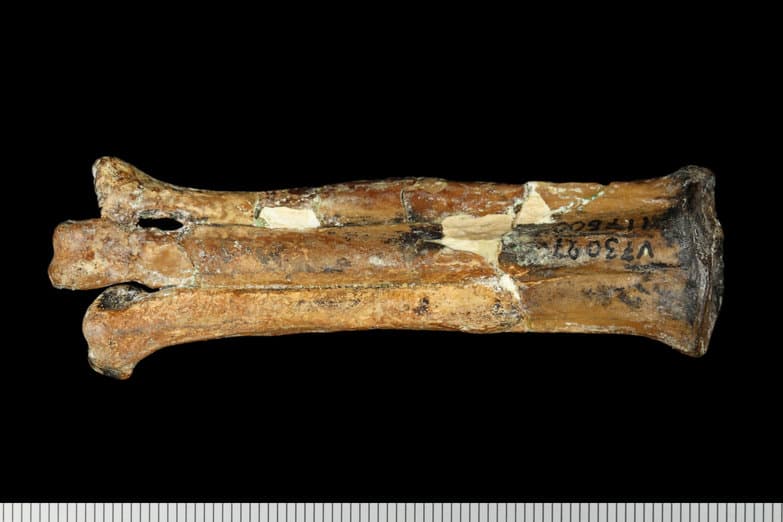
Avisaurus is a genus of enantiornithine avialans that lived in North America during the Late Cretaceous period. This "bird lizard" is known for its large size among enantiornithines and its predatory nature, with inwardly curved claws suggesting it preyed on small vertebrates.
Deinodon
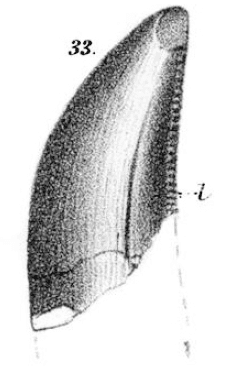
Deinodon is a genus of tyrannosaurid dinosaur known only from fossilized teeth discovered in the Late Cretaceous Judith River Formation of Montana. These teeth were the first tyrannosaurid remains to be described by paleontologist Joseph Leidy in 1856. However, Deinodon is largely considered a dubious genus, as its teeth are indistinguishable from those of other tyrannosaurids like Gorgosaurus and Daspletosaurus, and no skeletal remains have been definitively assigned to it.