
Dilong
Dilong is a genus of small, basal tyrannosauroid dinosaurs from the Lower Cretaceous Yixian Formation of China. Its discovery was significant as it provided the first evidence of feathers in tyrannosaurs. Dilong was named 'emperor dragon' due to its evolutionary relationship to Tyrannosaurus rex.
Key Facts
- ›Dilong lived during the Lower Cretaceous period.
- ›Fossils were discovered in the Yixian Formation of China.
- ›It was a small dinosaur, with adults estimated to be over 2 meters long.
- ›Dilong possessed simple feathers or protofeathers, likely for insulation.
- ›Its braincase suggests it was agile with good balance, but had a less refined sense of smell than Tyrannosaurus rex.

Small Body Size, Nearly Complete Skull and Skeleton Found, Possessed Simple Feathers Or Protofeathers, S-Shaped Brain, Large Flocculus Suggesting Agility, Small Olfactory Tracts
Tyrannosaurus Rex, Proceratosaurus, Guanlong
Asia
About Dilong
Dilong is a genus of small, basal tyrannosauroid dinosaurs that roamed the Earth during the Early Cretaceous period. The sole species, Dilong paradoxus, is known from fossils discovered in the Yixian Formation of what is now China. The discovery of Dilong was a landmark event in paleontology, providing the first concrete evidence of feathers in the tyrannosauroid lineage, a characteristic previously only suspected for the group.
Discovery and Naming
The holotype specimen of Dilong was unearthed in the Lujiatun Unit of the Yixian Formation, with geological dating placing the rocks between 125.8 and 126 million years old. The genus was formally described by Xu Xing and colleagues in 2004. The name "Dilong" is derived from the Chinese words 'dì' meaning 'emperor' and 'lóng' meaning 'dragon,' a nod to its evolutionary connection to the famed 'king' tyrannosaurid, Tyrannosaurus rex. The species name, paradoxus, is a Latinization of the Greek word for 'against received wisdom,' reflecting the surprising finding of feathers.
Physical Characteristics and Paleobiology
Dilong was a relatively small dinosaur, with the type specimen measuring approximately 1.6 meters (5.2 ft) in length. It is believed to have been a juvenile, with estimates suggesting fully grown adults could exceed 2 meters (6.6 ft) and weigh around 6 kg (13 lb). The fossilized remains reveal that Dilong possessed simple feathers or protofeathers, observed in skin impressions near the jaw and tail. These were likely for insulation, as they were not structured for flight. Braincase analysis indicates Dilong had an S-shaped brain and a large flocculus, suggesting agility and good balance. However, its olfactory tracts were small, implying a less developed sense of smell compared to later tyrannosaurids like Tyrannosaurus rex. There is speculation that feathers might have been shed as the animal grew larger, with adult tyrannosauroids perhaps relying more on scales.
Classification
Initial classification placed Dilong as one of the earliest and most primitive members of Tyrannosauroidea. However, subsequent phylogenetic analyses have yielded varied results, with some studies positioning it as a proceratosaurid or even outside the Tyrannosauroidea clade, while others continue to support its placement within the group.
Source: Wikipedia ↗
Frequently Asked Questions
What does the name Dilong mean?
The name Dilong is derived from Chinese and means 'emperor dragon'. The 'emperor' part refers to its evolutionary relationship with Tyrannosaurus rex, the 'king' of tyrannosaurids.
When did Dilong live?
Dilong lived during the Lower Cretaceous period, with its fossils dating to between 125.8 and 126 million years ago.
Where were Dilong fossils found?
The primary discovery location for Dilong fossils is the Yixian Formation in western Liaoning Province, China.
Did Dilong have feathers?
Yes, Dilong paradoxus had a covering of simple feathers or protofeathers. These were observed in fossilized skin impressions and are thought to have been for insulation rather than flight.
How big was Dilong?
The type specimen of Dilong was about 1.6 meters (5.2 ft) long, but it is believed to be a juvenile. Fully grown adults may have exceeded 2 meters (6.6 ft) in length and weighed around 6 kg (13 lb).
What was Dilong's diet?
While the specific diet of Dilong is not detailed, as a basal tyrannosauroid, it is presumed to have been a carnivore, though its small size and potential juvenile status might suggest a diet of smaller prey.
Related Dinosaur species
Banji
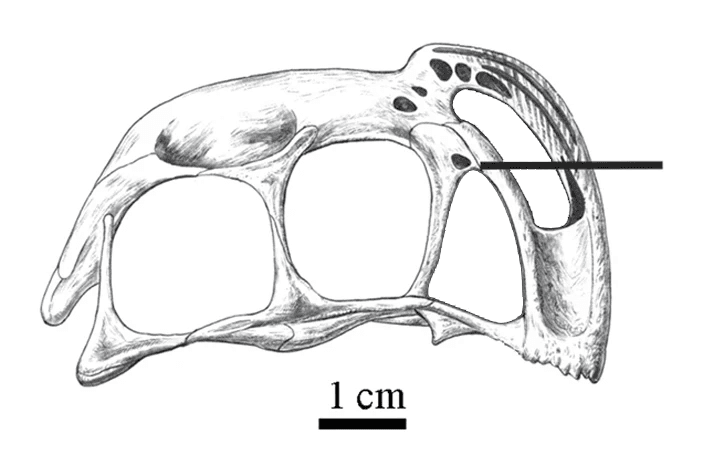
Banji is an extinct genus of oviraptorid dinosaur that lived approximately 66 million years ago in what is now China. This small, lightly built, ground-dwelling carnivore is known for its distinctive tall, crested skull with unique vertical striations.

Asiatyrannus
Asiatyrannus is an extinct genus of tyrannosaurine theropod dinosaur that lived during the Late Cretaceous period in what is now China. Known from a single specimen including a skull and partial skeleton, it is distinguished by its deep-snouted skull and relatively small body size compared to some contemporary tyrannosaurs. However, its validity as a distinct genus has been questioned, with some researchers suggesting it may represent a juvenile individual of the more well-known genus Tarbosaurus.
Changzhousaurus
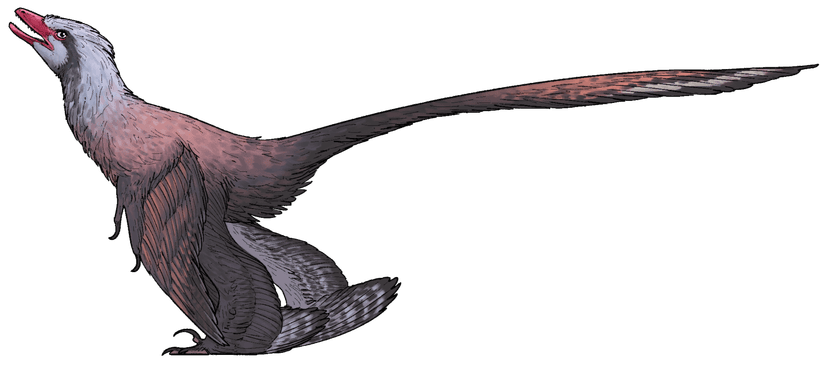
Changzhousaurus is a small, extinct paravian theropod dinosaur from the Early Cretaceous period of China. It is known from a nearly complete skeleton that showcases extensive feathering, including wing-like structures on its forelimbs and hindlimbs, and a tail fan. Its exact evolutionary relationships remain unclear due to a mosaic of anatomical features found in its fossils.