
Diluvicursor
Herbivore·Early Cretaceous·Victoria, Australia·Bipedal (implied by 'runner' in name and robust build)
Diluvicursor, meaning "flood runner," was a small ornithischian dinosaur that lived in Australia during the Early Cretaceous period. Known from a partial juvenile skeleton and a caudal vertebra, this dinosaur is estimated to have been around 1.2 meters long as a juvenile and potentially up to 2.3 meters as an adult. Its diet likely consisted of plants such as flowers, seeds, and mosses.
Key Facts
- ›Diluvicursor is known from a single species, D. pickeringi.
- ›Its fossils were discovered in the Eumeralla Formation of Victoria, Australia.
- ›The genus name "Diluvicursor" refers to its association with floodplains and its runner-like locomotion.
- ›Juvenile individuals were estimated to be around 1.2 meters long, with adults potentially reaching 2.3 meters.
- ›Its diet likely included flowers, seeds, fruit, pine nuts, mosses, and lichens.

- Small ornithischian dinosaur
- Estimated juvenile length: 1.2 meters
- Estimated adult length: at least 2.3 meters
- Distinctly more robust than other assumed relatives from the area
- Possessed ten autapomorphies
Anabisetia
Australia
About Diluvicursor
Diluvicursor, a genus of small ornithischian dinosaur, roamed the ancient floodplains of what is now Australia during the Early Cretaceous period, specifically the Lower Albian stage. Its name, derived from Latin, translates to "flood runner," a moniker reflecting both its environment and its presumed agile, bipedal locomotion.
Discovery and Naming
The first fossils of Diluvicursor were unearthed in 2005 from the Eumeralla Formation on the coast of Cape Otway in Victoria, Australia. This region has yielded the remains of several other ornithischian dinosaurs. The holotype specimen, NMV P221080, consists of a nearly complete articulated tail and parts of the lower right leg of a juvenile individual. A partial tail vertebra from a larger individual, NMV P229456, was also discovered nearby and referred to the same taxon. The species was formally described and named Diluvicursor pickeringi in early 2018. The genus name highlights its habitat and movement, while the species name honors David A. Pickering for his contributions to Australian paleontology.
Physical Characteristics and Diet
The juvenile holotype was estimated to be approximately 1.2 meters (3.9 ft) in length, comparable in size to a modern wild turkey. However, the preservation of its tail in a curled position makes precise length measurements uncertain. Analysis of a larger vertebra suggests that adult Diluvicursor may have reached lengths of at least 2.3 meters (7.5 ft), closer to the size of a rhea. This dinosaur was noted as being distinctly more robust than other small ornithopods found in the same area. Its diet is believed to have been herbivorous, likely consisting of plant matter such as flowers, seeds, fruit, pine nuts, mosses, and lichens.
Phylogeny and Significance
Phylogenetic analyses have placed Diluvicursor as a basal elasmarian ornithischian, closely related to Anabisetia. It is important to note that the Eumeralla Formation is also home to other small ornithopods like Atlascopcosaurus, Galleonosaurus, and Leaellynasaura. However, these are primarily known from craniodental material, meaning there is no direct anatomical overlap with the postcranial remains of Diluvicursor. This lack of overlapping material makes it impossible to definitively confirm or deny potential synonymy with these other genera without further fossil discoveries.
Diluvicursor represents a significant addition to the understanding of small dinosaur diversity in Early Cretaceous Australia, underscoring the unique palaeoenvironments and faunas present on the continent during that era.
Source: Wikipedia ↗
Frequently Asked Questions
What does the name Diluvicursor mean?
The name Diluvicursor translates to "flood runner." The "diluvi" part comes from the Latin word for flood or deluge, referencing the prehistoric floodplain environment it inhabited. The "cursor" part means runner, indicating its likely mode of locomotion.
Where were Diluvicursor fossils found?
Fossils of Diluvicursor were discovered in the Eumeralla Formation, located in Victoria, southeastern Australia. Specifically, they were found at Cape Otway, near the well-known Dinosaur Cove fossil site.
How big was Diluvicursor?
The holotype specimen, representing an older juvenile, was estimated to be about 1.2 meters (3.9 ft) in length. Based on a larger vertebra found nearby, adult Diluvicursor are estimated to have measured at least 2.3 meters (7.5 ft) long.
What did Diluvicursor eat?
The diet of Diluvicursor is believed to have been herbivorous. It likely consumed a variety of plant matter, including flowers, seeds, fruit, pine nuts, mosses, and lichens.
What geological period did Diluvicursor live in?
Diluvicursor lived during the Lower Albian stage of the Early Cretaceous period. This places its existence approximately 113 to 100 million years ago.
Related Dinosaur species
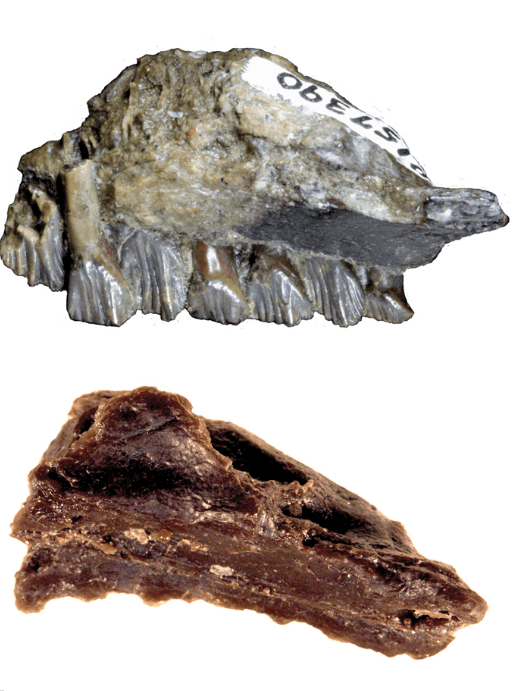
Atlascopcosaurus
Atlascopcosaurus is a genus of herbivorous dinosaur that lived during the Early Cretaceous period in what is now Australia. Based on related species, it is inferred to have been a small, bipedal herbivore.

Altirhinus
Altirhinus was a herbivorous ornithopod dinosaur that lived in what is now Mongolia during the Early Cretaceous period. Known for its distinctive tall, arched snout, this dinosaur was primarily bipedal but may have also moved on four legs, especially when feeding.

Bolong
Bolong is a genus of iguanodontian dinosaur that lived during the Early Cretaceous period, approximately 125 million years ago. Fossil remains have been discovered in China, with the type species being Bolong yixianensis. This relatively small dinosaur is characterized by its stocky head, powerful jaws, and distinctive teeth.