
Diuqin
Diuqin is an extinct genus of unenlagiine theropod dinosaur that lived during the Santonian age of the Late Cretaceous period in what is now Argentina. The genus is known from fragmentary remains, including a humerus and parts of vertebrae, which were discovered in the Bajo de la Carpa Formation. Its discovery helps to fill a significant gap in the fossil record for its clade.
Key Facts
- ›Diuqin means "bird of prey" in the Mapudungun language.
- ›It is classified as an unenlagiine theropod dinosaur.
- ›Fossils were found in the Bajo de la Carpa Formation of Argentina.
- ›The genus lived during the Santonian age of the Late Cretaceous period.
- ›The species name, lechiguanae, references a character from an Argentine film.
- ›Diuqin represents the first unenlagiine from its formation, addressing a 15-million-year gap in the fossil record.

- Humerus and fragmentary vertebrae indicate a theropod dinosaur.
- Belongs to the unenlagiine clade, suggesting bird-like characteristics.
Austroraptor, Unenlagia
Argentina
About Diuqin
Diuqin is an extinct genus of theropod dinosaur belonging to the unenlagiine clade, which roamed the Earth during the Santonian age of the Late Cretaceous period. The genus is known from limited fossil evidence discovered in the Bajo de la Carpa Formation of Argentinian Patagonia. Its scientific name, Diuqin, is derived from the Mapudungun language, meaning "bird of prey," while the species name, lechiguanae, pays homage to a character from a notable Argentine film.
Discovery and Significance
The holotype specimen of Diuqin, MUCPv 1401, consists of a partial left humerus and fragmentary vertebrae. This discovery is significant as it represents the first unenlagiine dinosaur to be described from the Bajo de la Carpa Formation. Its presence helps to bridge a substantial gap of at least 15 million years in the fossil record for this particular group of dinosaurs, connecting earlier taxa like Austroraptor with later forms such as Unenlagia.
Paleoenvironment
Diuqin inhabited an environment that is believed to have been warm and semiarid, as indicated by the geological context of the Bajo de la Carpa Formation. This formation has yielded a diverse array of other prehistoric life, including various other non-avian theropods, titanosaurian sauropods, birds, an ornithopod, snakes, lizards, turtles, crocodyliforms, and indeterminate pterosaurs, painting a picture of a dynamic Late Cretaceous ecosystem.
Source: Wikipedia ↗
Frequently Asked Questions
What does the name Diuqin mean?
The scientific name Diuqin is derived from the Mapudungun language and translates to "bird of prey." This name likely reflects some of its physical characteristics or predatory lifestyle.
When did Diuqin live?
Diuqin lived during the Santonian age, which is part of the Late Cretaceous period. This places its existence approximately 86 to 83 million years ago.
Where were the fossils of Diuqin found?
Fossils of Diuqin were discovered in the Bajo de la Carpa Formation, located in Neuquén Province of Argentinian Patagonia. This region is known for its rich dinosaur fossil discoveries.
What kind of dinosaur was Diuqin?
Diuqin was an unenlagiine theropod dinosaur. This group is known for its bird-like features and is closely related to birds.
What fossils have been found for Diuqin?
The fossil remains of Diuqin are fragmentary. They include a significant portion of a left humerus (upper arm bone) and pieces of sacral and caudal vertebrae, along with other possible vertebral fragments.
Related Dinosaur species
Bicentenaria
Bicentenaria argentina was a small, bipedal carnivorous dinosaur that lived during the early Late Cretaceous period in what is now Argentina. Its scientific name commemorates the 200th anniversary of Argentina's May Revolution. Discovered in the Candeleros Formation, its fossils include skull fragments, vertebrae, limb bones, and claws.
Aucasaurus
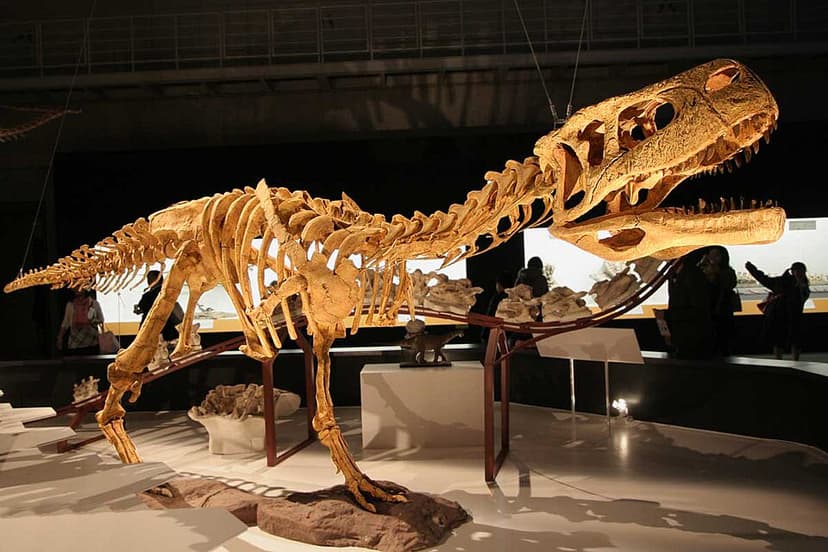
Aucasaurus is a genus of medium-sized abelisaurid theropod dinosaur that lived in Argentina during the Late Cretaceous period. It was characterized by its extremely reduced arms and lack of fingers, and possessed low ridges above its eyes instead of horns. The type specimen is well-preserved, offering significant insight into its anatomy.

Austroraptor
Austroraptor is a genus of dromaeosaurid theropod dinosaur that lived in Argentina during the Late Cretaceous period. It was a large, ground-dwelling carnivore, notable for its relatively short forelimbs and conical, non-serrated teeth. Its discovery provided insights into the diversity of dromaeosaurids in the Southern Hemisphere.