
Dongbeititan
Herbivore·Early Cretaceous·Beipiao, Liaoning, China·Quadrupedal
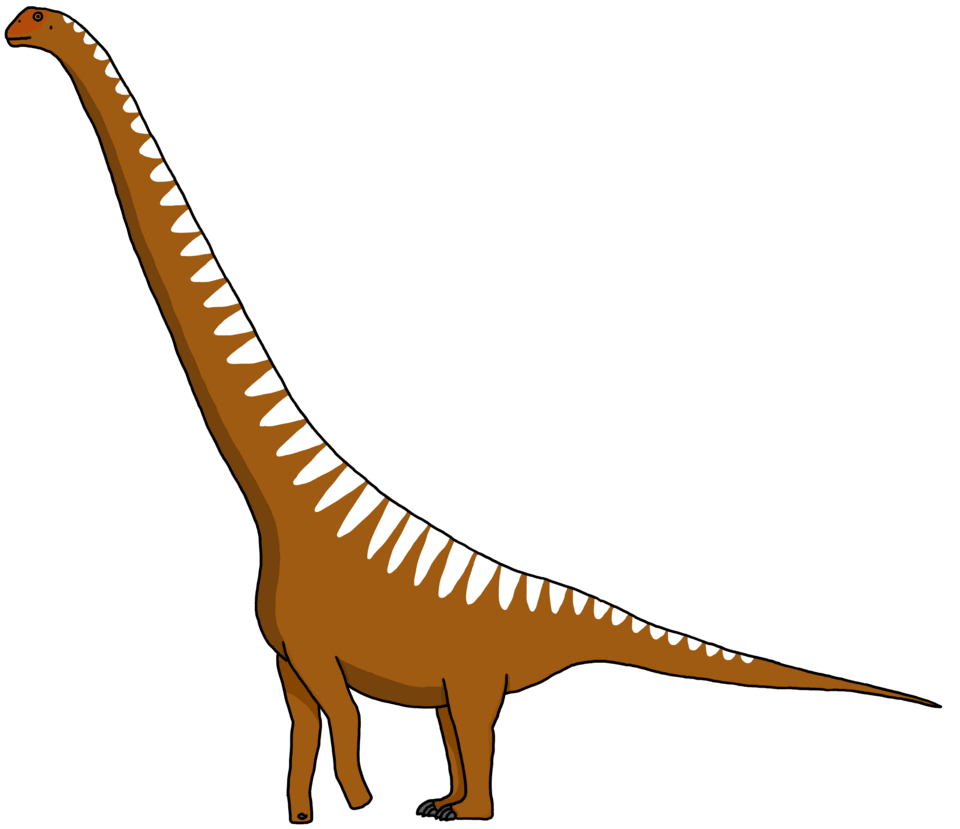
Dongbeititan is a genus of sauropod dinosaur that lived during the Early Cretaceous period in what is now China. Discovered in the Yixian Formation, it represents the first sauropod named from this well-known fossil-bearing region. As a large, quadrupedal herbivore, Dongbeititan is considered a basal titanosauriform, indicating an early position within a significant sauropod lineage.
Key Facts
- ›Dongbeititan lived during the Early Cretaceous period.
- ›Fossils were discovered in the Yixian Formation of Liaoning, China.
- ›It was a large, quadrupedal herbivore.
- ›The genus is classified as a basal titanosauriform.
- ›Its estimated length is around 15 meters, with a weight of approximately 7 tonnes.
- ›The specific name honors paleontologist Dong Zhiming.
- Quadrupedal
- Large size
- Camelar structure of presacral vertebrae
- Pneumatocoels on proximal extremities of dorsal costae
- Medially bent proximal femur
- Elongated anteroposteriorly coracoid bone with a square capitoventral end
- Long, smooth, slightly convex acetabular margin of pubic bone
Euhelopus, Fusuisaurus, Huanghetitan, Gobititan, Jiutaisaurus, Brachiosaurus, Titanosauria, Saltasaurus, Malawisaurus
China
About Dongbeititan
Dongbeititan is a genus of sauropod dinosaur that roamed the Earth during the Early Cretaceous period. Its fossils were discovered in the Yixian Formation of Beipiao, Liaoning, China, a region renowned for its rich fossil record, particularly from the Jehol Group. This discovery marked the first sauropod to be formally named from the Yixian Formation, contributing significantly to the understanding of dinosaur diversity in this ancient ecosystem.
Discovery and Classification
The holotype specimen, DNHM D2867, consists of a partial postcranial skeleton, including elements of the limbs, shoulder and pelvic girdles, and vertebrae. This specimen was described in 2007 by paleontologists who identified Dongbeititan as a basal titanosauriform. This classification places it within a significant sauropod lineage, indicating it was less derived than genera like Gobititan or Jiutaisaurus, but more advanced than earlier forms such as Euhelopus, Fusuisaurus, and Huanghetitan. The genus name, Dongbeititan, combines "Dongbei," referring to the northeastern region of China where the fossils were found, with the Greek word "titan," signifying its immense size. The species name, dongi, is an honorific tribute to the esteemed Chinese paleontologist Dong Zhiming.
Physical Characteristics and Lifestyle
As a sauropod, Dongbeititan was a large, quadrupedal herbivore, characteristic of its group. In 2024, estimates placed its length at approximately 15 meters (49 feet) and its weight at around 7 tonnes (6.9 long tons; 7.7 short tons). Distinctive anatomical features noted in its description include a camelar structure of its presacral vertebrae, pneumatocoels on the proximal extremities of dorsal costae, and a medially bent proximal femur. The coracoid bone is described as elongated anteroposteriorly with a square capitoventral end, and the pubic bone exhibits a long, smooth, and slightly convex acetabular margin. These traits helped differentiate it from its relatives and place it within the Somphospondyli clade, while still being considered a basal member of the Titanosauriformes.
The Yixian Formation, where Dongbeititan was unearthed, is known for its exceptional preservation, offering insights into the flora and fauna of the Early Cretaceous. This formation has yielded a diverse array of dinosaurs, including ornithopods, ankylosaurs, ceratopsians, and various coelurosaurs. The presence of Dongbeititan adds to the known sauropodomorph diversity of this ancient Chinese fauna, completing a more comprehensive picture of the Jehol fauna.
Source: Wikipedia ↗
Frequently Asked Questions
When did Dongbeititan live?
Dongbeititan lived during the Early Cretaceous period. This geological time frame is significant for many dinosaur discoveries in the region where its fossils were found.
Where were Dongbeititan fossils found?
Fossils of Dongbeititan were discovered in north-eastern China, specifically in western Liaoning province, in the region of Beipiao. The bones were located within rocks belonging to the Yixian Formation, part of the Jehol Group.
What did Dongbeititan eat?
Like other sauropods, Dongbeititan was a herbivore. It would have consumed plant matter as its primary food source.
How large was Dongbeititan?
Estimates suggest Dongbeititan reached a length of about 15 meters (49 feet). Its weight is estimated to have been around 7 tonnes (6.9 long tons; 7.7 short tons).
What is the meaning of the name Dongbeititan?
The genus name Dongbeititan combines 'Dongbei,' referring to the region in China where it was found, with the Greek word 'titan,' meaning 'giant.' The specific name, dongi, honors Chinese paleontologist Dong Zhiming.
What type of dinosaur was Dongbeititan?
Dongbeititan was a sauropod dinosaur. It is classified as a basal titanosauriform, indicating its evolutionary position within this group of long-necked, herbivorous dinosaurs.
Related Dinosaur species

Aragosaurus
Aragosaurus was a large, quadrupedal, herbivorous sauropod dinosaur that lived during the Early Cretaceous period in what is now Spain. With an estimated length of 18 meters and a weight of 25 tonnes, it possessed a long neck, a powerful tail, and a bulky body, similar in build to Camarasaurus. Its large, wide teeth were adapted for slicing leaves and branches from tall conifer trees.

Amargasaurus
Amargasaurus is a genus of sauropod dinosaur that lived in what is now Argentina during the Early Cretaceous epoch. It is distinguished by two parallel rows of tall spines running down its neck and back, a feature unique among known sauropods. While relatively small for a sauropod, Amargasaurus was a herbivore with a body plan typical of its group, characterized by a long tail, short neck, and barrel-shaped trunk.

Astrodon
Astrodon was a large herbivorous sauropod dinosaur that lived in what is now the eastern United States during the Early Cretaceous period. Fossils of this genus were discovered in Maryland and are estimated to be around 110 to 112 million years old. Its scientific name, Astrodon johnstoni, refers to the star-shaped cross-section found when one of its teeth was cut.