
Dreadnoughtus
Dreadnoughtus is a genus of titanosaurian sauropod dinosaur, known from two partial skeletons found in Argentina. It is recognized as one of the largest terrestrial vertebrates known from reasonably complete remains, with the immature type specimen estimated to be around 26 meters long and weighing up to 49 metric tons.
Key Facts
- ›Dreadnoughtus is known from more complete skeletons than any other gigantic titanosaurian.
- ›The genus name 'Dreadnoughtus' means 'fears nothing,' inspired by early 20th-century battleships.
- ›Its remains were discovered in the Cerro Fortaleza Formation in Santa Cruz Province, Argentina.
- ›The holotype specimen was likely not fully grown when it died, indicating it could have grown even larger.
- ›Dreadnoughtus possessed a wide-gauge posture with its feet held apart from the body midline.
- ›Its tail featured unique characteristics, including a ventral keel on the first vertebra and subdivided neural spines.

- Estimated length of 26 meters for the immature type specimen.
- Estimated weight of 48-49 metric tons for the immature type speciment.
- Unusually long neck, making up almost half of the animal's length.
- Broad sternal bones indicating a wide pectoral girdle and broad-shouldered, broad-chested appearance.
- Scapula measuring 1.74 m, longer than any other known titanosaur shoulder blade.
- Ilium measuring 1.31 m, larger than any other known titanosaur ilium.
- Forearm longer than previously known from titanosaurs, but shorter than brachiosaurids.
Aeolosaurus, Gondwanatitan
South America
About Dreadnoughtus
Dreadnoughtus is a genus of titanosaurian sauropod dinosaur, represented by a single species, Dreadnoughtus schrani. This colossal herbivore lived during the Late Cretaceous period, approximately 76 to 70 million years ago, in what is now Santa Cruz Province, Argentina.
Discovery and Significance
The discovery of Dreadnoughtus is particularly significant due to the remarkable completeness of its fossil remains compared to other gigantic titanosaurs. Two partial skeletons have been unearthed from the Cerro Fortaleza Formation. The genus name, Dreadnoughtus, meaning 'fears nothing,' was chosen by its discoverer, paleontologist Kenneth Lacovara, to reflect the dinosaur's immense size and presumed imperviousness to attack, drawing inspiration from powerful battleships.
Anatomy and Size
The immature type specimen of Dreadnoughtus schrani is estimated to have reached a length of about 26 meters (85 feet) and a weight of up to 48–49 metric tons (53–54 short tons). Its anatomy includes an unusually long neck, comprising nearly half its total length, and a broad chest supported by wide sternal bones. Distinctive features are also found in its tail, such as a ventral keel on the first tail vertebra and uniquely subdivided neural spines in the anterior third of the tail.
Paleobiology and Taphonomy
Analysis of the holotype specimen's bone histology suggests it was still growing at the time of its death, implying that a fully mature individual could have been even larger. The exceptional preservation of the Dreadnoughtus fossils is attributed to a rapid burial event, likely a flood, which quickly entombed the dinosaurs in sedimentary deposits. Evidence of scavenging, possibly by megaraptorans, has been found among the bones.
Source: Wikipedia ↗
Frequently Asked Questions
What does the name Dreadnoughtus mean?
The name Dreadnoughtus translates to 'fears nothing.' This name was chosen by its discoverer, Kenneth Lacovara, inspired by the powerful dreadnought battleships, signifying the dinosaur's immense size and presumed resilience.
Where were Dreadnoughtus fossils found?
Fossils of Dreadnoughtus were discovered in the Cerro Fortaleza Formation, located in Santa Cruz Province, Patagonia, Argentina.
How large was Dreadnoughtus?
The immature type specimen of Dreadnoughtus is estimated to have been approximately 26 meters (85 ft) long. Its weight estimates have varied, with later studies suggesting a range of 22.1–38.2 metric tons, though earlier estimates were higher.
What makes Dreadnoughtus significant in terms of fossil completeness?
Dreadnoughtus is significant because it is known from more complete skeletons than any other gigantic titanosaurian. The holotype specimen is approximately 45.3% complete overall, and 58.7% complete excluding the skull, providing substantial anatomical data.
What was the diet of Dreadnoughtus?
As a titanosaurian sauropod, Dreadnoughtus was a herbivore. Its immense size and anatomy are consistent with a diet of plant matter.
When did Dreadnoughtus live?
Dreadnoughtus lived during the Late Cretaceous period, specifically between approximately 76 and 70 million years ago.
Related Dinosaur species

Antarctosaurus
Antarctosaurus was a genus of titanosaurian sauropod dinosaurs that lived during the Late Cretaceous Period in South America. The genus is known from several species, though many are considered dubious due to fragmentary remains and taxonomic confusion. The type species, Antarctosaurus wichmannianus, is estimated to have reached about 17 meters in length, while Antarctosaurus giganteus, though poorly known, represents one of the largest dinosaurs ever discovered.

Aeolosaurus
Aeolosaurus was a genus of titanosaurian sauropod dinosaur that lived in South America during the Late Cretaceous Period. Characterized by a long neck and tail, it was a quadrupedal herbivore. The genus is well-represented, with remains from several individuals belonging to at least two species, though no skull material has been recovered.
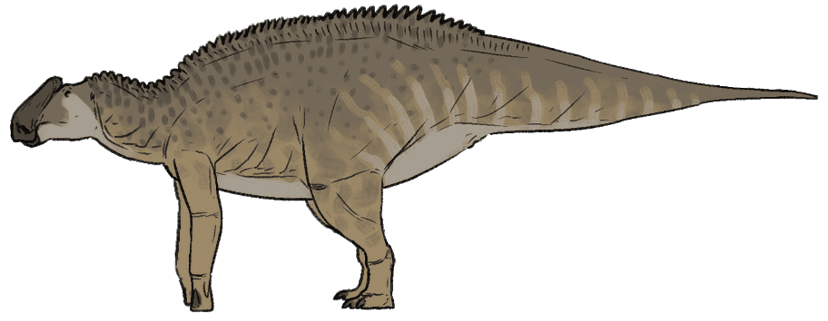
Bonapartesaurus
Bonapartesaurus is an extinct genus of herbivorous ornithopod dinosaur belonging to the Hadrosauridae family. It lived in what is now Argentina during the Late Cretaceous period. The genus was established in 2017 to house remains previously attributed to other hadrosaurids.