
Acinonyx
Acinonyx is a genus of the Felidae family, most famously represented by the cheetah (Acinonyx jubatus). This genus is characterized by extreme adaptations for speed and open-terrain hunting. While historically widespread across the Old World, climate change and human expansion led to the extinction of most Acinonyx species, leaving only the cheetah in scattered populations.
Key Facts
- ›The genus Acinonyx is renowned for its members' specialization in speed and open-terrain hunting.
- ›The only living species, the cheetah (Acinonyx jubatus), is found in the grasslands of Africa and parts of Asia.
- ›Acinonyx species, unlike most other felids, cannot fully retract their claws, which provides extra traction during sprints.
- ›Fossil evidence indicates that Acinonyx species once ranged widely across Europe and Asia.
- ›Extinction of most Acinonyx species is attributed to climate change, habitat loss, and shrinking prey populations.
- ›The genus name Acinonyx is derived from Greek words meaning 'unmoved' and 'claw', referring to their non-retractable claws.

Open Grasslands, Open Terrain
Specialize In Speed and Open-Terrain Hunting, Adapted For Swiftness
Cheetah-Like Cats
Climate Changes, Habitat Loss, Shrinking Prey Populations, Human Expansion
- Non-retractable claws providing extra traction
- Body adapted for extreme speed and swiftness
About Acinonyx
What is Acinonyx?
Acinonyx is a genus within the Felidae family, commonly known as the cat family. The genus is most famously represented by its single living species, the cheetah (Acinonyx jubatus), which is recognized for its unparalleled speed and specialization in hunting in open grasslands. Historically, the Acinonyx lineage was more diverse, with several species inhabiting vast regions across the Old World, including parts of Europe and Asia.
Evolutionary Adaptations and Extinction
The defining characteristic of Acinonyx species is their remarkable adaptation for speed. This includes a lighter, more slender build compared to many other felids, facilitating rapid pursuit of prey. A unique trait shared by all Acinonyx is their semi-retractable claws, which function more like cleats, providing essential traction during high-speed sprints. Evidence suggests that the genus evolved early within the felid lineage, specializing in stealth and running. However, most Acinonyx species faced extinction due to significant climate shifts starting in the Pleistocene epoch, which altered their grassland habitats. Human expansion also played a critical role by encroaching on their territories, reducing prey populations, and fragmenting habitats, making reproduction more difficult and leading to population decline.
Fossil Record and Taxonomy
Fossil remains of cheetah-like cats related to Acinonyx have been excavated, dating back to the late Pliocene and Middle Pleistocene periods, indicating a long evolutionary presence. These fossils demonstrate that Acinonyx once ranged widely across Eurasia. The genus was formally proposed by Joshua Brookes in 1828. The name "Acinonyx" is derived from Greek roots, "akinetos" (unmoved or motionless) and "onyx" (nail or claw), referencing their non-retractable claws. Molecular phylogenetic studies have placed Acinonyx within the subfamily Felinae, identifying it as the sister group to the genus Puma. While the Asiatic cheetah represents a surviving lineage, most other historical Acinonyx species are now extinct.
Source: Wikipedia ↗
Frequently Asked Questions
What is the Acinonyx genus known for?
The Acinonyx genus is primarily known for its members' exceptional adaptations for speed and hunting in open terrain. This specialization allowed them to pursue fast-moving prey.
Where did Acinonyx species historically live?
Fossil records indicate that Acinonyx species once inhabited a wide range across the Old World, including parts of Europe and Asia, dating back to the Pliocene and Pleistocene epochs.
Why did most Acinonyx species go extinct?
The extinction of most Acinonyx species is largely due to significant climate changes that altered their grassland habitats, coupled with human expansion which led to habitat loss, reduced prey availability, and isolation of populations.
What is unique about the claws of Acinonyx species?
A defining characteristic of Acinonyx species is their inability to fully retract their claws. This trait provides them with enhanced traction, crucial for their high-speed pursuits.
What is the relationship between Acinonyx and the cheetah?
The cheetah (Acinonyx jubatus) is the sole living species within the Acinonyx genus. It represents the most well-known and surviving lineage of this group.
How are Acinonyx species classified taxonomically?
The Acinonyx genus is placed within the Felidae family and the subfamily Felinae. Molecular phylogenetic analyses have shown it to be closely related to the genus Puma.
Related Felid species

Caracal
The caracal is a medium-sized wild cat native to Africa, the Middle East, Central Asia, and parts of India and Pakistan. It is distinguished by its robust build, long legs, short face, and notably long, tufted ears. This secretive, primarily nocturnal predator is known for its exceptional leaping ability, capable of catching birds in mid-air.
Catopuma
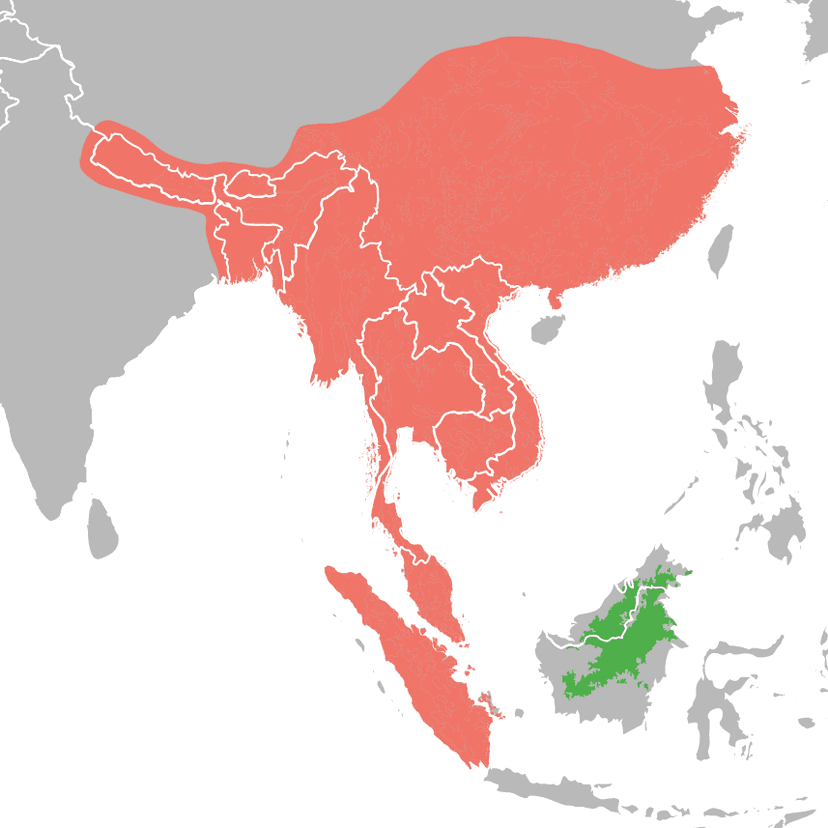
Catopuma is a genus of small wild cats native to Southeast Asia, encompassing the Asian golden cat and the bay cat. These felines share similar reddish-brown pelage with darker markings and can exhibit color variations from brown to gray and black. They are found in forested regions, with the Asian golden cat's range extending from northeast India to Sumatra, and the bay cat being endemic to Borneo.

Herpailurus
The jaguarundi (Herpailurus yagouaroundi) is a medium-sized wild cat native to the Americas, with a range extending from central Argentina to northern Mexico. Distinctive for its slender build, uniform coat coloration in gray or red morphs, and an elongated body with short legs and a long tail, it resembles mustelids. Unlike many other feline species, the jaguarundi is primarily diurnal, hunting during the day and evening.