
Catopuma
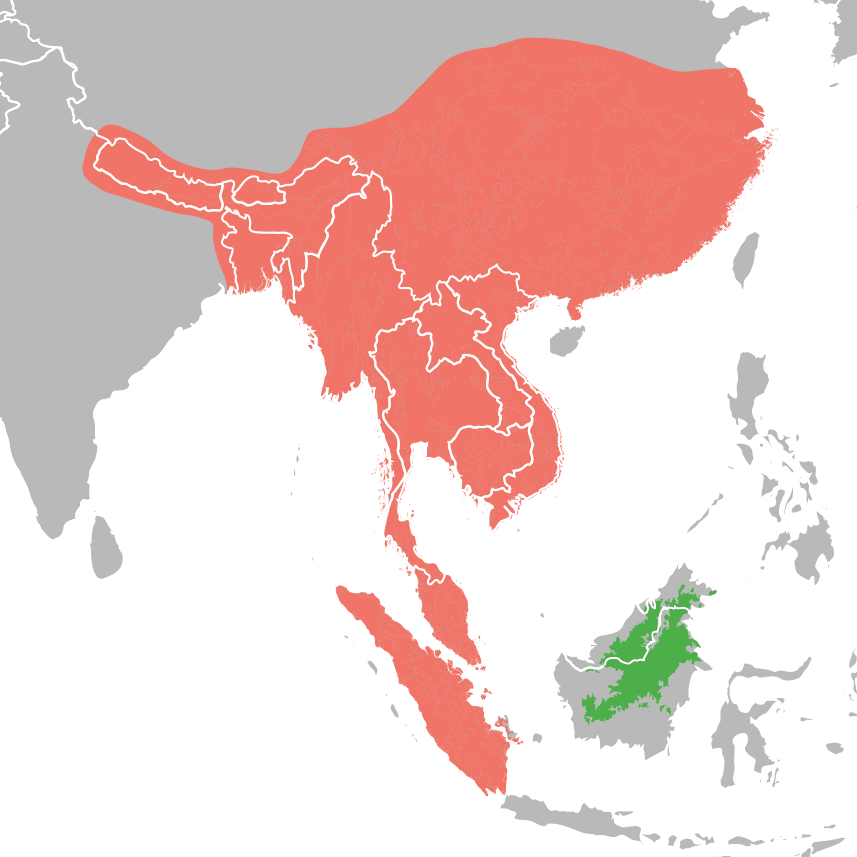
Catopuma is a genus of small wild cats native to Southeast Asia, encompassing the Asian golden cat and the bay cat. These felines share similar reddish-brown pelage with darker markings and can exhibit color variations from brown to gray and black. They are found in forested regions, with the Asian golden cat's range extending from northeast India to Sumatra, and the bay cat being endemic to Borneo.
Key Facts
- ›Genus Catopuma contains two species: the Asian golden cat and the bay cat.
- ›Found in Southeast Asia, primarily in forested areas.
- ›Both species share similar reddish-brown coloration with darker markings.
- ›Exhibit color morphs ranging from brown to gray to black.
- ›The Asian golden cat is found from northeast India to Sumatra.
- ›The bay cat is endemic to the island of Borneo.
Inhabit Forested Areas, Exhibit Color Morphs
Asian Golden Cat, Bay Cat
- Similar pelage with reddish-brown coloration and darker head markings
- Color morphs ranging from brown to gray to black
About Catopuma
The genus Catopuma encompasses two small wild cat species native to Southeast Asia: the Asian golden cat (Catopuma temminckii) and the bay cat (Catopuma badia).
Distribution and Habitat
These felines are found in forested areas within their respective ranges. The Asian golden cat's territory extends from northeast India eastward to Sumatra. In contrast, the bay cat is endemic to the island of Borneo, meaning it is found nowhere else in the world.
Physical Characteristics
Species within the Catopuma genus share similar physical traits, particularly in their pelage. They typically exhibit a solid reddish-brown coloration on their backs, often complemented by darker markings on the head. Furthermore, both the Asian golden cat and the bay cat are known to display color morphs, with individuals varying in shades from brown to gray and even black.
Evolutionary History
Genetic studies indicate that the closest living relative to the Catopuma genus is the marbled cat (Pardofelis marmorata). The common ancestor of Catopuma and the marbled cat is estimated to have diverged approximately 9.4 million years ago. The divergence between the Asian golden cat and the bay cat occurred more recently, around 3.16 million years ago, predating the geological separation of Borneo from neighboring islands.
Source: Wikipedia ↗
Frequently Asked Questions
What species are included in the genus Catopuma?
The genus Catopuma includes two species: the Asian golden cat (Catopuma temminckii) and the bay cat (Catopuma badia). These are the only two species currently recognized within this genus.
Where are Catopuma cats found?
Catopuma species are native to Southeast Asia. The Asian golden cat inhabits a range from northeast India to Sumatra, while the bay cat is exclusively found on the island of Borneo.
What is the typical appearance of Catopuma cats?
Both species generally display a solid reddish-brown coloration on their backs, complemented by darker markings on their heads. They also can occur in various color morphs, including shades of brown, gray, and black.
What kind of habitats do Catopuma species prefer?
Catopuma species are forest dwellers. They are found in forested areas within their respective geographical ranges.
What is the closest living relative to the Catopuma genus?
The closest living relative to the Catopuma genus is the marbled cat (Pardofelis marmorata). The common ancestor of Catopuma and the marbled cat diverged approximately 9.4 million years ago.
Related Felid species

Caracal
The caracal is a medium-sized wild cat native to Africa, the Middle East, Central Asia, and parts of India and Pakistan. It is distinguished by its robust build, long legs, short face, and notably long, tufted ears. This secretive, primarily nocturnal predator is known for its exceptional leaping ability, capable of catching birds in mid-air.
Lynx
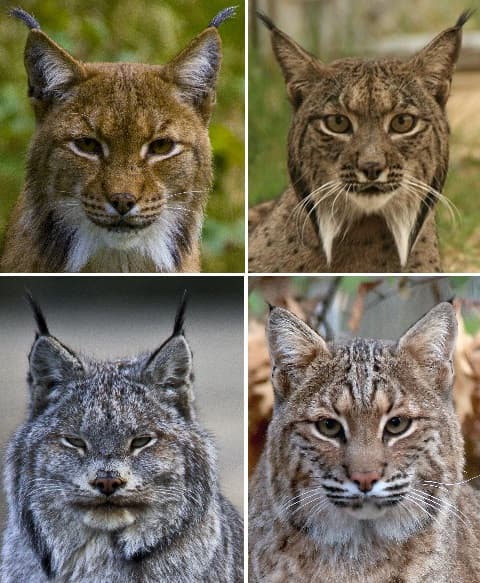
The lynx is a genus of medium-sized wild cats, comprising four extant species: the Canada lynx, Iberian lynx, Eurasian lynx, and bobcat. Originating from an Indo-European root word meaning 'light' or 'brightness,' their name is thought to refer to their reflective eyes. Lynx are distinctive for their short tails, tufted ears, large padded paws, and facial ruffs.

Prionailurus
Prionailurus is a genus of small, spotted wild cats native to Asia. These felines primarily inhabit forests and are known to prey on small mammals, reptiles, birds, and sometimes aquatic wildlife. The genus was first proposed in 1858 and has since been widely accepted, with several species recognized.