
Herpailurus
Felinae·Herpailurus·Carnivore·Least Concern
The jaguarundi (Herpailurus yagouaroundi) is a medium-sized wild cat native to the Americas, with a range extending from central Argentina to northern Mexico. Distinctive for its slender build, uniform coat coloration in gray or red morphs, and an elongated body with short legs and a long tail, it resembles mustelids. Unlike many other feline species, the jaguarundi is primarily diurnal, hunting during the day and evening.
Key Facts
- ›Native to the Americas, ranging from Argentina to Mexico.
- ›Possesses a slender body with short legs, a small head, and a long tail.
- ›Exhibits two primary color morphs: gray and red.
- ›Primarily diurnal, hunting during the day and evening hours.
- ›Inhabits a wide variety of habitats, including forests, deserts, and savannas.
- ›Feeds on a diverse diet, including birds, reptiles, rodents, and small mammals.

Tropical Rainforests, Deciduous Forests, Deserts, Thorn Scrubs, Cloud Forests, Mangroves, Savannas, Open Areas With Vegetative Cover
- Secretive and reclusive
- Primarily diurnal, hunting during daytime and evening
- Solitary or forms pairs in the wild, more gregarious in captivity
- Efficient climber but prefers hunting on the ground
- Wide vocal repertoire including chattering, purring, screaming, whistling, and yapping
Eyra, Gato Colorado, Gato Moro, LeóN BreñEro, Leoncillo, Tigrillo, Gato-Mourisco, Gato-Preto, Gato-Vermelho, Maracajá-Preto
Chattering, Purring, Screaming, 'Wah-Wah' Call, Whistling, Yapping, Bird-Like Chirp
Habitat Loss, Habitat Fragmentation, Persecution For Killing Poultry
Mexican West Coast Boa Constrictors, Cougars, Domestic Dogs
Uniform Coat Coloration, Elongated Body and Short Legs, Resemblance To Mustelids, Diurnal Activity Pattern
About Herpailurus
What is the Jaguarundi?
The jaguarundi, scientifically known as Herpailurus yagouaroundi, is a medium-sized wild cat native to the Americas. Its range spans widely from central Argentina in the south to northern Mexico, traversing Central and South America east of the Andes. This species is distinguished by its slender build, elongated body, relatively short legs, small head, and a long tail, giving it a somewhat mustelid-like appearance. Jaguarundis exhibit two primary coat color morphs: a gray phase and a red phase, though intermediate shades are also observed.
Habitat and Behavior
This adaptable cat inhabits a broad spectrum of environments, including tropical rainforests, deciduous forests, deserts, thorn scrubs, cloud forests, mangroves, and savannas. Unlike many other feline species that are predominantly nocturnal, the jaguarundi is largely diurnal, with its hunting activity peaking during the daytime and evening hours. While it is an adept climber, it primarily hunts on the ground. Jaguarundis are typically solitary or form pairs, though individuals in captivity can be more social. They possess a varied vocal repertoire, including chattering, purring, screaming, and a distinctive bird-like chirp.
Diet and Reproduction
The jaguarundi's diet consists mainly of small prey, such as ground-feeding birds, reptiles, rodents, and small mammals. They are opportunistic hunters and will also consume larger prey like domestic poultry and fish. Mating can occur year-round, with a gestation period lasting approximately 70 to 75 days. Litters typically consist of one to four kittens, which are born spotted but lose these markings as they mature. Lifespans of up to 15 years have been recorded in captivity.
Conservation Status
The jaguarundi is currently listed as Least Concern by the IUCN Red List. However, populations are experiencing declines in many areas primarily due to habitat loss and fragmentation. Persecution by humans, particularly for preying on poultry, also poses a threat. While not highly sought after for its fur due to its poor quality, these threats necessitate ongoing conservation efforts.
Source: Wikipedia ↗
Frequently Asked Questions
What is the scientific name for the jaguarundi?
The scientific name for the jaguarundi is Herpailurus yagouaroundi. It was formerly classified under the genus Felis and later Puma, but current taxonomy places it in its own genus, Herpailurus.
Where can jaguarundis be found?
Jaguarundis have a wide distribution, ranging from central Argentina in the south through Central and South America east of the Andes, and extending into northern Mexico. They were once present in the Lower Rio Grande Valley in Texas but are now believed to be extirpated from the US.
What are the physical characteristics of a jaguarundi?
Jaguarundis are medium-sized cats with a slender build, an elongated body, relatively short legs, a small, narrow head, small ears, a short snout, and a long tail. They are typically about twice the size of a domestic cat and have uniform coloration, appearing in gray or red morphs.
What do jaguarundis eat?
The jaguarundi has a varied diet, primarily consisting of small prey weighing less than 1 kg (2.2 lb). This includes ground-feeding birds, reptiles, rodents, small mammals, and arthropods. They are also known to take larger prey like domestic poultry and fish when available.
Are jaguarundis social animals?
In the wild, jaguarundis are typically solitary or form pairs, though individuals in captivity tend to be more gregarious. Studies have mostly observed them alone or in pairs, which may form between mothers and older kittens or between individuals of opposite sexes during the mating season.
What is the conservation status of the jaguarundi?
The jaguarundi is listed as Least Concern on the IUCN Red List. However, populations are declining in many parts of its range due to habitat loss and fragmentation, as well as persecution for killing poultry.
Related Felid species

Caracal
The caracal is a medium-sized wild cat native to Africa, the Middle East, Central Asia, and parts of India and Pakistan. It is distinguished by its robust build, long legs, short face, and notably long, tufted ears. This secretive, primarily nocturnal predator is known for its exceptional leaping ability, capable of catching birds in mid-air.
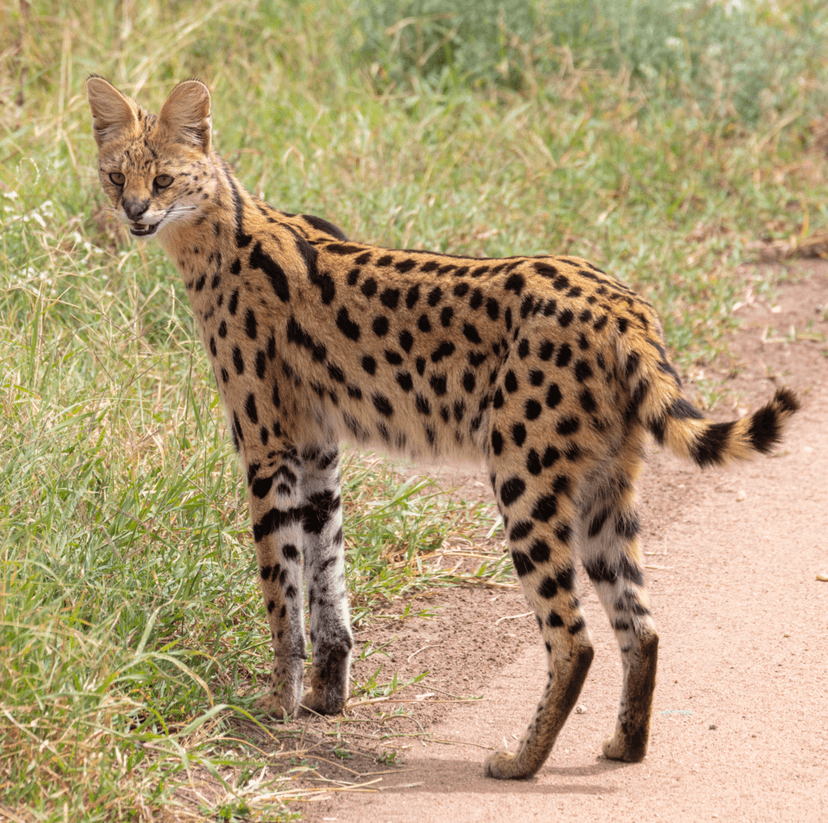
Leptailurus
The serval (Leptailurus serval) is a small wild cat native to sub-Saharan Africa, inhabiting grasslands, wetlands, and savannas. It is distinguished by its exceptionally long legs relative to its body size, a slender build, and a golden-yellow coat with black spots and stripes. This solitary carnivore is an adept hunter, using its acute hearing to locate prey and executing impressive leaps to capture it.
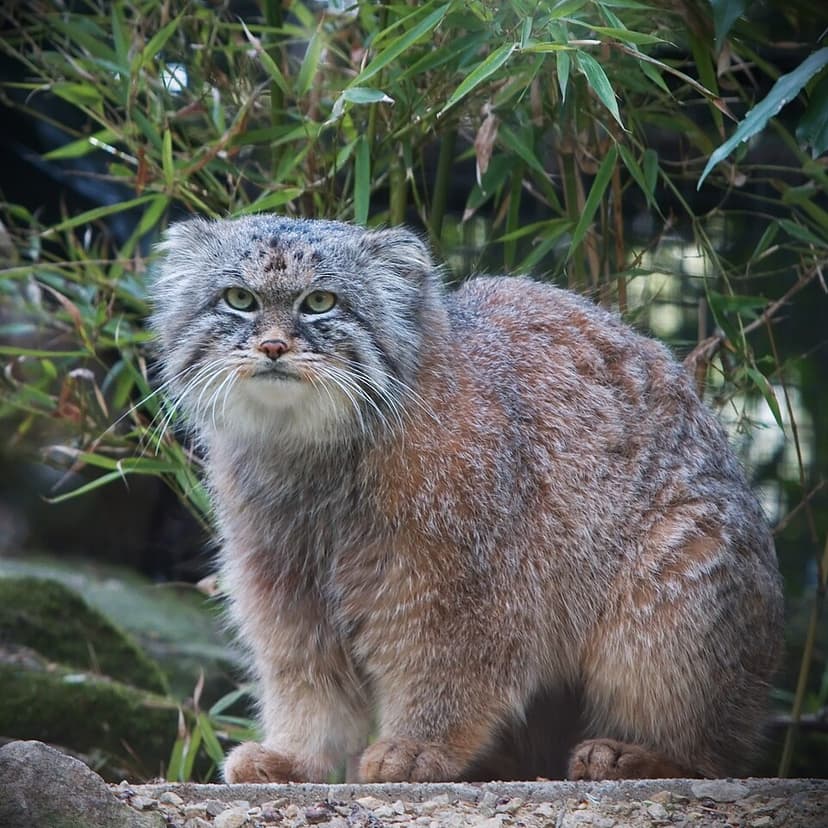
Otocolobus
Pallas's cat (Otocolobus manul), also known as the manul, is a small wild cat native to Central Asia, characterized by its long, dense, light grey fur and rounded ears set low on its head. This species is well-adapted to cold, arid environments and primarily preys on small mammals like lagomorphs and rodents. Despite a wide distribution, the Pallas's cat faces threats from poaching and habitat changes.