
Caracal
Felinae·Caracal·Carnivore·Least Concern
The caracal is a medium-sized wild cat native to Africa, the Middle East, Central Asia, and parts of India and Pakistan. It is distinguished by its robust build, long legs, short face, and notably long, tufted ears. This secretive, primarily nocturnal predator is known for its exceptional leaping ability, capable of catching birds in mid-air.
Key Facts
- ›Native to Africa, the Middle East, Central Asia, and arid regions of Pakistan and northwestern India.
- ›Characterized by long, tufted ears, long legs, and a uniformly reddish tan or sandy coat.
- ›Primarily nocturnal and highly secretive, making it difficult to observe.
- ›A skilled hunter capable of leaping over 3 meters to catch birds in flight.
- ›Diet consists mainly of birds, rodents, and other small mammals.
- ›Breeds throughout the year, with litters typically ranging from one to six kittens.

- Typically nocturnal and secretive.
- Solitary, living mainly alone or in pairs.
- Territorial, marking boundaries with urine and scent.
- Exceptional leaping ability for hunting birds.
- Stalks prey before a final sprint.
- Communicates with meows, growls, hisses, spits, and purrs.
Desert Lynx, Persian Lynx
Meow, Growl, Hiss, Spit, Purr
Habitat Loss, Agricultural Expansion, Building of Roads and Settlements, Hunting For Pet Trade, Retaliation For Livestock Predation, Road Accidents
Long, Black Ear Tufts, Exceptional Leaping Ability, Uniformly Reddish Tan Or Sandy Coat, Short Face With Long Canine Teeth
About Caracal
The caracal (Caracal caracal) is a wild cat recognized for its distinctive long, black ear tufts and robust build. Native to Africa, the Middle East, Central Asia, and arid regions of Pakistan and northwestern India, this medium-sized feline inhabits a variety of environments, preferring dry areas with sufficient cover.
Characteristics and Behavior
Physically, the caracal is characterized by its uniformly reddish tan or sandy coat, long legs, short face, and long canine teeth. Adult males typically weigh between 7.2 and 19 kg, while females range from 7 to 15.9 kg. The caracal is primarily a nocturnal and secretive animal, making it challenging to observe. They are solitary or live in pairs, and are territorial, marking their ranges with scent. Their most striking behavioral trait is their remarkable leaping ability, capable of reaching heights over 3 meters to catch birds in mid-air. They hunt by stalking prey and then launching into a sprint, killing with a precise bite.
Diet and Reproduction
As carnivores, caracals primarily prey on small mammals, with birds forming a significant portion of their diet. They are also known to hunt rodents, lizards, and snakes. Occasionally, they may consume small livestock. Breeding occurs throughout the year, with females becoming sexually mature around one year of age. After a gestation period of two to three months, litters of one to six kittens are born. The young remain with their mother for about nine to ten months before dispersing.
Distribution and Conservation
Caracals are widely distributed across various African and Asian countries. While the species is listed as Least Concern globally by the IUCN, certain regional populations face significant threats. Habitat loss due to agricultural expansion and human development is a major concern. In some areas, caracals are persecuted by local people to protect livestock or in retaliation for predation. Hunting for the pet trade also poses a threat in certain regions. Despite these challenges, caracals are found in numerous protected areas across their range.
Source: Wikipedia ↗
Frequently Asked Questions
What is a caracal?
The caracal is a medium-sized wild cat native to Africa, the Middle East, Central Asia, and parts of Pakistan and northwestern India. It is known for its distinctive long, tufted ears and powerful legs.
Where do caracals live?
Caracals are found in a wide range of habitats including forests, savannas, marshy lowlands, semideserts, and scrub forests. They prefer dry areas with low rainfall and availability of cover, and can be found at elevations up to 3,000 meters in the Ethiopian Highlands.
What do caracals eat?
Caracals are carnivores with a diet primarily consisting of small mammals, which make up at least 80% of their food intake. They also prey on birds, rodents, lizards, snakes, and occasionally small monkeys and young antelopes.
How do caracals hunt?
Caracals are known for their agility and speed, stalking prey to within 5 meters before launching into a sprint. Their powerful hind legs enable them to leap more than 3 meters to catch birds in mid-air. They kill larger prey with a bite to the throat and smaller prey with a bite to the back of the neck.
What is the lifespan of a caracal?
The average lifespan of a caracal in captivity is nearly 16 years. Information on their lifespan in the wild is less precisely documented.
Are caracals endangered?
The caracal is listed as Least Concern on the IUCN Red List globally. However, populations vary by region; they are considered critically endangered in Pakistan and Uzbekistan, and endangered in Jordan, while being stable in central and southern Africa.
Related Felid species
Leptailurus
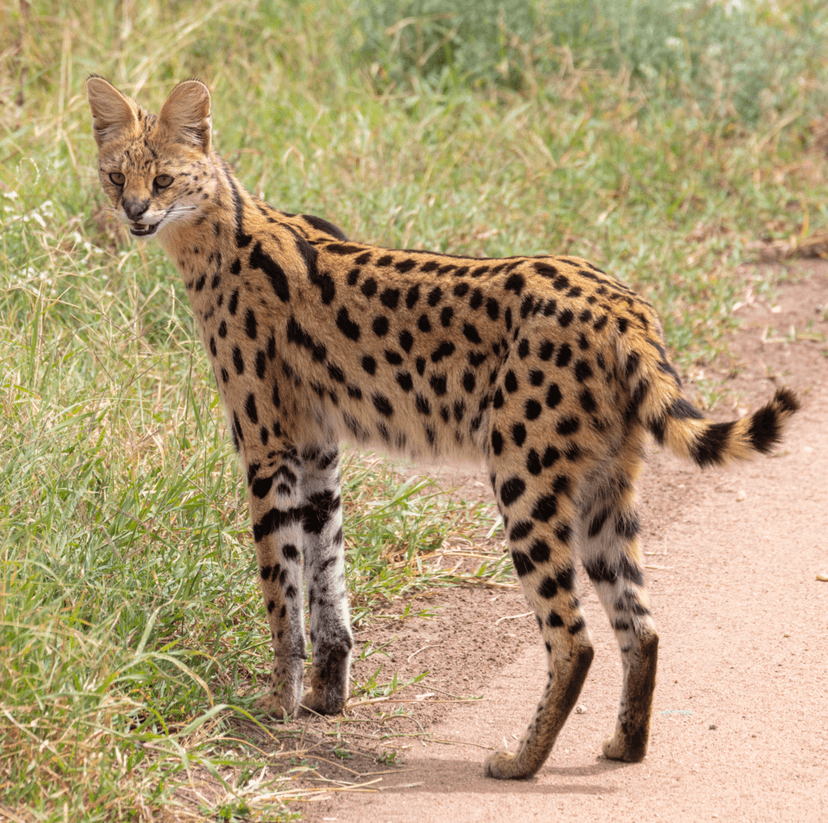
The serval (Leptailurus serval) is a small wild cat native to sub-Saharan Africa, inhabiting grasslands, wetlands, and savannas. It is distinguished by its exceptionally long legs relative to its body size, a slender build, and a golden-yellow coat with black spots and stripes. This solitary carnivore is an adept hunter, using its acute hearing to locate prey and executing impressive leaps to capture it.
Puma
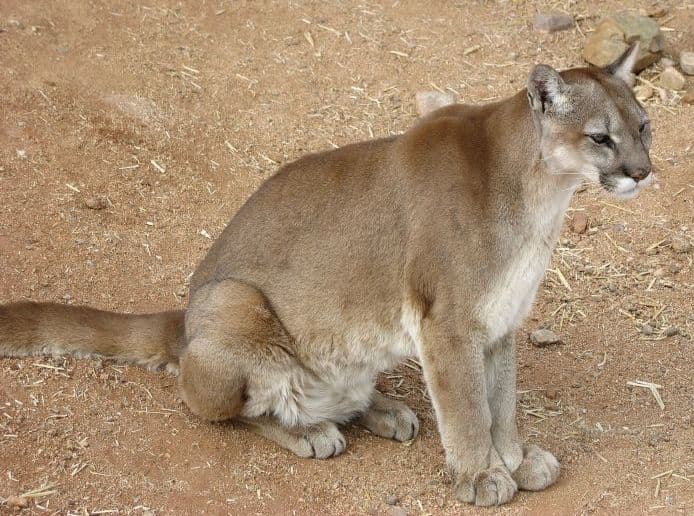
The Puma is a genus within the Felidae family, with its sole extant species being the cougar, also known by many other names including puma and mountain lion. This highly adaptable cat is found across the Americas, inhabiting a wide array of environments from mountains to deserts and forests. Pumas are distinguished by their powerful build, long tails, and a coat color that varies from grey-red to brown-yellow, aiding in camouflage.

Catopuma
Catopuma is a genus of small wild cats native to Southeast Asia, encompassing the Asian golden cat and the bay cat. These felines share similar reddish-brown pelage with darker markings and can exhibit color variations from brown to gray and black. They are found in forested regions, with the Asian golden cat's range extending from northeast India to Sumatra, and the bay cat being endemic to Borneo.