
Puma
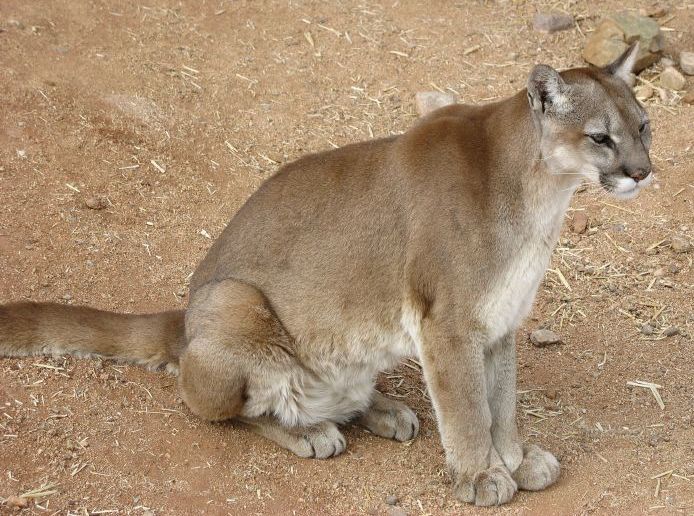
The Puma is a genus within the Felidae family, with its sole extant species being the cougar, also known by many other names including puma and mountain lion. This highly adaptable cat is found across the Americas, inhabiting a wide array of environments from mountains to deserts and forests. Pumas are distinguished by their powerful build, long tails, and a coat color that varies from grey-red to brown-yellow, aiding in camouflage.
Key Facts
- ›The genus Puma's only living species is the cougar, also known as the puma or mountain lion.
- ›Pumas are found in a diverse range of habitats across North and South America.
- ›Adult males can weigh between 52 and 100 kg, while females range from 29 to 64 kg.
- ›They are powerful carnivores with a diet consisting of rodents, birds, and larger prey like deer and bighorn sheep.
- ›Pumas are solitary animals, except when mothers are raising their young.
- ›Despite habitat fragmentation, the cougar is listed as a species of Least Concern by the IUCN due to its adaptability.
Mountains, Forest, Tropical Jungle, Grasslands, Arid Desert Regions, Rocky Crags, Pastures
Solitary, Hunt at night and day, Cover large home ranges, Known to share food kills with other pumas
Cougar, Mountain Lion, Panther
Warning Calls, Mating Calls
Habitat Fragmentation, Urban Development, Freeways, Inbreeding
Highly Adaptable To Various Habitats, Powerful Leaping Ability, Coat Color Varies With Climate
About Puma
The genus Puma is a member of the Felidae family, with its sole extant species being the cougar, widely recognized also as the puma or mountain lion. Fossil representatives, such as Puma pardoides, suggest a broader historical distribution in the Old World, while Puma pumoides and the "American cheetahs" are possible New World fossil relatives. Despite their large size, pumas are more closely related to smaller feline species than to true big cats like lions.
Distribution and Habitat
Pumas are primarily found in the mountainous regions of North and South America, often residing in rocky crags and pastures. However, their remarkable adaptability allows them to thrive in a diverse array of habitats, including forests, tropical jungles, grasslands, and arid desert regions. As human settlements expand and land is cleared, pumas are increasingly found in smaller and more challenging territories, though their adaptability is expected to aid their survival.
Anatomy and Appearance
As the fourth-largest cat species, pumas possess a robust physique. Adult males can reach approximately 2.4 meters from nose to tail and weigh between 52 and 100 kg, while females are generally smaller, measuring up to 2.0 meters and weighing 29 to 64 kg. Their tails range from 0.6 to 0.9 meters in length. They have round heads with erect ears and powerful forequarters, necks, and jaws. Their fur coat, which varies from brown-yellow to grey-red depending on the subspecies and climate, provides insulation. The hindlimbs are notably stronger than the forelimbs, enabling impressive leaps of up to 5 meters vertically and 12 to 14 meters horizontally. They are capable of reaching speeds of up to 80 km/h during sprints.
Behavior and Lifestyle
Pumas are predominantly solitary animals, only congregating for mating or when a mother is raising her cubs. They maintain large home ranges, covering significant distances in search of food. These cats are equally adept at hunting during the day and at night. While historically considered solitary, recent observations have revealed instances of pumas sharing food kills with others, suggesting a more complex social dynamic than previously understood.
Diet
Pumas are powerful carnivores. Their diet typically includes small animals such as rodents, birds, fish, and rabbits. Larger individuals are capable of preying on larger animals like deer, bighorn sheep, guanacos, and mountain goats. They may also prey on livestock in areas where populations are high.
Reproduction and Life Cycles
The breeding season for pumas generally occurs between December and March. Following a gestation period of approximately 91 days, litters of up to six kittens are born. The male and female separate after mating, with the female solely responsible for raising the young. Kittens are born blind and helpless, with spots that fade as they mature into adulthood. They begin to eat solid food around 2 to 3 months of age and typically remain with their mother for about a year. In the wild, the average lifespan is around 12 years, but individuals can live up to 25 years in captivity.
Conservation
Despite being pushed into smaller habitats due to human expansion, the cougar is designated as a species of Least Concern by the IUCN. This is attributed to their exceptional adaptability to changing environments. However, in some metropolitan areas, habitat fragmentation caused by urban development and freeways isolates populations, hindering genetic diversity and increasing the risk of inbreeding. Conservation efforts are underway to mitigate these threats, including proposals for wildlife crossings to facilitate safe passage across freeways.
Source: Wikipedia ↗
Frequently Asked Questions
What are the different names for the Puma species?
The extant species within the Puma genus is most commonly known as the cougar. It is also widely recognized by other names such as puma, mountain lion, and panther.
Where do Pumas live?
Pumas are primarily found in the mountains of North and South America. They are highly adaptable and can inhabit a variety of environments including forests, tropical jungles, grasslands, and arid desert regions.
How large do Pumas get?
Adult male pumas can reach lengths of up to 2.4 meters (7.9 feet) from nose to tail and weigh between 52 and 100 kg. Females are typically smaller, reaching up to 2.0 meters (6.7 feet) and weighing between 29 and 64 kg.
What do Pumas eat?
Pumas are carnivores. Their diet primarily consists of small animals like rodents, birds, fish, and rabbits. They are also capable of hunting larger prey such as deer, bighorn sheep, and mountain goats.
Are Pumas social animals?
Generally, members of the Puma genus live solitary lives, with the exception of cubs spending time with their mothers. However, recent studies have documented instances of pumas sharing food kills with other nearby pumas, suggesting a more complex social interaction than previously understood.
What is the conservation status of the Puma?
The cougar, the sole extant species in the Puma genus, is classified as a species of Least Concern by the IUCN. This designation reflects its low risk of extinction in the wild, largely due to its remarkable adaptability to various environmental conditions.
Related Felid species
Leptailurus
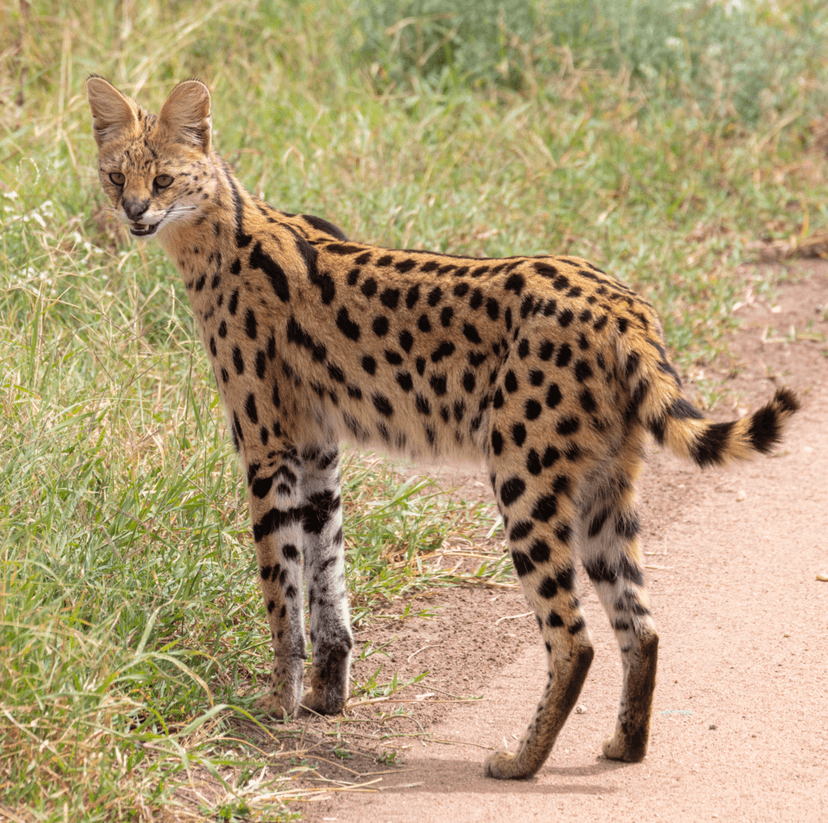
The serval (Leptailurus serval) is a small wild cat native to sub-Saharan Africa, inhabiting grasslands, wetlands, and savannas. It is distinguished by its exceptionally long legs relative to its body size, a slender build, and a golden-yellow coat with black spots and stripes. This solitary carnivore is an adept hunter, using its acute hearing to locate prey and executing impressive leaps to capture it.

Caracal
The caracal is a medium-sized wild cat native to Africa, the Middle East, Central Asia, and parts of India and Pakistan. It is distinguished by its robust build, long legs, short face, and notably long, tufted ears. This secretive, primarily nocturnal predator is known for its exceptional leaping ability, capable of catching birds in mid-air.

Catopuma
Catopuma is a genus of small wild cats native to Southeast Asia, encompassing the Asian golden cat and the bay cat. These felines share similar reddish-brown pelage with darker markings and can exhibit color variations from brown to gray and black. They are found in forested regions, with the Asian golden cat's range extending from northeast India to Sumatra, and the bay cat being endemic to Borneo.