
Leptailurus
Felinae·Leptailurus·Carnivore·Least Concern
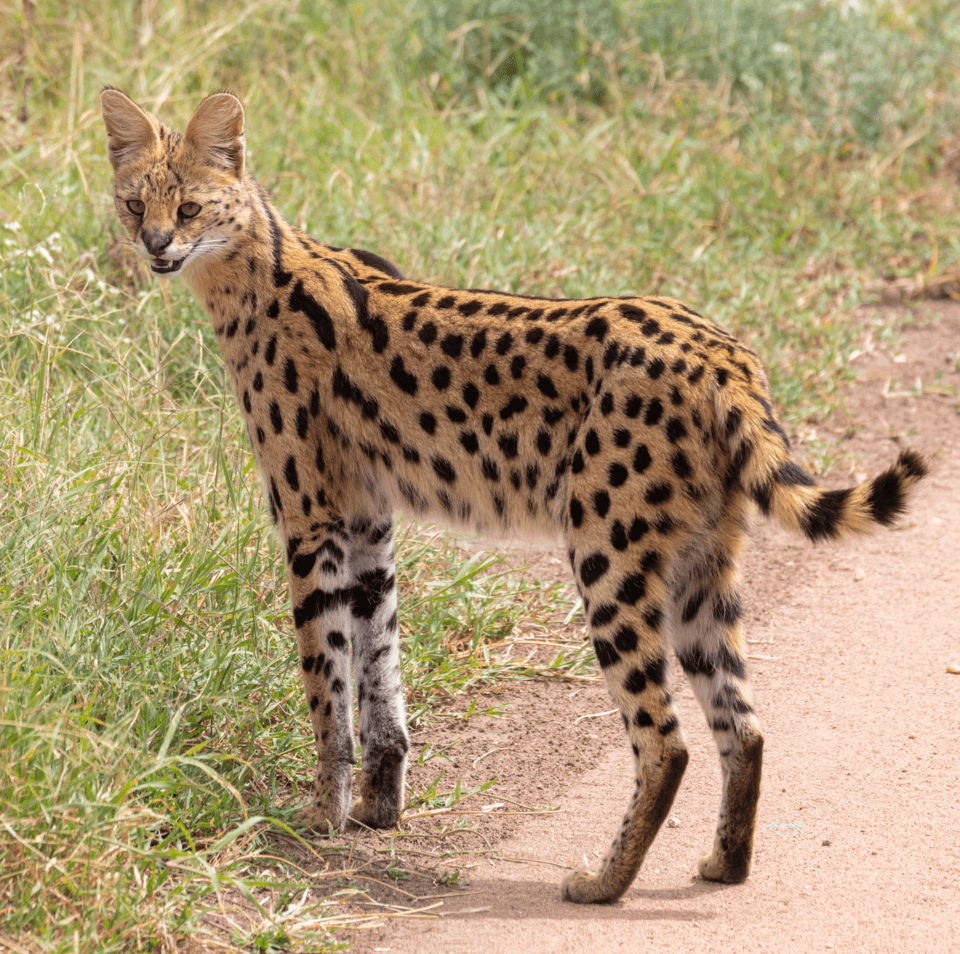
The serval (Leptailurus serval) is a small wild cat native to sub-Saharan Africa, inhabiting grasslands, wetlands, and savannas. It is distinguished by its exceptionally long legs relative to its body size, a slender build, and a golden-yellow coat with black spots and stripes. This solitary carnivore is an adept hunter, using its acute hearing to locate prey and executing impressive leaps to capture it.
Key Facts
- ›Native to sub-Saharan Africa, found in grasslands, wetlands, and savannas.
- ›Possesses the longest legs of any cat relative to its body size.
- ›Feeds primarily on rodents, small birds, frogs, insects, and reptiles.
- ›Known for its remarkable leaping ability to catch prey.
- ›Solitary by nature, except during the mating season.
- ›Listed as Least Concern by the IUCN Red List.
Grasslands, Wetlands, Moorlands, Bamboo Thickets, Savanna, Semi-Arid Areas, Cork Oak Forests
Solitary, Active By Day and Night, Excellent Hearing For Locating Prey, Uses Powerful Leaps To Hunt, Marks Territory With Feces and Saliva, Cautious of Surroundings, Can Climb Trees To Escape Predators
Serval
Purr, Chirp, Hiss, Cackle, Growl, Grunt, Meow
Degradation of Wetlands and Grasslands, Trade of Serval Skins, Killing By Pastoralists To Protect Livestock
Hyenas, African Wild Dogs
Longest legs of any cat relative to body size, Large, independently rotating ears, Exceptional leaping ability
About Leptailurus
Leptailurus (Serval)
The serval, scientifically classified as Leptailurus serval, is a medium-sized wild cat native to the African continent. It is the sole member of its genus and is widely distributed across sub-Saharan countries, thriving in diverse habitats such as grasslands, wetlands, moorlands, and bamboo thickets. The serval is easily recognized by its slender build, strikingly long legs—the longest in proportion to its body size among all felids—and its distinctive coat, which is typically golden-yellow to buff, adorned with black spots and stripes. Its head is small, complemented by large ears that aid in its exceptional hearing, crucial for hunting.
Hunting and Diet
As a solitary carnivore, the serval is an opportunistic hunter that is active both during the day and at night. Its diet primarily consists of rodents, particularly vlei rats, but also includes small birds, frogs, insects, and reptiles. The serval's hunting strategy involves using its keen hearing to pinpoint prey, often remaining motionless for extended periods before executing a remarkable leap of up to 2 meters in the air to pounce on its target. This powerful jump incapacitates the prey, which is then killed with a bite to the neck or head. Servals are also known to cache larger kills for later consumption.
Behavior and Reproduction
Servals maintain highly overlapping home ranges, which they mark with feces and saliva. Social interaction is minimal, occurring mainly during the mating season. Females typically give birth to a litter of one to four kittens after a gestation period of two to three months. The young are born blind and are weaned at about one month old, beginning to hunt independently around six months and leaving their mother by the age of one year. While they can reach sexual maturity between 12 and 25 months, their lifespan is approximately 10 years in the wild and up to 20 years in captivity.
Conservation and Cultural Significance
The serval is currently listed as Least Concern by the IUCN, although habitat degradation poses a threat to its populations. Hunting is regulated or prohibited in many of its range countries, and it is found in numerous protected areas. Historically, servals have been depicted in Ancient Egyptian art, and they continue to be occasionally kept as pets, though their ownership is often regulated due to their wild nature. They can also be hybridized with domestic cats to create breeds like the Savannah cat.
Source: Wikipedia ↗
Frequently Asked Questions
What is a serval?
The serval, scientifically known as Leptailurus serval, is a small wild cat species native to Africa. It is characterized by its slender build, long legs, large ears, and a spotted and striped coat. Servals are solitary carnivores found in various African habitats.
Where do servals live?
Servals are widespread across sub-Saharan African countries, inhabiting grasslands, wetlands, moorlands, and bamboo thickets. They prefer areas with water bodies and tall grasses or reeds for cover.
What do servals eat?
Servals are carnivores with a diet consisting mainly of rodents, such as vlei rats, and also include small birds, frogs, insects, and reptiles. They are known to occasionally hunt larger prey like duikers and young antelopes.
How do servals hunt?
Servals use their acute hearing to locate prey, often remaining motionless for extended periods. They then launch into impressive leaps, sometimes exceeding 2 meters in height, to pounce on their prey with their forepaws, incapacitating it before delivering a killing bite.
Are servals social animals?
Servals are primarily solitary animals, with little social interaction outside of the mating season. The only long-lasting bond is typically between a mother and her cubs, which stay with her for about a year.
What is the conservation status of the serval?
The serval is currently listed as Least Concern on the IUCN Red List. However, habitat degradation remains a significant threat to its survival across its range.
Related Felid species

Caracal
The caracal is a medium-sized wild cat native to Africa, the Middle East, Central Asia, and parts of India and Pakistan. It is distinguished by its robust build, long legs, short face, and notably long, tufted ears. This secretive, primarily nocturnal predator is known for its exceptional leaping ability, capable of catching birds in mid-air.
Puma
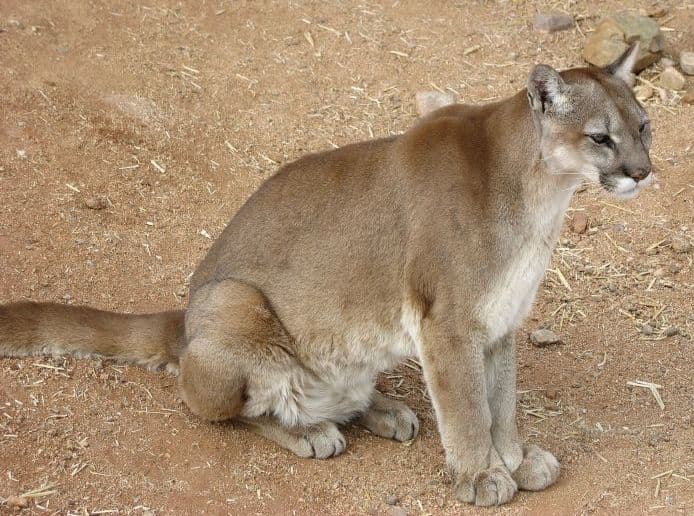
The Puma is a genus within the Felidae family, with its sole extant species being the cougar, also known by many other names including puma and mountain lion. This highly adaptable cat is found across the Americas, inhabiting a wide array of environments from mountains to deserts and forests. Pumas are distinguished by their powerful build, long tails, and a coat color that varies from grey-red to brown-yellow, aiding in camouflage.

Herpailurus
The jaguarundi (Herpailurus yagouaroundi) is a medium-sized wild cat native to the Americas, with a range extending from central Argentina to northern Mexico. Distinctive for its slender build, uniform coat coloration in gray or red morphs, and an elongated body with short legs and a long tail, it resembles mustelids. Unlike many other feline species, the jaguarundi is primarily diurnal, hunting during the day and evening.