
Otocolobus
Felinae·Otocolobus·Carnivore·Least Concern
Pallas's cat (Otocolobus manul), also known as the manul, is a small wild cat native to Central Asia, characterized by its long, dense, light grey fur and rounded ears set low on its head. This species is well-adapted to cold, arid environments and primarily preys on small mammals like lagomorphs and rodents. Despite a wide distribution, the Pallas's cat faces threats from poaching and habitat changes.
Key Facts
- ›Pallas's cat has exceptionally dense fur, with up to 9,000 hairs per square centimeter, providing insulation in its cold habitat.
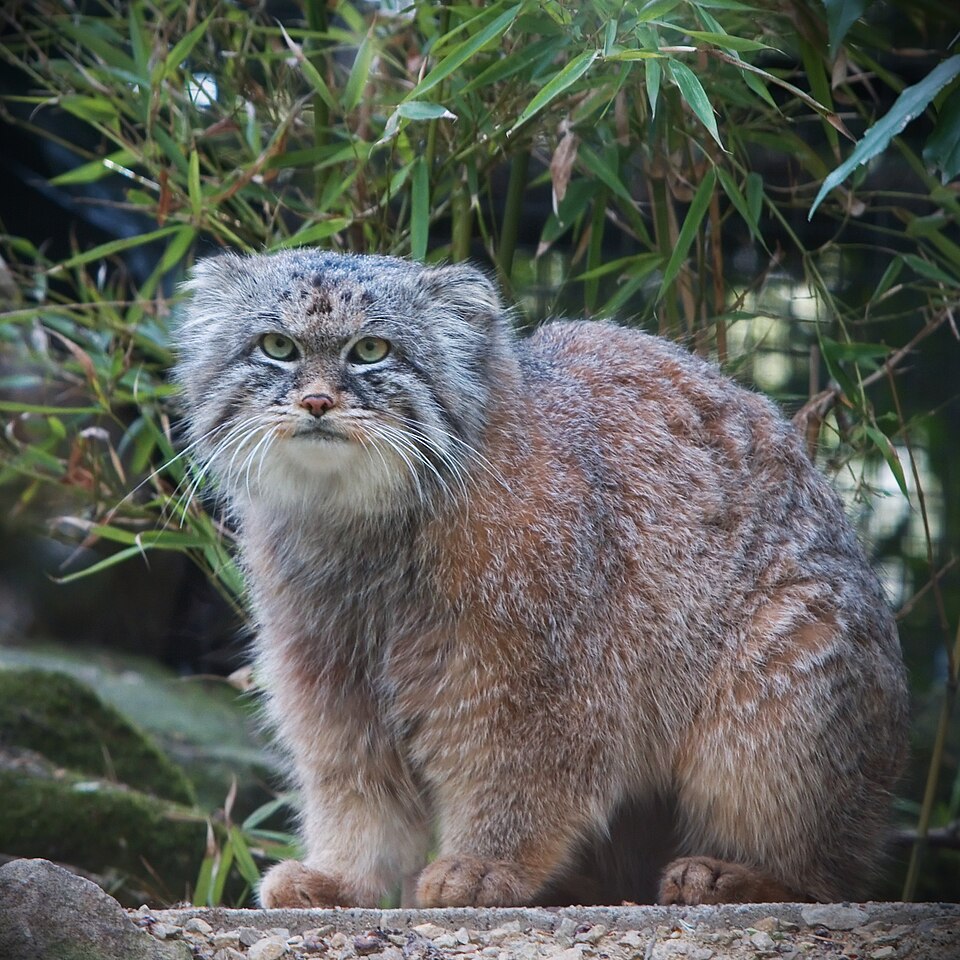
- ›Its rounded ears are set low on its head, allowing it to peer over obstacles with minimal exposure.
- ›The species inhabits rocky montane grasslands and shrublands where snow cover is not excessively deep.
- ›Primary prey includes lagomorphs, rodents, and occasionally birds.
- ›Females typically give birth to litters of two to six kittens in the spring.
- ›Pallas's cat is listed as Least Concern on the IUCN Red List but faces regional threats.
Montane Grasslands, Shrublands, Rocky Outcrops, Scree Slopes, Ravines, Dry Steppe, Semi-Desert
- Solitary
- Crepuscular
- Uses caves, rock crevices, and burrows for shelter
- Hunts by stalking or ambushing prey near burrow exits
- Can pull rodents from shallow burrows with its paws
Manul
Poaching, Prey base decline due to rodent control, Habitat fragmentation, Mining, Infrastructure projects, Herding dogs, Traps set for small mammals
Long, dense, light grey fur, Rounded ears set low on the head, Round pupils, Stocky build
About Otocolobus
Pallas's Cat (Otocolobus manul)
Pallas's cat, also known as the manul, is a small wild cat native to the cold, arid regions of Central Asia. Its scientific name is Otocolobus manul, and it is distinguished by its exceptionally long and dense light grey fur, rounded ears set low on its head, and a stocky build, all adaptations for surviving in its harsh environment.
Habitat and Distribution
The Pallas's cat inhabits rocky montane grasslands and shrublands across a vast territory stretching from the Caucasus and Iranian Plateau eastward through the Himalayas, Tibetan Plateau, and into the Altai-Sayan region and South Siberian Mountains. They prefer areas with limited rainfall and wide temperature fluctuations, utilizing rock crevices and burrows for shelter. Their habitat is typically characterized by snow cover that remains below 15–20 cm.
Physical Characteristics
This species is about the size of a domestic cat, weighing between 2.5 and 4.5 kg. Its head-and-body length is typically 46–65 cm, with a tail of 21–31 cm. The fur is a primary distinguishing feature, being incredibly dense with up to 9,000 hairs per square centimeter, providing insulation against extreme cold. The coat is predominantly light grey, sometimes with yellowish or reddish tinges, and features black zigzag lines on the cheeks and dark rings on the tail. Notably, Pallas's cats possess rounded pupils, a trait shared with a few other members of the Felinae subfamily.
Diet and Behavior
Pallas's cats are specialized carnivores, primarily preying on small mammals such as lagomorphs (pikas, hares) and rodents (ground squirrels, voles). They hunt by stalking or ambushing their prey, often near burrow exits, and are also capable of pulling rodents from shallow burrows. These cats are solitary and generally crepuscular, most active during dawn and dusk, though their activity patterns can be influenced by seasonal changes and the presence of livestock.
Reproduction and Life Cycle
Females reach sexual maturity around one year of age and have a gestation period of 66 to 75 days. Litters typically consist of two to six kittens, born in spring. Newborns are born with fuzzy fur and closed eyes, opening them after about two weeks. Kittens begin hunting around five months of age and reach adult size by six to seven months.
Conservation Status and Threats
As of 2020, Pallas's cat is listed as Least Concern on the IUCN Red List due to its widespread distribution and presumed large population. However, certain populations face significant threats. These include poaching for their fur and body parts, depletion of their prey base due to rodent control programs, and habitat fragmentation caused by mining and infrastructure development. In some regions, they are also threatened by encounters with herding dogs and by being accidentally caught in traps set for other small mammals.
Source: Wikipedia ↗
Frequently Asked Questions
What is Pallas's cat, and where does it live?
Pallas's cat, scientifically known as Otocolobus manul, is a small wild cat found across a wide range in Central Asia. Its native range extends from the Caucasus eastward to the Tibetan Plateau and the South Siberian Mountains.
What are the distinctive physical features of Pallas's cat?
Pallas's cats are recognized by their long, dense, light grey fur, rounded ears positioned low on the sides of their head, and a stocky build. Their fur provides excellent camouflage and insulation against the cold.
What does Pallas's cat eat?
The diet of Pallas's cat is specialized, consisting mainly of small mammals. Their primary prey includes lagomorphs such as pikas and hares, as well as various rodents like ground squirrels and voles.
What is the habitat of Pallas's cat?
Pallas's cats inhabit rocky montane grasslands and shrublands. They prefer areas with limited rainfall and a wide temperature range, seeking shelter in rock crevices and abandoned burrows.
What are the conservation concerns for Pallas's cat?
While Pallas's cat is listed as Least Concern globally due to its wide range, some populations are threatened by poaching, declines in prey availability due to rodent control, and habitat fragmentation from mining and infrastructure.
How is Pallas's cat behaviorally described?
Pallas's cats are solitary animals. They are primarily crepuscular, meaning they are most active during dawn and dusk, though their activity patterns can vary seasonally and with the presence of human activity.
Related Felid species

Caracal
The caracal is a medium-sized wild cat native to Africa, the Middle East, Central Asia, and parts of India and Pakistan. It is distinguished by its robust build, long legs, short face, and notably long, tufted ears. This secretive, primarily nocturnal predator is known for its exceptional leaping ability, capable of catching birds in mid-air.

Herpailurus
The jaguarundi (Herpailurus yagouaroundi) is a medium-sized wild cat native to the Americas, with a range extending from central Argentina to northern Mexico. Distinctive for its slender build, uniform coat coloration in gray or red morphs, and an elongated body with short legs and a long tail, it resembles mustelids. Unlike many other feline species, the jaguarundi is primarily diurnal, hunting during the day and evening.
Leptailurus
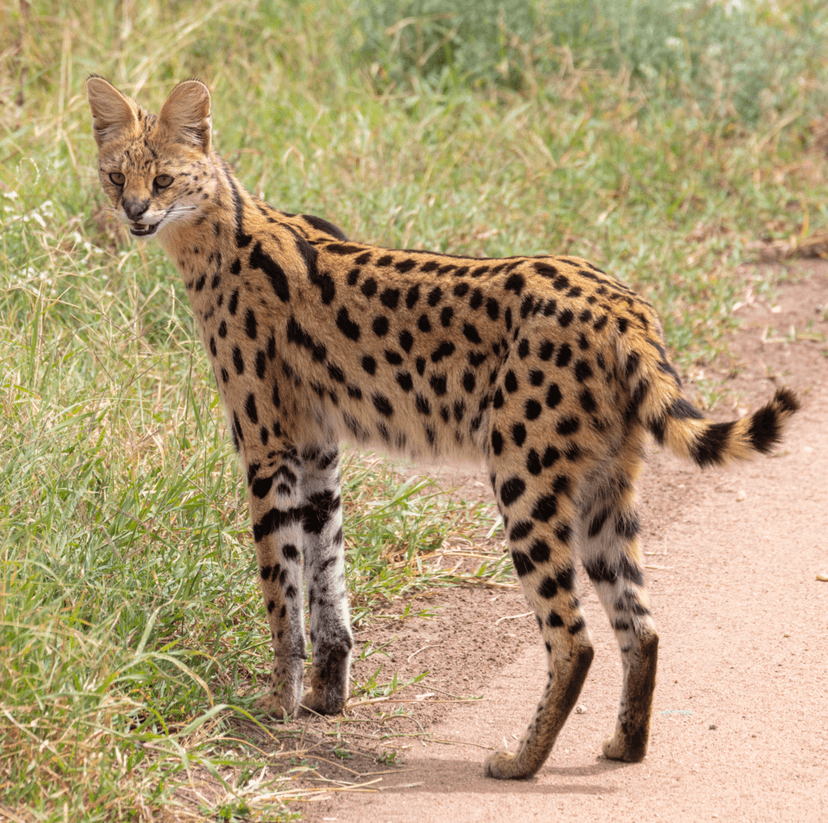
The serval (Leptailurus serval) is a small wild cat native to sub-Saharan Africa, inhabiting grasslands, wetlands, and savannas. It is distinguished by its exceptionally long legs relative to its body size, a slender build, and a golden-yellow coat with black spots and stripes. This solitary carnivore is an adept hunter, using its acute hearing to locate prey and executing impressive leaps to capture it.