
Neofelis
Pantherinae·Neofelis·Carnivore
Neofelis is a genus of cats native to Southeast Asia. It comprises two distinct species: the clouded leopard of mainland Asia and the Sunda clouded leopard found on Sumatra and Borneo. These cats are characterized by their exceptionally long canine teeth and a remarkable jaw gape, placing them in the subfamily Pantherinae and making them more closely related to iconic large cats like lions and tigers than other felids.
Key Facts
- ›The genus Neofelis includes the clouded leopard and the Sunda clouded leopard.
- ›They possess the largest gape among extant carnivores, reaching approximately 90 degrees.
- ›Neofelis species are found in primary evergreen tropical rainforests but also inhabit secondary forests, grasslands, and scrub.
- ›Deforestation and commercial poaching for their skins, claws, teeth, bones, and meat are the primary threats to their survival.
- ›Both species are listed in CITES Appendix I and are protected across most of their range.
- ›Their skull anatomy shares resemblances with the extinct saber-toothed cat, Smilodon.
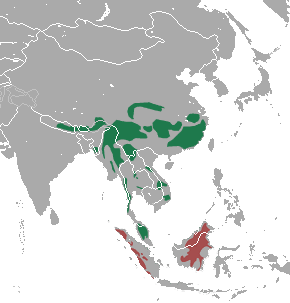
Primary Evergreen Tropical Rainforest, Secondary Forest, Logged Forest, Grassland, Scrub
- Arboreal capabilities implied by habitat and morphology
- Primarily associated with rainforest environments
- Adaptable to secondary and logged forests, as well as grasslands and scrub
Clouded Leopard, Sunda Clouded Leopard
Deforestation, Commercial Poaching, Wildlife Trade
- Exceptionally Long Canine Teeth
- Maximum Gape of Approximately 90 Degrees
- Skull Anatomy Reminiscent of Saber-Toothed Cats
About Neofelis
The genus Neofelis comprises two distinct species of cats found in the diverse ecosystems of Southeast Asia: the clouded leopard (Neofelis nebulosa) of mainland Asia and the Sunda clouded leopard (Neofelis diardi) native to the islands of Sumatra and Borneo. The genus name itself is a combination of Greek and Latin, meaning 'new cat,' reflecting their unique status within the felid family.
Taxonomy and Relatives
Classified within the subfamily Pantherinae, Neofelis shares a closer evolutionary relationship with iconic large cats such as lions, tigers, leopards, and jaguars (genus Panthera) than with other felids. This placement is supported by anatomical features, particularly their skull morphology, which has been noted for its resemblances to the extinct saber-toothed cat, Smilodon.
Unique Characteristics
Neofelis species are distinguished by their exceptionally long, conical canine teeth and a remarkable skull structure that enables an unusually wide jaw gape, reaching approximately 90 degrees. This is the largest gape recorded among extant carnivores. While specific measurements for average weight and length are not detailed, their physical adaptations suggest a carnivorous diet.
Distribution and Habitat
These elusive cats inhabit a broad swathe of Southeast Asia, with populations ranging from the Himalayan foothills in Nepal eastward to southern China, and extending southeastward to Myanmar, the Malay Peninsula, and the islands of Sumatra, Java, and Borneo. Their primary habitat is the dense environment of primary evergreen tropical rainforests. However, they demonstrate adaptability, also being sighted in secondary and logged forests, as well as in grassland and scrubland areas, and have been recorded at elevations up to 1,450 meters in the Himalayan foothills.
Threats and Conservation
Both Neofelis species face significant threats, primarily driven by habitat destruction through deforestation. Commercial poaching is another major concern, with their skins, claws, teeth, bones, and meat being sought after for the wildlife trade, traditional Asian medicines, and the pet trade. Recognizing their vulnerable status, both the clouded leopard and the Sunda clouded leopard are listed in CITES Appendix I, affording them the highest level of international protection. Hunting is prohibited in most of their range states, underscoring global efforts to conserve these unique felines.
Source: Wikipedia ↗
Frequently Asked Questions
What are the species within the Neofelis genus?
The genus Neofelis currently comprises two extant species: the clouded leopard (Neofelis nebulosa) found in mainland Southeast Asia, and the Sunda clouded leopard (Neofelis diardi) which inhabits the islands of Sumatra and Borneo.
What is unique about the Neofelis skull and jaw structure?
Neofelis species possess an elongate skull with a broad face and remarkably long canine teeth. This unique anatomy allows them to achieve an extraordinary jaw gape of approximately 90 degrees, the largest among all living carnivores.
Where are Neofelis species found?
These cats are distributed from Nepal and Sikkim eastward through mainland Southeast Asia to southern China, and southeastward to Myanmar, the Malay Peninsula, Sumatra, Java, and Borneo. They are most commonly associated with primary evergreen tropical rainforests.
What are the main threats facing Neofelis cats?
The most significant threats to Neofelis species are deforestation, which destroys their habitat, and commercial poaching. They are targeted for their skins, claws, teeth, bones, and meat, which are used in traditional medicines, clothing, and the pet trade.
Are Neofelis species protected?
Yes, both Neofelis species are listed in CITES Appendix I, indicating they are endangered and subject to strict international trade regulations. Hunting is banned in many of their range states, with hunting regulations in place in others.
How closely related are Neofelis to other big cats?
Neofelis is placed in the subfamily Pantherinae, which also includes the genus Panthera (lions, tigers, leopards, jaguars). This classification indicates they are more closely related to these iconic big cats than to other smaller felid species.
Related Felid species

Panthera
Panthera is a genus of large cats within the Felidae family, distinguished by their ability to roar, a trait shared by most species due to specialized vocal folds and an incompletely ossified hyoid bone. This genus includes the world's largest living cat species, such as the lion, tiger, jaguar, and leopard, along with the snow leopard. Their evolutionary history is complex, with genetic studies helping to clarify relationships and taxonomic classifications.
Lynx
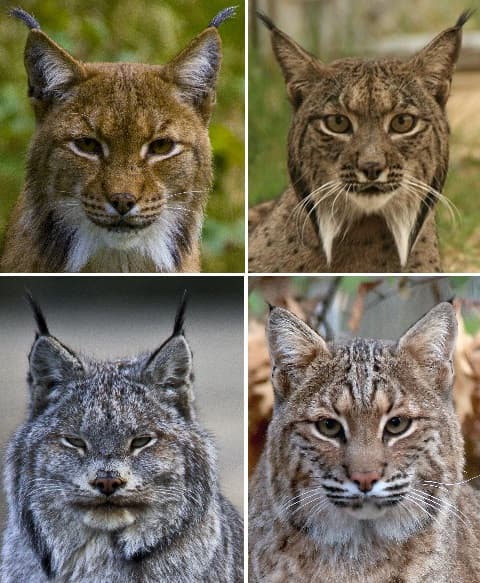
The lynx is a genus of medium-sized wild cats, comprising four extant species: the Canada lynx, Iberian lynx, Eurasian lynx, and bobcat. Originating from an Indo-European root word meaning 'light' or 'brightness,' their name is thought to refer to their reflective eyes. Lynx are distinctive for their short tails, tufted ears, large padded paws, and facial ruffs.
Leptailurus
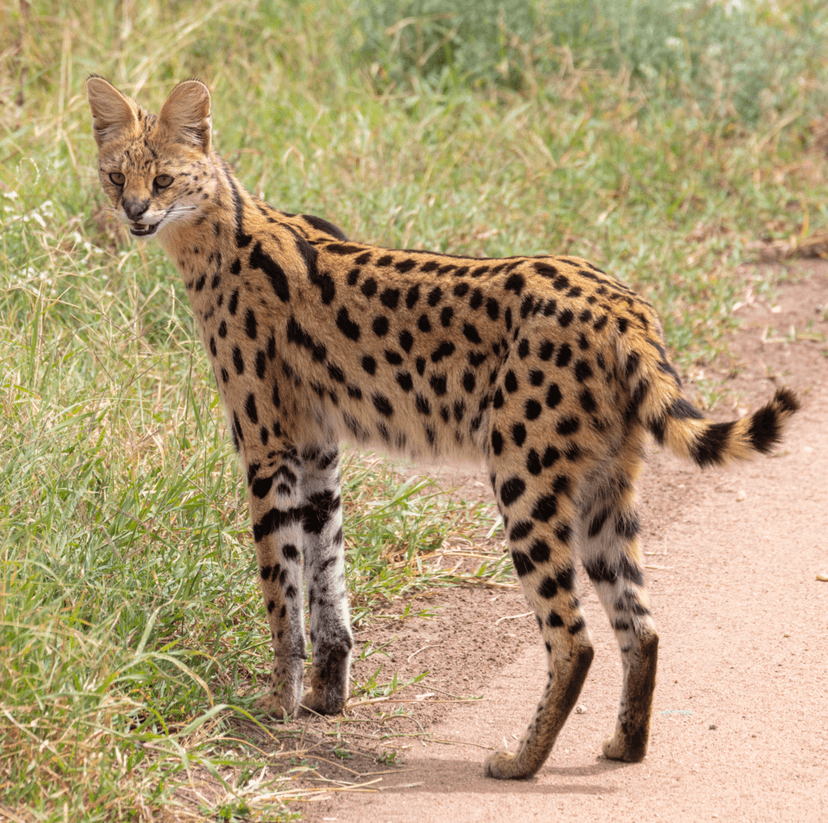
The serval (Leptailurus serval) is a small wild cat native to sub-Saharan Africa, inhabiting grasslands, wetlands, and savannas. It is distinguished by its exceptionally long legs relative to its body size, a slender build, and a golden-yellow coat with black spots and stripes. This solitary carnivore is an adept hunter, using its acute hearing to locate prey and executing impressive leaps to capture it.