
Acanthixalus spinosus
Acanthixalus spinosus, commonly known as the African wart frog, is a species of frog native to Africa, found from southeastern Nigeria to Gabon and the Democratic Republic of the Congo. It is distinctive for its warty, black or brownish-to-olive dorsum with an hourglass pattern, and the males' unique possession of strong tarsal spines and larger digital discs. This species primarily inhabits lowland rainforests, dwelling in water-filled tree holes and exhibiting predominantly aquatic behavior.
Key Facts
- ›Found in lowland rainforests of Africa, from Nigeria to the Democratic Republic of the Congo.
- ›Males and females range from 30-38 MM and 32-36 MM snout-to-vent length, respectively.
- ›Features a warty, dark dorsum with a distinctive hourglass pattern.
- ›Males possess strong spines on their tarsus and larger digital discs than females.
- ›Primarily aquatic, living in water-filled tree holes and only emerging at night to forage.
- ›Vulnerable to habitat loss due to its reliance on large trees with water-collecting holes.
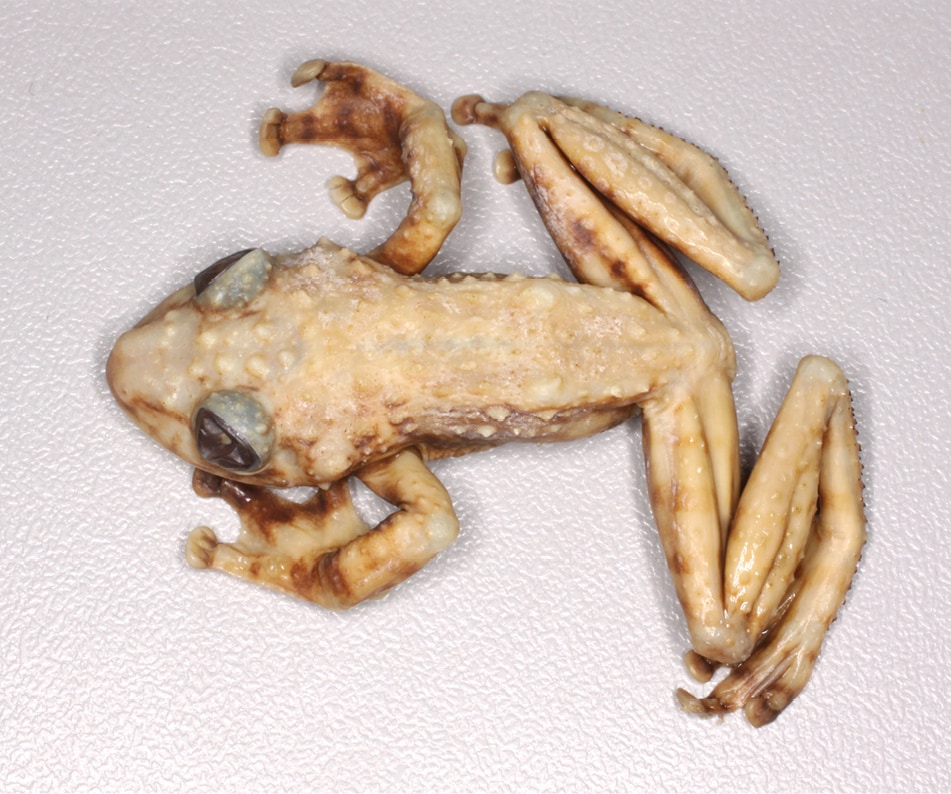
African Wart Frog
Rainforest, Wetlands
Warty Dorsal Surface, Hourglass Pattern On Dorsum and Limbs, Strong Spines On Tarsus, Larger Digital Discs
About Acanthixalus spinosus
Acanthixalus spinosus: The African Wart Frog
Acanthixalus spinosus, more commonly recognized as the African wart frog, is a species of frog belonging to the Hyperoliidae family, which includes sedge and bush frogs. This species is indigenous to Africa, with its range extending from southeastern Nigeria across to Gabon and into the Democratic Republic of the Congo.
Description and Physical Characteristics
The African wart frog is characterized by its warty skin, typically colored black, brownish, or olive. A distinctive feature is the hourglass pattern formed by irregular transverse bands that adorn its dorsum and limbs. Adult males measure between 30–38 mm and females between 32–36 mm in snout-to-vent length. Males are further distinguished by the presence of strong spines on their tarsus and larger digital discs compared to females. Interestingly, males are believed to be mute, lacking vocal sacs or vocal sac openings. The tadpoles can grow up to 60 mm in total length and are detritivores. Newly metamorphosed juveniles exhibit a striking bright orange dorsal coloration, accented with deep maroon markings on the head and across the middle and lumbar regions of the back.
Habitat and Ecology
This species primarily inhabits lowland rainforests, where it leads a predominantly aquatic life. Its niche is the water-filled holes found within trees, a habitat that dictates its survival. Acanthixalus spinosus appears to emerge from these tree holes only during the night to forage. The reproductive cycle involves eggs being deposited a few centimeters above the water surface within these tree holes; upon hatching, the tadpoles drop into the water below. Tadpole development is relatively lengthy, taking approximately three months. The species is also noted as being a host to the commensal protists Opalina proteus and Cepedea couillardi.
Conservation Concerns
The African wart frog faces significant conservation challenges. Its reliance on large trees that possess natural cavities capable of collecting rainwater makes it particularly vulnerable to the ongoing loss of forest habitats. This dependence on specific environmental conditions underscores the impact of deforestation on its population.
Source: Wikipedia ↗
Frequently Asked Questions
What is the common name for Acanthixalus spinosus?
Acanthixalus spinosus is commonly known as the African wart frog. This name likely refers to its warty skin texture and its African origin.
Where is the African wart frog found?
The African wart frog is native to Africa and can be found in a range stretching from south-eastern Nigeria to Gabon and the Democratic Republic of the Congo. Its habitat is specifically lowland rainforests.
What are the physical characteristics of Acanthixalus spinosus?
This frog has a warty, black or brownish to olive dorsum marked with an hourglass pattern of irregular transverse bands on its body and limbs. Males are distinguished by strong spines on their tarsus and larger digital discs compared to females.
What is the habitat of the African wart frog?
Acanthixalus spinosus primarily lives in lowland rainforests, where it is mostly aquatic. It inhabits water-filled holes within trees and is dependent on these large trees for survival.
How does Acanthixalus spinosus reproduce?
The eggs are laid a few centimeters above the water surface in tree holes. Upon hatching, the tadpoles drop into the water below, and their development takes about three months. The tadpoles are detritivores.
What is the conservation status of the African wart frog?
The African wart frog is considered vulnerable. This is due to its specific habitat requirements, relying on large trees with natural water-collecting holes, which are threatened by ongoing deforestation.
Related Frogs

African clawed frog
The African clawed frog (Xenopus laevis) is a fully aquatic species native to Sub-Saharan Africa, known for its smooth, mottled skin and powerful legs. These adaptable amphibians are notable for their unique breeding behavior, ability to survive drought by burrowing, and extensive use as a model organism in scientific research, particularly in developmental biology and genetics. They are also recognized as an invasive species in many parts of the world due to their voracious appetite and resilience.

Agalychnis annae
The blue-sided leaf frog (Agalychnis annae), also known as the orange-eyed leaf frog, is a vulnerable species of tree frog native to the tropical rainforests of Costa Rica and Panama. Named in honor of Ann S. Duellman, it is distinguished by its striking coloration and its habitat in the montane rainforests of Central America. Much of its habitat has been fragmented by human development, leading to its vulnerable conservation status.
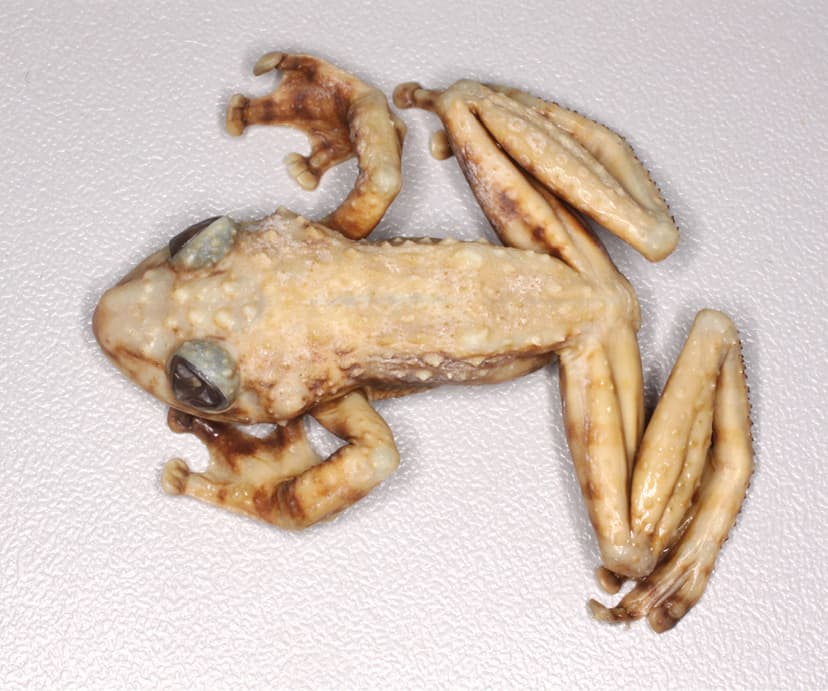
Acanthixalus
Acanthixalus, commonly known as African wart frogs, is a genus of frogs belonging to the family Hyperoliidae. These frogs are found in the rainforests of Western and Central Africa, spanning from Ivory Coast to Congo. They are distinctive for their habit of living in water-filled tree cavities and their apparent lack of vocalizations, possibly using olfactory cues for mating.