
Agalychnis lemur
Agalychnis·Critically Endangered
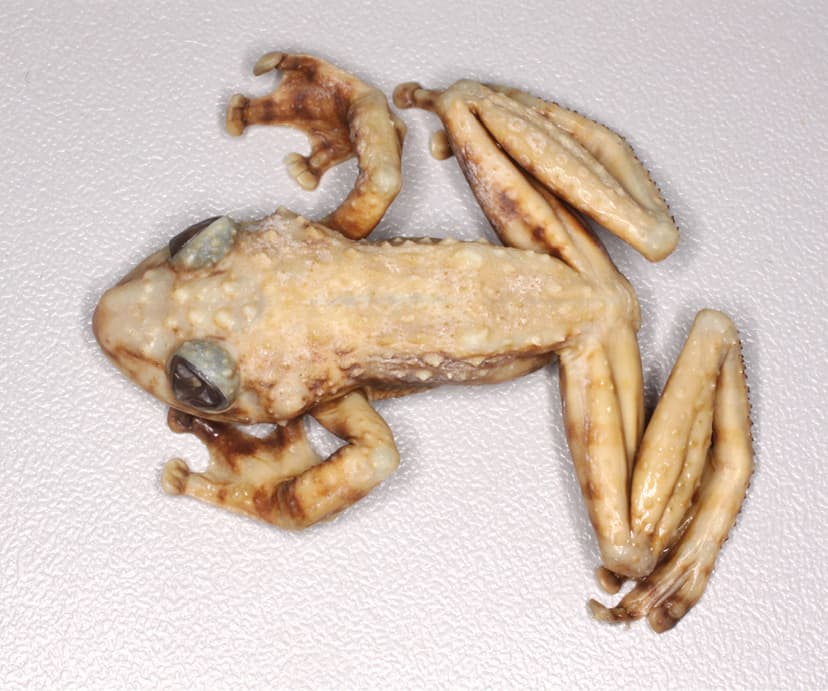
The lemur leaf frog, also known as the lemur frog, is a critically endangered amphibian found in the rainforests of Costa Rica, Panama, and northwestern Colombia. It is distinctive for its ability to change color from vibrant green during the day to brown at night, aiding in camouflage, and for its resilience to the chytrid fungus due to unique skin properties.
Key Facts
- ›Found in tropical MID-elevation pre-montane rainforests between 440 and 1600 meters ASL.
- ›Changes color from green during the day to brown at night for camouflage.
- ›Females are larger than males, with adult females ranging from 40-45 MM and males from 30-35 MM in length.
- ›Reproduces during the rainy seasons with males calling females using a series of clicks.
- ›Eggs are laid on vegetation overhanging water and hatch into tadpoles that drop into the water below.
- ›Listed as Critically Endangered due to population decline, largely attributed to chytridiomycosis and habitat loss.

Lemur Leaf Frog, Lemur Frog
Rainforest, Pre-Montane Rainforest
Costa Rica, Panama, Colombia
- Changes Color From Green During the Day To Brown At Night
- Slender Body
- Lack of Inter-Digital Webbing On Feet
- Sexual Dimorphism With Larger Females
About Agalychnis lemur
Agalychnis lemur: The Lemur Leaf Frog
The lemur leaf frog, scientifically known as Agalychnis lemur, is a species of frog native to the tropical mid-elevation pre-montane rainforests of Costa Rica, Panama, and northwestern Colombia. This distinctive amphibian is currently classified as Critically Endangered, facing significant threats primarily from the fungal disease chytridiomycosis and habitat loss due to deforestation.
Habitat and Distribution
This species thrives in rainforest environments between 440 and 1600 meters above sea level. In Costa Rica, key habitats include Fila Asuncion, a forested area near Parque National Barbilla, and Guayacán in Limón Province, with Fila Asuncion being a significant site for breeding populations. While historically common in Costa Rica, its numbers have drastically declined, leading to intensive monitoring in Panama where it remains more abundant in certain areas.
Biology and Behavior
A striking characteristic of the lemur leaf frog is its ability to change color. During the day, it presents a vibrant green, aiding in camouflage among foliage. As night falls, it shifts to a brown hue, which is advantageous for its nocturnal activities and hunting. The species exhibits sexual dimorphism, with females being larger and heavier than males. Adult females typically measure between 40–45 mm in length and weigh around 4 grams, while males are approximately 30–35 mm long and weigh about 2 grams. They are primarily nocturnal, resting on the undersides of leaves during daylight hours.
Reproduction and Life Cycle
Breeding in lemur leaf frogs occurs continuously during the rainy seasons, often observed in spring and summer. Males use a series of clicks to call to females for mating. The female lays up to 20 bluish-green or grey eggs, encased in a jelly mass, on vegetation or roots that overhang a water supply. When the eggs hatch, the tadpoles drop into the water below. The tadpoles are bluish-gray in preservation but greenish-gray with a white abdomen in life. Metamorphosis typically takes between 90 to 150 days, influenced by factors such as temperature, food availability, and water conditions. Tadpoles possess the ability to hatch prematurely if they sense the presence of predators or significant vibrations, such as from heavy rain, allowing them to escape or enter the water below more quickly.
Conservation Challenges and Resilience
The lemur leaf frog's population has experienced a severe decline, prompting significant conservation efforts. A notable aspect of its biology is its partial resilience to chytridiomycosis. Researchers have identified that the frog's skin possesses antimicrobial peptides and the ability to reflect sunlight, allowing it to bask in high temperatures that can kill the fungus without causing dehydration. This unique adaptation is being studied to understand amphibian resistance to this devastating disease. Despite this resilience, the fungus, along with habitat loss, has led to dramatic population reductions. Conservation initiatives include in-situ breeding programs, ex-situ breeding at institutions like Manchester Museum and the Atlanta Botanical Garden, and habitat preservation efforts to secure the future of this critically endangered species. Challenges in captive breeding have included nutritional deficiencies, such as vitamin A deficiency, and associated health issues like osteodystrophy, highlighting the complexity of conservation strategies.
Source: Wikipedia ↗
Frequently Asked Questions
What is the conservation status of the lemur leaf frog?
The lemur leaf frog is listed as Critically Endangered by the International Union for Conservation of Nature. This status is due to a significant population decline, with an over 80% decrease observed in Costa Rica over a decade.
Why is the lemur leaf frog important in the fight against chytridiomycosis?
Researchers are studying the lemur leaf frog's resilience to the chytrid fungus. Its unique skin allows it to bask in hot sunlight, raising its body temperature enough to kill the fungus without drying out, a trait that offers insights into amphibian survival.
What are the breeding habits of the lemur leaf frog?
Lemur leaf frogs engage in prolonged breeding during the rainy seasons. Males attract females with a series of clicks. Eggs are laid on vegetation overhanging water, and tadpoles hatch and drop into the water below.
Where can lemur leaf frogs be found?
This species is found in Costa Rica, Panama, and adjacent northwestern Colombia. In Costa Rica, specific known habitats include Fila Asuncion, a forested area near Parque National Barbilla, and Guayacán in Limón Province.
How does the lemur leaf frog's appearance change?
During the day, the lemur leaf frog is a vibrant green, which helps it blend with foliage. At night, it transforms to a brown coloration, further enhancing its ability to camouflage while it hunts.
Related Frogs
Acanthixalus
Acanthixalus, commonly known as African wart frogs, is a genus of frogs belonging to the family Hyperoliidae. These frogs are found in the rainforests of Western and Central Africa, spanning from Ivory Coast to Congo. They are distinctive for their habit of living in water-filled tree cavities and their apparent lack of vocalizations, possibly using olfactory cues for mating.
Acanthixalus spinosus
Acanthixalus spinosus, commonly known as the African wart frog, is a species of frog native to Africa, found from southeastern Nigeria to Gabon and the Democratic Republic of the Congo. It is distinctive for its warty, black or brownish-to-olive dorsum with an hourglass pattern, and the males' unique possession of strong tarsal spines and larger digital discs. This species primarily inhabits lowland rainforests, dwelling in water-filled tree holes and exhibiting predominantly aquatic behavior.

African clawed frog
The African clawed frog (Xenopus laevis) is a fully aquatic species native to Sub-Saharan Africa, known for its smooth, mottled skin and powerful legs. These adaptable amphibians are notable for their unique breeding behavior, ability to survive drought by burrowing, and extensive use as a model organism in scientific research, particularly in developmental biology and genetics. They are also recognized as an invasive species in many parts of the world due to their voracious appetite and resilience.