
African clawed frog
Xenopus·Not evaluated
The African clawed frog (Xenopus laevis) is a fully aquatic species native to Sub-Saharan Africa, known for its smooth, mottled skin and powerful legs. These adaptable amphibians are notable for their unique breeding behavior, ability to survive drought by burrowing, and extensive use as a model organism in scientific research, particularly in developmental biology and genetics. They are also recognized as an invasive species in many parts of the world due to their voracious appetite and resilience.
Key Facts
- ›Native to Sub-Saharan Africa, found in ponds, rivers, and artificial water bodies.
- ›Completely aquatic, using hands to manipulate food and powerful legs for swimming.
- ›Possesses three black claws on its hind feet used for tearing food and defense.
- ›Known for its adaptability, burrowing during droughts and laying eggs when conditions are favorable.
- ›Widely used in scientific research, including early pregnancy tests and developmental biology studies.
- ›Considered an invasive species in several countries, posing a threat to native ecosystems.

Xenopus, African Clawed Toad, African Claw-Toed Frog, Platanna
Wetlands, Ponds, Lakes, Rivers, Arid Zones, Semi-Arid Zones, Artificial Water Bodies
Nigeria, Sudan, South Africa
- Https://Upload.Wikimedia.Org/Wikipedia/Commons/Thumb/B/B4/African_clawed_frog_-_xenopus_laevis.Jpg/1024px-African_clawed_frog_-_xenopus_laevis.Jpg
- Https://Upload.Wikimedia.Org/Wikipedia/Commons/Thumb/5/59/Xenopus_laevis_female_and_male.Jpg/1024px-Xenopus_laevis_female_and_male.Jpg
- Https://Upload.Wikimedia.Org/Wikipedia/Commons/Thumb/F/F1/Xenopus_laevis_-_mouth.Jpg/1024px-Xenopus_laevis_-_mouth.Jpg
Native Birds
Completely Aquatic Lifestyle, Smooth, Slippery Skin With Mottled Coloration, Three Black Claws On Hind Feet, Eyes Positioned On Top of the Head, Curved, Flat Snout, Lack of Tongue, Males Have Black Patches On Hands and Arms
About African clawed frog
African Clawed Frog (Xenopus laevis)
The African clawed frog, scientifically known as Xenopus laevis and also referred to as xenopus or platanna, is a species of fully aquatic frog native to Sub-Saharan Africa. Its common name is derived from the distinctive black claws found on its feet, which it uses for tearing food and defense. The genus name Xenopus translates to 'strange foot,' and the species name laevis means 'smooth,' both referencing its unique physical characteristics.
Description and Habitat
These frogs are typically mottled greenish-grey-brown on their backs, sometimes with yellowish botches, and possess a pale white-cream belly. They are entirely aquatic, inhabiting ponds, rivers, and lakes across arid and semi-arid regions of Africa. African clawed frogs are highly adaptable and can be found in a variety of water bodies, including artificial ones like irrigation canals and dams, often at higher densities than in natural streams. They have powerful legs for swimming and can survive periods of drought by burrowing into mud and entering a dormant state for up to a year.
Behavior and Diet
African clawed frogs are nocturnal, with most of their feeding and reproductive activity occurring after dark. They are opportunistic carnivores and scavengers, consuming almost any organic material they can fit into their mouths, including fish, other amphibians, invertebrates, and decaying matter. Lacking a tongue, they use their hands to manipulate and ingest food. They locate prey using their keen sense of smell and a lateral line system rather than relying solely on eyesight. Cannibalism, including the consumption of their own larvae, is not uncommon, which helps them survive in food-scarce environments.
Reproduction and Lifespan
Reproduction occurs through external fertilization, with males clasping females in an inguinal amplexus position. They are opportunistic breeders, readily laying eggs when conditions are favorable, especially during rainy seasons. Males produce a distinctive mating call of trills, to which females may respond vocally. African clawed frogs are known for their longevity, with individuals surviving 15 or more years in the wild and commonly reaching 25–30 years in captivity. They shed their skin seasonally and consume it afterward.
Significance in Research and Invasive Status
The African clawed frog holds significant importance in scientific research. Its embryos and eggs are widely used in developmental biology, cell biology, and toxicology studies due to their large size, ease of manipulation, and rapid development. They were also historically used for pregnancy testing. However, their adaptability and voracious appetite have led to them becoming an invasive species in numerous countries worldwide, where they can disrupt native ecosystems by preying on local fauna. They are also considered a potential vector for the chytrid fungus Batrachochytrium dendrobatidis, implicated in amphibian population declines globally.
Source: Wikipedia ↗
Frequently Asked Questions
What are the distinguishing features of the African clawed frog?
African clawed frogs are identified by their smooth, slippery skin which is multicolored on its back with blotches of olive gray or brown, and a creamy white underside with a yellow tinge. Males are smaller and slimmer with black patches on their hands and arms, while females are larger and more rotund with a more pronounced cloaca and hip-like bulges where eggs are internally located. They also have eyes on the top of their heads and curved, flat snouts.
What do African clawed frogs eat?
These frogs are carnivores and scavengers, consuming almost anything living, dying, or dead. Their diet includes fish, tadpoles, crustaceans, annelids, arthropods, and organic waste. They use their hands to grab food and shovel it into their mouths, as they lack a tongue.
Where do African clawed frogs live?
In their native range, African clawed frogs inhabit wetlands, ponds, and lakes across arid and semi-arid regions of Sub-Saharan Africa. They are often found in higher densities in artificial water bodies like ponds, dams, and irrigation canals. Introduced populations exist in North America, South America, Europe, and Asia.
How do African clawed frogs reproduce?
African clawed frogs reproduce through external fertilization and engage in inguinal amplexus, where the male clasps the female in front of her hind legs. They are highly adaptable and will lay eggs whenever conditions allow, often during wet rainy seasons. Males produce a mating call of alternating long and short trills, while females signal acceptance or rejection vocally.
Why are African clawed frogs used in scientific research?
African clawed frogs are extensively used in research due to their experimental tractability and large, easily manipulated embryos. They were instrumental in early pregnancy tests, and their embryos and eggs serve as a popular model system for studying molecular, cell, and developmental biology, including gene function, DNA replication, and apoptosis.
Are African clawed frogs dangerous?
While not venomous, African clawed frogs are considered voracious predators and an invasive species in many regions. They can devastate native populations by consuming other frogs' young and other aquatic creatures. They are also suspected vectors of the chytrid fungus Batrachochytrium dendrobatidis, which causes amphibian declines.
Related Frogs
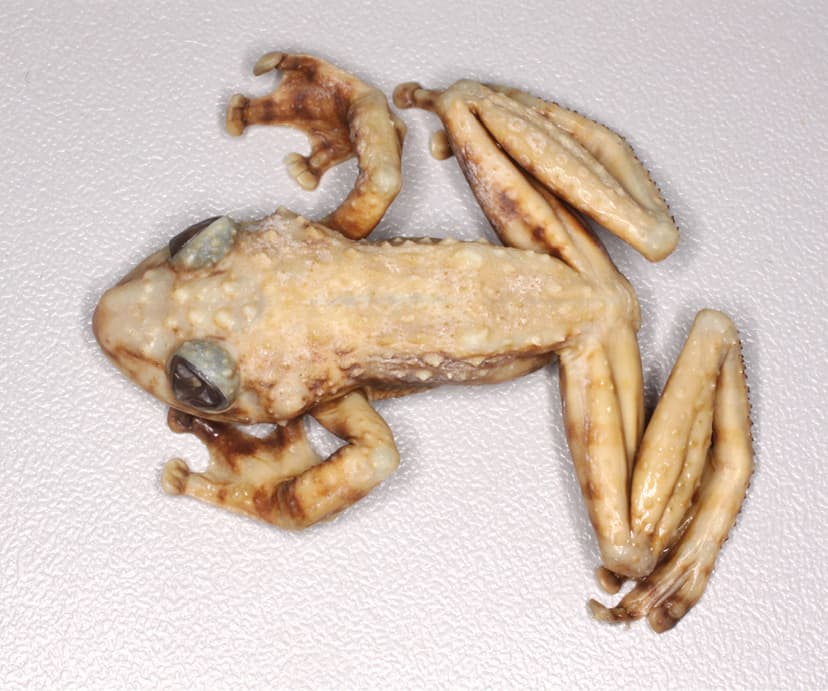
Acanthixalus spinosus
Acanthixalus spinosus, commonly known as the African wart frog, is a species of frog native to Africa, found from southeastern Nigeria to Gabon and the Democratic Republic of the Congo. It is distinctive for its warty, black or brownish-to-olive dorsum with an hourglass pattern, and the males' unique possession of strong tarsal spines and larger digital discs. This species primarily inhabits lowland rainforests, dwelling in water-filled tree holes and exhibiting predominantly aquatic behavior.

Agalychnis lemur
The lemur leaf frog, also known as the lemur frog, is a critically endangered amphibian found in the rainforests of Costa Rica, Panama, and northwestern Colombia. It is distinctive for its ability to change color from vibrant green during the day to brown at night, aiding in camouflage, and for its resilience to the chytrid fungus due to unique skin properties.
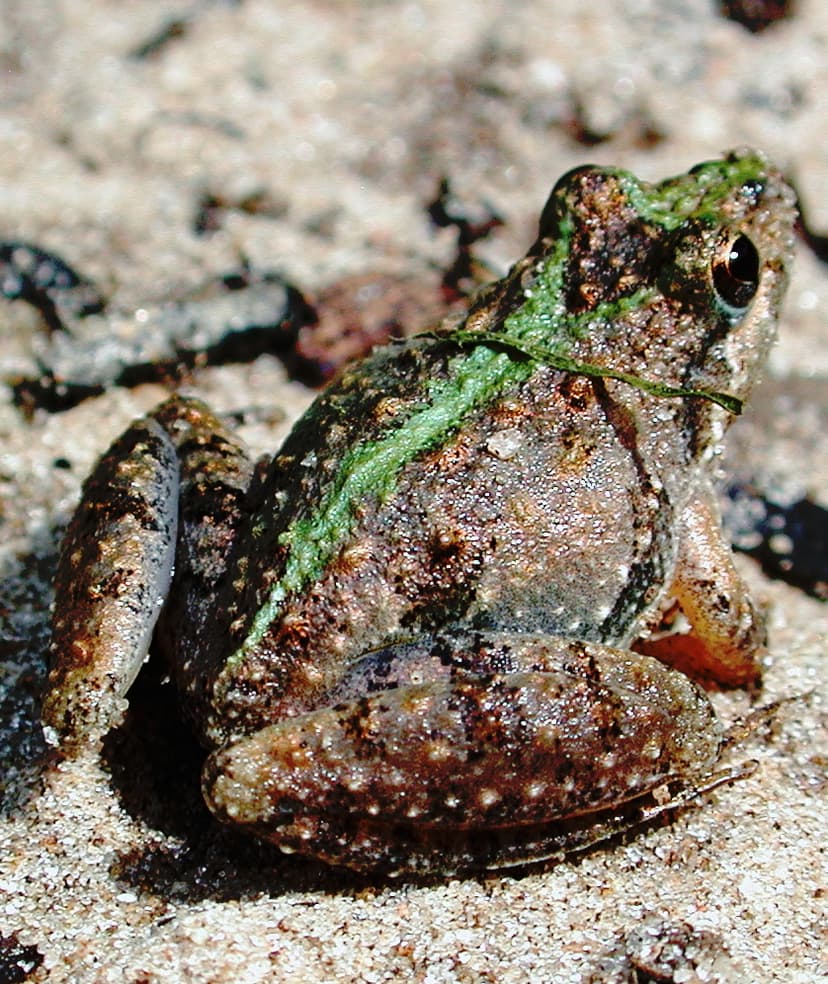
Acris
Cricket frogs, genus Acris, are small North American frogs belonging to the Hylidae family. Found from northern Mexico to southern Ontario, they are known for their cricket-like vocalizations, which play a crucial role in reproductive isolation. These frogs are notably more aquatic than other tree frogs and are strongly associated with permanent water bodies that offer surface vegetation for survival.