
Acris crepitans
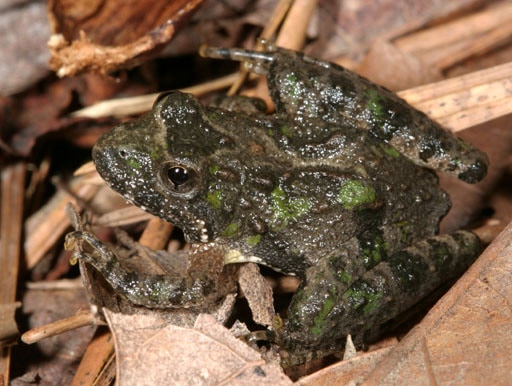
The northern cricket frog (Acris crepitans) is a small hylid frog native to the United States and northeastern Mexico. Despite being part of the tree frog family, they are terrestrial and prefer habitats near slow-moving water bodies with nearby shelter. They are distinguished by their small size, varied coloration, and a characteristic triangular mark on their head.
Key Facts
- ›One of the three smallest vertebrates in North America, measuring 19–38 MM.
- ›Possesses a bumpy skin texture and a blunt snout, with coloration ranging from grey, green, to brown.
- ›Though members of the tree frog family, they are not arboreal and prefer terrestrial habitats near water.
- ›Active throughout most of the year, with reduced activity in winter when they hibernate.
- ›Their diet consists primarily of terrestrial invertebrates like dipterans, homopterans, and spiders.
- ›Males produce a distinctive high-pitched, short, pebble-like call to attract mates.
Northern Cricket Frog, Cricket Frog
Wetlands, Grasslands, Aquatic
New York, Florida, Texas, Louisiana
Birds, Snakes, Fish, Other Frogs
Small Size, Bumpy Skin, Triangular Head Marking, Blunt Snout, Lack of Toe Pads
About Acris crepitans
Northern Cricket Frog (Acris crepitans)
The northern cricket frog, scientifically known as Acris crepitans, is a small amphibian native to the United States and northeastern Mexico. It is one of the smallest vertebrates found in North America, typically measuring between 19 and 38 millimeters in length. Despite belonging to the tree frog family (Hylidae), these frogs are terrestrial and do not exhibit arboreal behavior. They are most commonly found near the edges of slow-moving bodies of water, where they can also find shelter among rocks or vegetation.
Description and Characteristics
The appearance of the northern cricket frog is quite variable. Its dorsal coloration can range from grey, green, to brown, often featuring irregular blotching patterns. A prominent triangular marking is usually present on the top of its head, situated between the eyes. Dark bands frequently adorn the legs, and a white bar may extend from the eye to the base of the foreleg. The skin texture is noticeably bumpy, and unlike many related species, they lack toe pads. Their snout is blunt, and they possess well-webbed hind feet, which contribute to their strong swimming ability.
Habitat and Distribution
Northern cricket frogs prefer habitats adjacent to slow-moving, permanent water sources, with a preference for open, shallow waters that support aquatic vegetation. They often seek out locations with potential shelter, such as rocks. While adults are terrestrial, their tadpoles develop in shallow freshwater environments. During the colder months, these frogs hibernate in upland areas, which may be located a considerable distance from water.
Geographically, the species is found from New York south to Florida, and westward along the Gulf Coast states to Texas. A recognized subspecies, A. c. paludicola, occurs in southwestern Louisiana and eastern Texas.
Diet and Behavior
The diet of the northern cricket frog is opportunistic, largely consisting of whatever invertebrates are readily available. They consume a variety of terrestrial insects and spiders, with larger frogs preying on larger insects. They are active for most of the year, with activity decreasing significantly in mid-winter. When threatened, they are capable of impressive leaps relative to their body size and are adept swimmers, often diving into water to escape predators.
Reproduction and Vocalization
Breeding typically takes place from late spring through summer. Male northern cricket frogs attract females by emitting a distinctive high-pitched, short call that has been likened to the sound of pebbles clicking together or a cricket's chirp. These calls are crucial for species recognition and mate attraction. Eggs are laid individually and attached to vegetation, with tadpoles hatching within days and undergoing metamorphosis by early autumn. Females are generally slightly larger than males and reach sexual maturity at around 20 mm snout-vent length.
Source: Wikipedia ↗
Frequently Asked Questions
What is the size of a northern cricket frog?
The northern cricket frog is one of the smallest vertebrates in North America, with adults typically ranging from 19 to 38 millimeters (0.75 to 1.50 inches) in snout-to-vent length.
What are the typical habitats for northern cricket frogs?
These frogs prefer the edges of slow-moving, permanent bodies of water, often in shallow areas with aquatic vegetation and potential shelter like rocks. They can also hibernate in upland areas away from water.
What do northern cricket frogs eat?
Their diet is opportunistic and depends on what is available, but they primarily consume terrestrial invertebrates such as dipterans, homopterans, and spiders. Larger frogs tend to eat larger prey.
How do male northern cricket frogs attract mates?
Males produce a high-pitched, short, pebble-like call that resembles the clicking of pebbles or a cricket's chirp. They modify their calls based on the presence of other males to increase their chances of attracting a female.
Are northern cricket frogs arboreal?
No, despite being members of the tree frog family, northern cricket frogs are not arboreal. They are terrestrial and prefer to live on land near water sources.
What are the predators of the northern cricket frog?
Northern cricket frogs are preyed upon by various animals including birds like great-tailed grackles and American kestrels, snakes such as common watersnakes and eastern garter snakes, fish like black bass, and other frogs like American bullfrogs.
Related Frogs
Acris gryllus
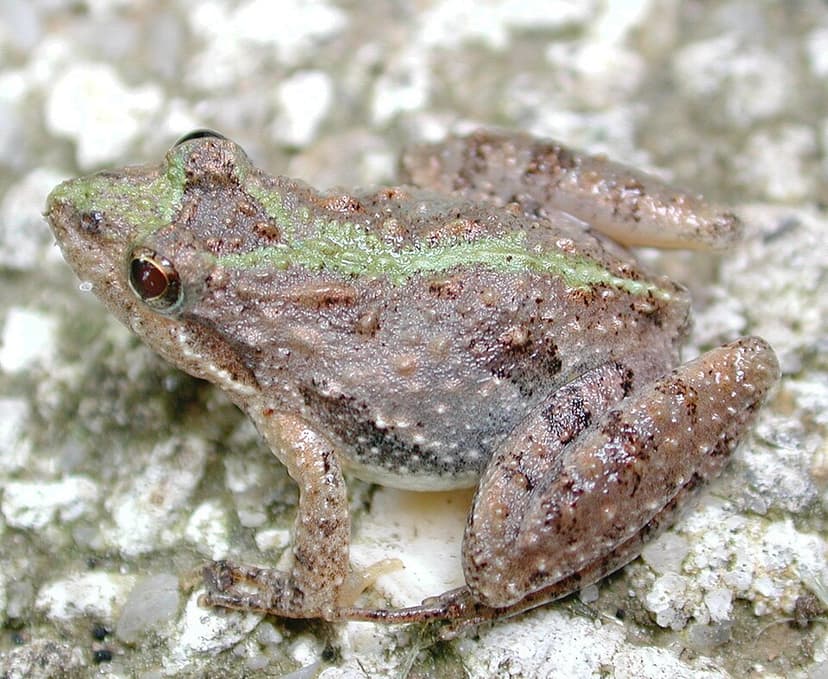
The southern cricket frog (Acris gryllus) is a small hylid frog native to the Southeastern United States. It is distinguished from its close relative, the northern cricket frog, by a more pointed snout, longer hind legs, and a sharply defined black stripe on the back of its thigh. This species is typically found in sunny, open areas near water bodies.
Acris
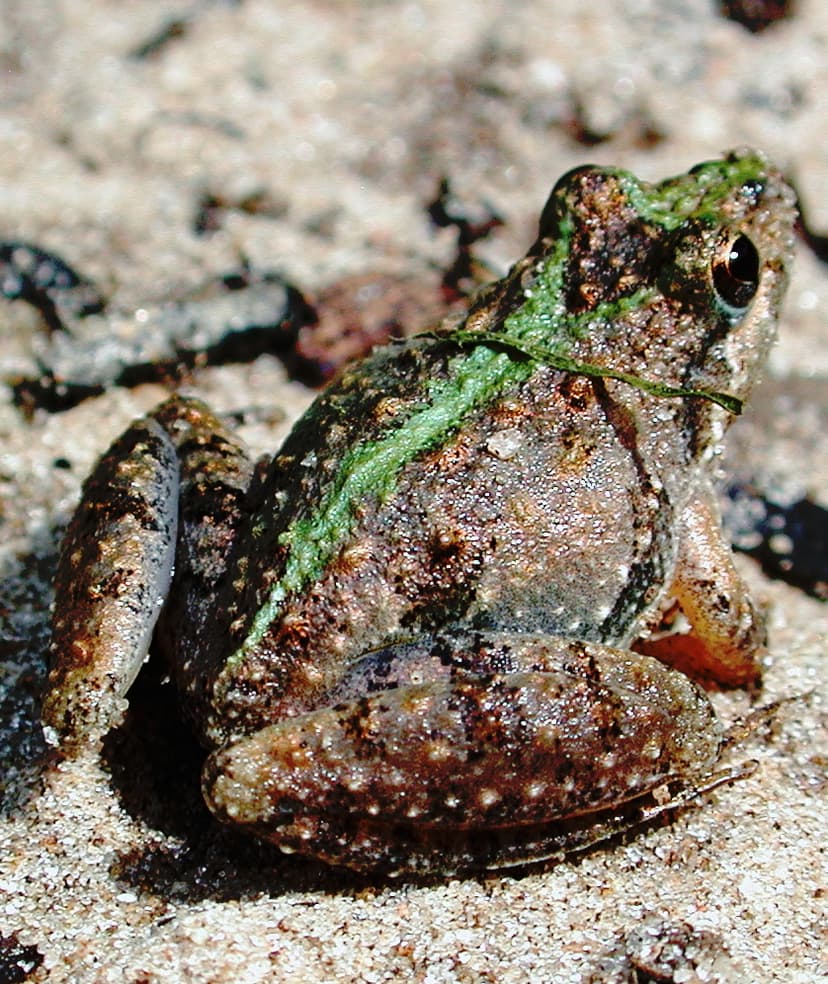
Cricket frogs, genus Acris, are small North American frogs belonging to the Hylidae family. Found from northern Mexico to southern Ontario, they are known for their cricket-like vocalizations, which play a crucial role in reproductive isolation. These frogs are notably more aquatic than other tree frogs and are strongly associated with permanent water bodies that offer surface vegetation for survival.

Adelophryne baturitensis
Adelophryne baturitensis is a small frog species endemic to the Serra de Baturité region in north-eastern Brazil. It is characterized by its brown dorsal coloration with darker patterns and cross-bands on its limbs, and its small size, with adults measuring between 12 and 16 mm in snout-to-vent length. This species inhabits leaf litter within well-preserved forests and shaded coffee plantations.