
Afrixalus wittei
Afrixalus wittei, commonly known as De Witte's spiny reed frog, is a species of frog belonging to the Hyperoliidae family. This amphibian is found across several countries in Southern and Central Africa, including Angola, the Democratic Republic of the Congo, Tanzania, and Zambia. Its distinctiveness lies in its adaptation to specific wetland and grassland environments.
Key Facts
- ›Found in Angola, Democratic Republic of the Congo, Tanzania, and Zambia.
- ›Inhabits moist savanna, flooded grassland, marshes, and temporary pools.
- ›Belongs to the family Hyperoliidae.
- ›Commonly referred to as De Witte's spiny reed frog.
- ›Requires humid and water-adjacent environments for survival.

De Witte's Spiny Reed Frog
Moist Savanna, Flooded Grassland, Marshes, Temporary Pools
About Afrixalus wittei
Afrixalus wittei, commonly known as De Witte's spiny reed frog, is a species of frog that belongs to the family Hyperoliidae. This amphibian is native to several countries in Southern and Central Africa, specifically Angola, the Democratic Republic of the Congo, Tanzania, and Zambia. The species is characterized by its habitat preferences, thriving in environments that are consistently moist and often associated with water.
Habitat
The natural habitats of Afrixalus wittei are diverse yet specific, requiring conditions of high humidity and the presence of water. It is found in moist savanna regions, which are grasslands interspersed with trees that benefit from substantial rainfall. Additionally, the species inhabits flooded grasslands, areas that are either seasonally or permanently waterlogged, and marshes, characterized by wetlands dominated by herbaceous vegetation. Temporary pools that form after rainfall, and may disappear during drier periods, also serve as crucial habitats for this frog.
Taxonomy and Naming
The scientific name for this species is Afrixalus wittei. Its common name, De Witte's spiny reed frog, likely refers to its physical characteristics or perhaps its discoverer. As a member of the Hyperoliidae family, it is related to a diverse group of tree frogs and reed frogs found across Africa.
Source: Wikipedia ↗
Frequently Asked Questions
What is Afrixalus wittei commonly known as?
Afrixalus wittei is commonly known as De Witte's spiny reed frog. This name reflects its appearance or perhaps the discoverer associated with the species.
Where can Afrixalus wittei be found?
De Witte's spiny reed frog has a distribution across several African nations. It is found in Angola, the Democratic Republic of the Congo, Tanzania, and Zambia.
What are the natural habitats of Afrixalus wittei?
This frog species thrives in environments that are consistently moist and often water-associated. Its natural habitats include moist savanna, flooded grasslands, marshes, and areas with temporary pools of water.
Related Frogs

Afrixalus vittiger
The banded banana frog, scientifically known as Afrixalus fulvovittatus, is a species of frog native to West Africa. It inhabits moist savannas, swamps, and marshes, and is particularly found in degraded former forest areas. This species is currently threatened by habitat loss.
Afrixalus weidholzi
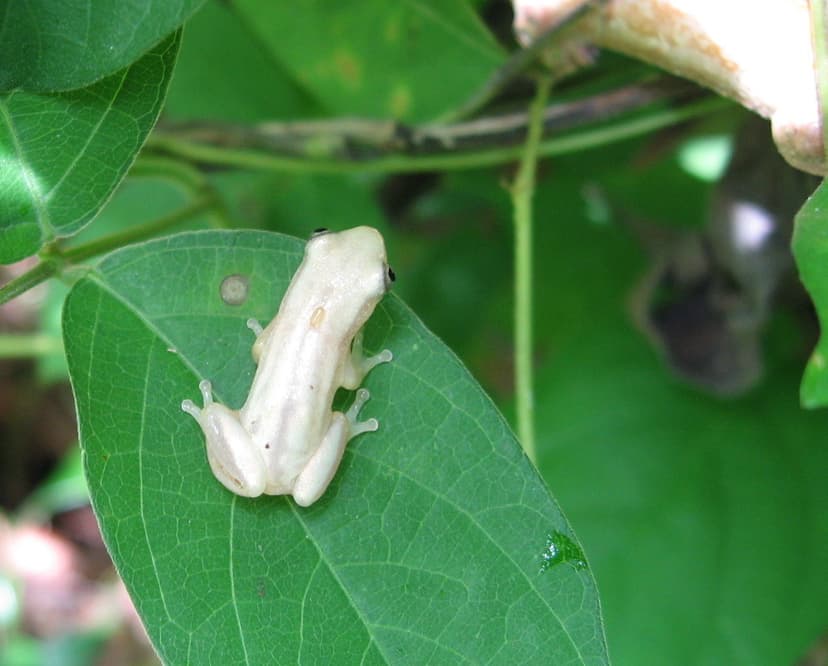
Afrixalus weidholzi, also known as Weidholz's banana frog or Weidholz's leaf-folding frog, is a small frog species found across savannas in West and Central Africa. It is distinctive for its breeding behavior, where males call from flooded grass and eggs are laid in folded leaves, and its specific coloration featuring dark vertebral and lateral stripes.
Afrixalus
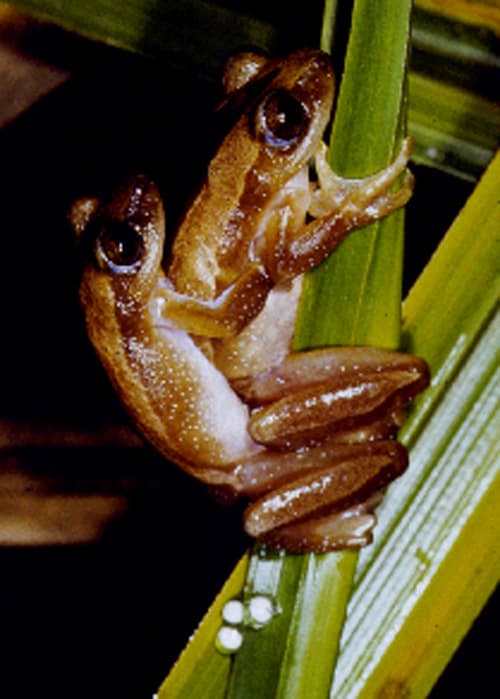
Afrixalus is a genus of frogs belonging to the family Hyperoliidae, found throughout Sub-Saharan Africa. They are commonly known as banana frogs, spiny reed frogs, cat's eye reed frogs, or leaf-folding frogs. A distinctive characteristic is their habit of laying eggs in vegetation above water, often folding leaves around them for protection.