
Agalychnis callidryas
The red-eyed tree frog (Agalychnis callidryas) is a vibrantly colored amphibian native to the rainforests of Central America and northwestern South America. Despite its striking appearance with bright red eyes, green body, and blue and yellow side stripes, it is not poisonous. Its colors are thought to serve as camouflage and a startle display to deter predators, allowing it valuable escape time.
Key Facts
- ›Possesses bright red eyes, a green body, and blue and yellow side stripes.
- ›Arboreal and nocturnal, hunting insects primarily at night.
- ›Embryos can hatch early in response to threats, dropping into water to escape.
- ›Males are smaller than females and engage in complex mating rituals.
- ›Found in humid lowlands and tropical forests near ponds or bodies of water.
- ›Classified as Least Concern by the IUCN due to wide distribution and habitat tolerance.

Red-Eyed Leaf Frog
Tropical Rainforest, Wetlands, Forests
- Https://Upload.Wikimedia.Org/Wikipedia/Commons/Thumb/A/A4/Red-Eyed_tree_frog_%28agalychnis_callidryas%29_male_on_leaf.Jpg/1280px-Red-Eyed_tree_frog_%28agalychnis_callidryas%29_male_on_leaf.Jpg
- Https://Upload.Wikimedia.Org/Wikipedia/Commons/Thumb/C/C5/Red_eyed_tree_frog_20080719.Jpg/1024px-Red_eyed_tree_frog_20080719.Jpg
- Https://Upload.Wikimedia.Org/Wikipedia/Commons/Thumb/0/0d/Agalychnis_callidryas_ranita_de_ojos_rojos_2.Jpg/1024px-Agalychnis_callidryas_ranita_de_ojos_rojos_2.Jpg
- Https://Upload.Wikimedia.Org/Wikipedia/Commons/Thumb/0/00/Red-Eyed_tree_frog_agalychnis_callidryas.Jpg/1280px-Red-Eyed_tree_frog_agalychnis_callidryas.Jpg
Wasps, Snakes, Dragonflies, Fish, Water Beetles, Shrimp, Aquatic Spiders, Birds, Bats
Bright Red Eyes, Bright Green Body, Blue and Yellow Stripes On Sides, Orange Feet With Suction Cups, Smooth Skin
About Agalychnis callidryas
Agalychnis callidryas: The Red-Eyed Tree Frog
The red-eyed tree frog, scientifically known as Agalychnis callidryas and sometimes called the red-eyed leaf frog, is a well-known amphibian species native to the lush rainforests and humid lowlands of Central America and northwestern South America. It is renowned for its exceptionally vibrant coloration, making it one of the most recognizable frogs in its native range.
Appearance and Camouflage
This species boasts a striking appearance: a bright green body is adorned with vivid blue and yellow stripes along its sides, and its underside is a pale cream or white. Its feet are a brilliant orange and are equipped with suction cups, aiding in its arboreal lifestyle. The most prominent feature, however, is its large, bright red eyes with slitted pupils. Despite these bold colors, the red-eyed tree frog is not poisonous. Its coloration is believed to serve as camouflage against the green foliage and as a startle display; when threatened, it can flash its red eyes, striped sides, and orange feet, potentially disorienting predators and giving it a chance to escape.
Habitat and Behavior
Agalychnis callidryas is an arboreal and nocturnal species, spending most of its time in the forest canopy among leaves. It requires high humidity, typically above 80 percent, and is always found in close proximity to ponds or other bodies of water, which are essential for its reproductive cycle. At night, it actively hunts for insects, its primary food source. Males are generally smaller than females and display complex mating behaviors, including vocalizations and physical competition, to attract mates. Females choose mates based on auditory and visual cues, such as the male's call and the patterns of his flank stripes.
Reproduction and Life Cycle
The breeding season for red-eyed tree frogs occurs during the rainy season. Females lay clutches of around 40 eggs on the underside of leaves suspended over water. A remarkable adaptation of this species is the ability of its embryos to hatch early in response to perceived threats, such as vibrations from approaching predators. If threatened, the embryos will hatch prematurely and drop into the water below to escape danger. Tadpoles develop in the water, feeding on algae and plankton, before undergoing metamorphosis into adult frogs. The lifespan of a red-eyed tree frog in the wild is approximately five years.
Conservation Status
As of 2016, the red-eyed tree frog is classified as Least Concern by the International Union for Conservation of Nature (IUCN). This classification is due to its wide distribution, general tolerance to habitat modification, and a presumed large captive population. However, the species still faces threats from habitat loss due to deforestation, logging, residential development, and the international pet trade. Chytrid fungus and ranavirus have also impacted wild populations.
Source: Wikipedia ↗
Frequently Asked Questions
What makes the red-eyed tree frog distinctive?
The red-eyed tree frog is easily recognized by its vibrant coloration, featuring a bright green body, blue and yellow side stripes, and its namesake bright red eyes. It also has orange feet with suction cups.
Is the red-eyed tree frog poisonous?
No, despite its bright colors which might suggest toxicity, the red-eyed tree frog is not poisonous. Its coloration likely serves as camouflage and a startle display to deter predators.
Where does the red-eyed tree frog live?
This species is native to Central America, ranging from northeastern Honduras to northern Colombia. It inhabits tropical rainforests and wetlands in humid lowlands, always found near ponds or other water bodies essential for reproduction.
What do red-eyed tree frogs eat?
Adult red-eyed tree frogs are carnivores, primarily feeding on insects such as moths, crickets, katydids, grasshoppers, and flies. They may occasionally consume smaller amphibians. Their tadpoles have a different diet, consisting of plants, algae, plankton, and carrion.
How do red-eyed tree frogs reproduce?
They mate seasonally in the rainy season. Males croak to attract females and compete with each other. Females lay eggs on the underside of leaves above water, and the male fertilizes them externally. The tadpoles hatch and drop into the water.
What are the predators of red-eyed tree frogs?
Predators vary throughout their life cycle. Wasps and snakes prey on the eggs, while dragonflies, fish, beetles, and shrimp prey on tadpoles. Adult frogs and froglets face threats from spiders, snakes, birds, and bats.
Related Frogs
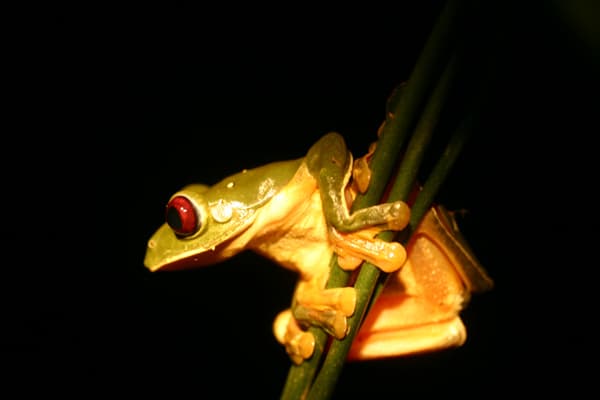
Agalychnis saltator
Agalychnis saltator, also known as the parachuting red-eyed leaf frog or misfit leaf frog, is a species of frog found in the humid and wet forests of Central America, from Honduras to Costa Rica. This arboreal and nocturnal species is distinctive for its bright red eyes with vertical pupils and its ability to 'parachute' by spreading webbing between its limbs and toes to glide between trees.
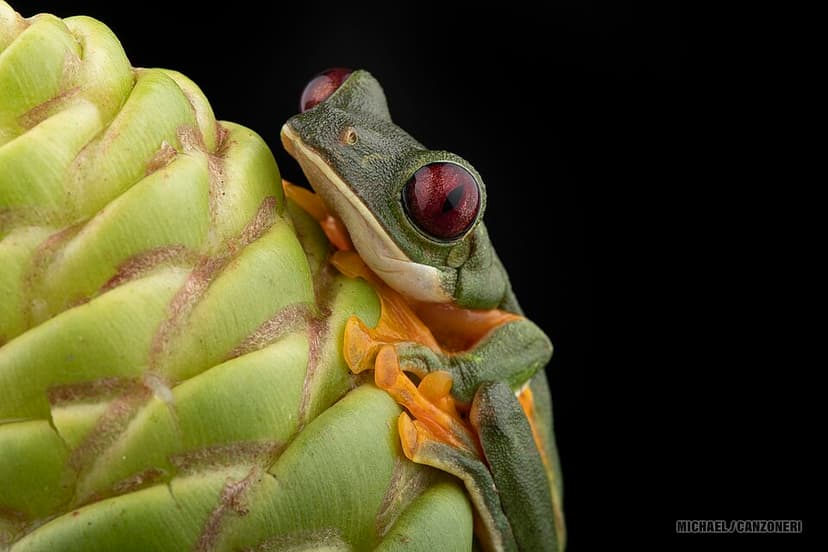
Agalychnis spurrelli
The gliding tree frog (Agalychnis spurrelli) is a species found in the humid forests and marshes of Colombia, Costa Rica, Ecuador, and Panama. It is distinctive for its ability to glide by spreading its limbs and using the extensive webbing as a parachute, and its color changes from pale green to dark green at nightfall.

Agalychnis lemur
The lemur leaf frog, also known as the lemur frog, is a critically endangered amphibian found in the rainforests of Costa Rica, Panama, and northwestern Colombia. It is distinctive for its ability to change color from vibrant green during the day to brown at night, aiding in camouflage, and for its resilience to the chytrid fungus due to unique skin properties.