
Agalychnis spurrelli
The gliding tree frog (Agalychnis spurrelli) is a species found in the humid forests and marshes of Colombia, Costa Rica, Ecuador, and Panama. It is distinctive for its ability to glide by spreading its limbs and using the extensive webbing as a parachute, and its color changes from pale green to dark green at nightfall.
Key Facts
- ›Native to humid subtropical or tropical lowland forests and intermittent freshwater marshes.
- ›Found in Colombia, Costa Rica, Ecuador, and Panama.
- ›Adult males range from 48-56 MM snout-to-vent length, while females range from 60-72 MM.
- ›Possesses adhesive discs on fingers and toes for climbing.
- ›Capable of gliding by spreading limbs and using extensive webbing as a parachute.
- ›Breeding is explosive, occurring in the rainy season with eggs laid on leaves overhanging water.
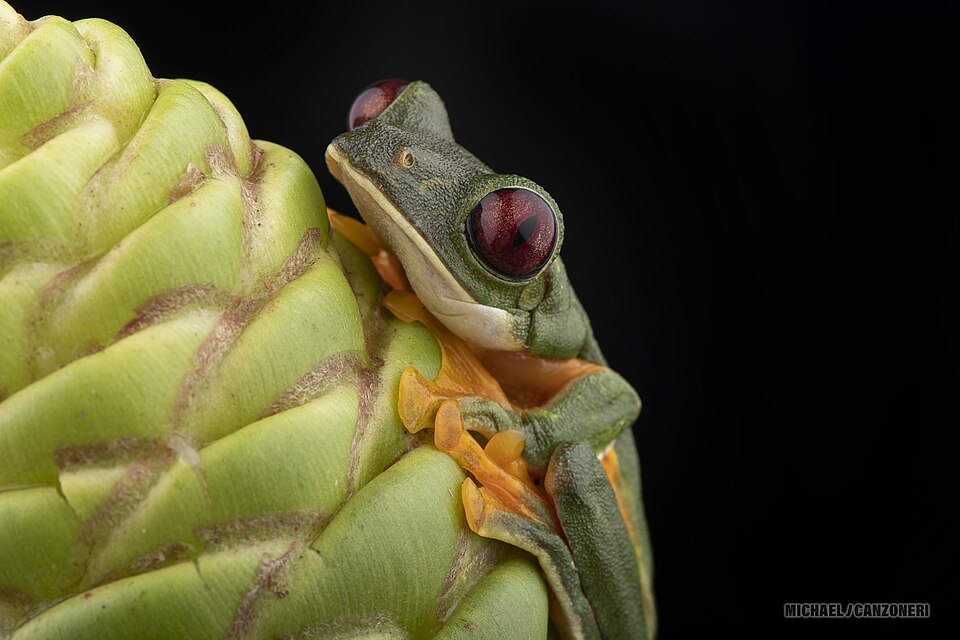
Gliding Leaf Frog, Spurrell's Leaf Frog, Pink-Sided Tree Frog
Lowland Forests, Freshwater Marshes
- Ability To Glide
- Color Change From Pale Green To Dark Green At Night
- Large, Reticulated Lower Eyelids
- Adhesive Discs On Fingers and Toes
- Extensive Webbing On Toes
About Agalychnis spurrelli
Agalychnis spurrelli: The Gliding Tree Frog
The gliding tree frog, scientifically known as Agalychnis spurrelli, is a captivating amphibian species found in the humid lowland forests and intermittent freshwater marshes of Colombia, Costa Rica, Ecuador, and Panama. It is also recognized by other common names such as the gliding leaf frog, Spurrell's leaf frog, and pink-sided tree frog. This species is notable for its arboreal lifestyle and its remarkable ability to glide between trees.
Description and Biology
Adult gliding tree frogs exhibit sexual dimorphism in size, with males measuring between 48 to 56 mm (1.9 to 2.2 inches) in snout-to-vent length, and females being larger, ranging from 60 to 72 mm (2.4 to 2.8 inches). They possess a broad head and large eyes, featuring distinctive reticulated lower eyelids. The body is slender, with smooth skin dorsally and on the limbs, contrasting with granular skin on the belly. The limbs are slim and equipped with adhesive discs on the fingers and toes, aiding in climbing. The fingers are approximately three-quarters webbed, while the toes are fully webbed, which plays a crucial role in their gliding locomotion. A fascinating characteristic is their nocturnal color change; the dorsal surface shifts from a pale green during the day to a dark green at nightfall. The underparts are a striking cream and orange.
Agalychnis spurrelli is primarily a nocturnal species that inhabits the tree canopy. Its movement is characterized by climbing using a hand-over-hand technique. When leaping, the frog spreads its hands and feet, utilizing the extensive webbing as a parachute to control its descent, capable of maintaining an angle of descent up to 45° for some distance. This gliding ability is a key adaptation for navigating its forest habitat.
Reproduction
Breeding in the gliding tree frog is described as explosive, occurring during the rainy season. The eggs are deposited in small clusters on the upperside of leaves that hang over temporary pools of water or water-filled cavities within logs. Approximately six days after being laid, the eggs hatch, and the tadpoles fall directly into the water bodies below, where they will continue their development.
Habitat and Distribution
The species is native to the humid forests of south-eastern and south-western Costa Rica, Panama, the Pacific lowlands of Colombia, and north-western Ecuador. Its habitat preference for moist lowland forests and marshes makes it vulnerable to environmental changes.
Conservation
The gliding tree frog is threatened by habitat loss, a common concern for many amphibian species in tropical regions. Specific details regarding its conservation status are not provided in the available information.
Source: Wikipedia ↗
Frequently Asked Questions
What is the gliding tree frog?
The gliding tree frog, scientifically known as Agalychnis spurrelli, is a species of frog native to several Central and South American countries. It is recognized for its arboreal lifestyle and unique gliding ability.
Where can the gliding tree frog be found?
This species inhabits the humid subtropical or tropical lowland forests and intermittent freshwater marshes of Colombia, Costa Rica, Ecuador, and Panama.
How does the gliding tree frog move?
It moves by climbing using a hand-over-hand motion. When leaping, it spreads its hands and feet, and the extensive webbing acts as a parachute, allowing it to glide.
What are the distinctive features of the gliding tree frog?
Its distinctive features include large, reticulated lower eyelids, smooth dorsal skin that changes from pale green to dark green at night, and cream and orange underparts. It also has adhesive discs on its digits for climbing.
How does the gliding tree frog reproduce?
Reproduction is explosive and occurs during the rainy season. Eggs are laid in small clusters on leaves overhanging temporary pools or water-filled log cavities, and the tadpoles hatch and fall into the water below.
Related Frogs
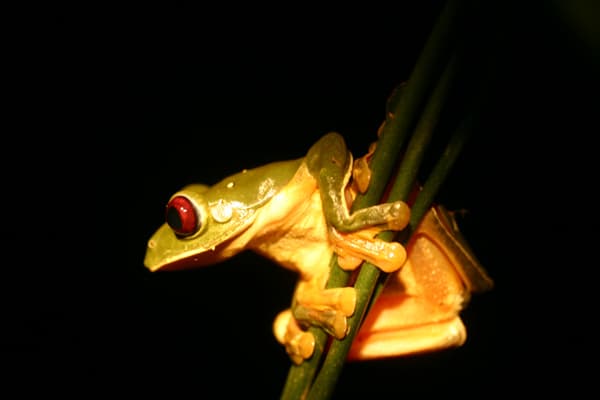
Agalychnis saltator
Agalychnis saltator, also known as the parachuting red-eyed leaf frog or misfit leaf frog, is a species of frog found in the humid and wet forests of Central America, from Honduras to Costa Rica. This arboreal and nocturnal species is distinctive for its bright red eyes with vertical pupils and its ability to 'parachute' by spreading webbing between its limbs and toes to glide between trees.

Agalychnis callidryas
The red-eyed tree frog (Agalychnis callidryas) is a vibrantly colored amphibian native to the rainforests of Central America and northwestern South America. Despite its striking appearance with bright red eyes, green body, and blue and yellow side stripes, it is not poisonous. Its colors are thought to serve as camouflage and a startle display to deter predators, allowing it valuable escape time.

Agalychnis lemur
The lemur leaf frog, also known as the lemur frog, is a critically endangered amphibian found in the rainforests of Costa Rica, Panama, and northwestern Colombia. It is distinctive for its ability to change color from vibrant green during the day to brown at night, aiding in camouflage, and for its resilience to the chytrid fungus due to unique skin properties.