
Albanian water frog
Pelophylax·Endangered
The Albanian water frog (Pelophylax shqipericus) is a species of true frog native to western Albania and southern Montenegro. This medium-sized amphibian is characterized by green to light brown coloration with large dark spots, and males may display a distinctive bright green stripe down their backbone. It is an endangered species, with populations declining due to habitat pollution, wetland drainage, and aggressive collection for commercial purposes.
Key Facts
- ›Native to western Albania and southern Montenegro.
- ›Medium-sized frog with green to light brown coloration and large dark spots.
- ›Males may exhibit a bright green stripe along their backbone.
- ›Prefers aquatic environments such as marshes, swamps, ditches, and lake/river shorelines.
- ›Endangered species facing threats from habitat loss, pollution, and over-collection.

Albanian Water Frog
Wetlands, Freshwater Marshes, Swamps, Ditches, Lake Shorelines, River Shorelines
Albania, Montenegro
- Distinctive Bright Green Stripe Down the Backbone In Males
- Large Black Or Dark Brown Spots On Dorsal Side
- Fully Webbed Feet Extending To Toe Tips
- Yellowish Coloration Around Groin, Hind Legs, and Belly
About Albanian water frog
Albanian Water Frog (Pelophylax shqipericus)
The Albanian water frog, scientifically classified as Pelophylax shqipericus, is a species of true frog belonging to the family Ranidae. It is endemic to the Balkan region, with its primary distribution confined to western Albania and southern Montenegro. This amphibian is strongly associated with aquatic environments, thriving in freshwater marshes, swamps, ditches, and the vegetated edges of lakes and rivers.
Appearance and Characteristics
Adult Albanian water frogs are medium-sized, with males typically reaching lengths of approximately 71 mm (snout-to-vent) and females slightly larger, averaging around 74 mm. Their dorsal coloration varies from green to light brown, marked by prominent large spots of black or dark brown. A distinctive feature observed in some males is a bright green stripe running vertically along their backbone. During the breeding season, these spots may become less distinct, and the dorsal hue can shift to olive or grass green. Both sexes possess fully webbed feet, with webbing extending to the very tips of their toes, an adaptation suited to their aquatic lifestyle. Yellow coloration is often present around the groin area, sometimes extending onto the hind legs and belly, though the female's belly is typically cream-colored and unspotted. The vocal sacs of the males are lightly pigmented, appearing grayish or green.
Habitat and Distribution
The species is exclusively found in the Balkans, specifically in western Albania and southern Montenegro. Its preferred habitats are freshwater wetlands, including marshes, swamps, and ditches, as well as the well-vegetated banks of lakes and rivers. The northernmost extent of its range includes Lake Skadar, a significant wetland area recognized by the Ramsar Convention.
Conservation Status and Threats
The Albanian water frog is classified as an endangered species, with its populations experiencing a significant decline. Several factors contribute to this precarious status. Habitat fragmentation and degradation are major concerns, driven by the drainage of wetlands for agricultural purposes and infrastructure development. Pollution from agricultural and industrial runoff further diminishes the quality of its remaining habitat. A direct and aggressive threat is the collection of these frogs for the pet trade and food industry, which not only reduces their numbers but also introduces diseases like chytridiomycosis and non-native species into their ecosystems.
Breeding Behavior and Vocalization
Reproduction and larval development are intrinsically linked to the species' aquatic habitat. Both males and females can produce a distress call lasting several seconds. The specific advertising call of the male is noted for lacking discrete pulse groups.
Source: Wikipedia ↗
Frequently Asked Questions
What is the scientific name of the Albanian water frog?
The scientific name of the Albanian water frog is Pelophylax shqipericus. It was initially described as Rana shqiperica in 1987 before being transferred to the genus Pelophylax based on molecular phylogenetic data.
Where is the Albanian water frog found?
The Albanian water frog is endemic to the Balkans, primarily found in western Albania and southern Montenegro. Its northernmost range includes Lake Skadar.
What are the main threats to the Albanian water frog?
The primary threats to the Albanian water frog are habitat loss and degradation. This includes the drainage of wetlands for agriculture and infrastructure, as well as pollution from agricultural and industrial runoff. Aggressive collection for the pet trade and food industries also significantly impacts its populations.
What does the Albanian water frog look like?
Adult males are typically around 71 mm long and have green to light brown dorsal coloration with large brown or black spots. They may also have a bright green vertebral stripe. Females are slightly larger, averaging about 74 mm, and are light brown to olive green with similar spotting. Both sexes have fully webbed feet.
What is the conservation status of the Albanian water frog?
The Albanian water frog is classified as an endangered species. Its populations are diminishing due to a combination of environmental threats and direct human impact.
Related Frogs

Allobates brunneus
Allobates brunneus, commonly known as the Chupada rocket frog, is a small frog species found in the southern Amazon drainage of Brazil and northern Bolivia. It is distinguished by its varied dorsal coloration, distinct leg striping, and sexually dimorphic throat and belly colors. This species is classified as endangered primarily due to habitat loss.
Acanthixalus spinosus
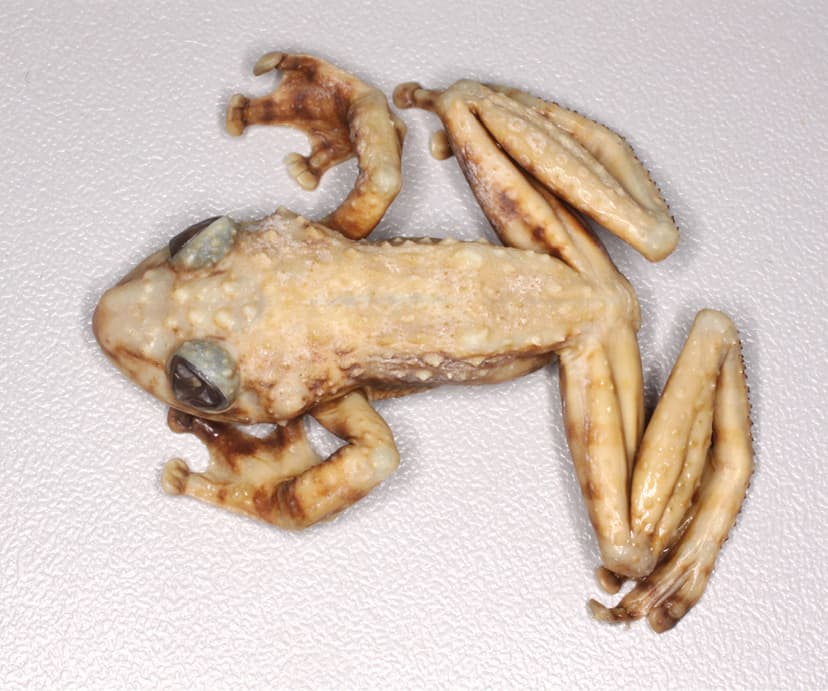
Acanthixalus spinosus, commonly known as the African wart frog, is a species of frog native to Africa, found from southeastern Nigeria to Gabon and the Democratic Republic of the Congo. It is distinctive for its warty, black or brownish-to-olive dorsum with an hourglass pattern, and the males' unique possession of strong tarsal spines and larger digital discs. This species primarily inhabits lowland rainforests, dwelling in water-filled tree holes and exhibiting predominantly aquatic behavior.
Acris
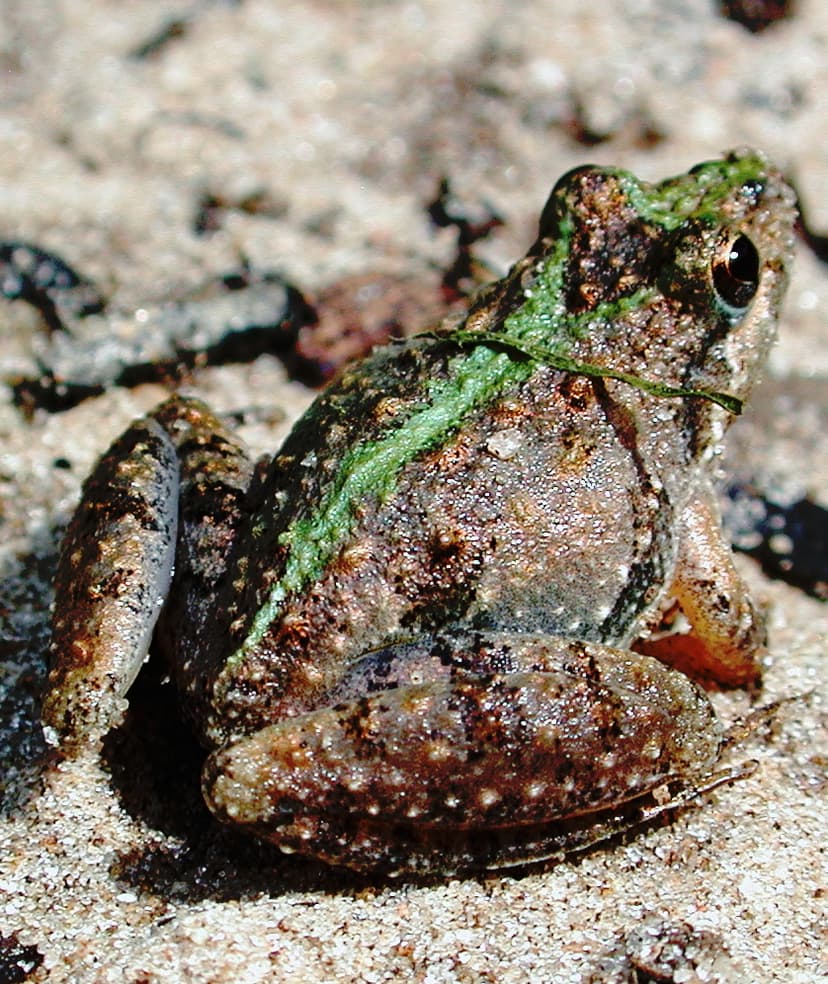
Cricket frogs, genus Acris, are small North American frogs belonging to the Hylidae family. Found from northern Mexico to southern Ontario, they are known for their cricket-like vocalizations, which play a crucial role in reproductive isolation. These frogs are notably more aquatic than other tree frogs and are strongly associated with permanent water bodies that offer surface vegetation for survival.