
Allobates fuscellus
Allobates fuscellus is a frog species native to the Amazon Basin in western Brazil, with potential presence in Peru. It is distinguished by its terrestrial egg-laying and the unique behavior of adult frogs carrying hatched tadpoles to streams for further development. The species is currently classified as least concern for extinction.
Key Facts
- ›Found in tropical lowland primary and secondary rainforests.
- ›Eggs are laid on land, and tadpoles are transported to streams by adults.
- ›Observed at elevations between 65 and 250 meters above sea level.
- ›Classified as least concern by the IUCN.
- ›Clear-cut logging is a potential threat in some areas of its range.

Rainforest
Brazil
- Terrestrial Egg-Laying
- Parental Care Involving Tadpole Transport To Streams
About Allobates fuscellus
Allobates fuscellus is a species of frog belonging to the Aromobatidae family. It is native to the Amazon Basin, with documented occurrences in western Brazil and a potential presence extending into Peru. This species is notable for its unique reproductive strategy, which includes terrestrial egg deposition and direct parental care of tadpoles.
Habitat and Distribution
The preferred habitat for Allobates fuscellus consists of tropical lowland areas, encompassing both primary and secondary rainforests. Observations indicate that this frog inhabits elevations ranging from approximately 65 to 250 meters above sea level. Its distribution is primarily concentrated in western Brazil, though its presence in neighboring Peru is also considered possible.
Reproduction and Life Cycle
Allobates fuscellus exhibits a distinct breeding behavior. Females lay their eggs on land, away from immediate water sources. Upon hatching, adult frogs play a crucial role in the tadpoles' survival by carrying them to nearby streams. This ensures that the tadpoles can continue their development in an aquatic environment, a behavior that highlights significant parental investment.
Conservation Status and Threats
The International Union for Conservation of Nature (IUCN) has classified Allobates fuscellus as a species of Least Concern regarding extinction. While the species is not currently facing immediate threats of extinction, clear-cut logging activities are identified as a potential danger in certain parts of its geographical range. Continued habitat preservation efforts are important for its long-term survival.
Source: Wikipedia ↗
Frequently Asked Questions
Where is Allobates fuscellus found?
Allobates fuscellus is found in the Amazon Basin, specifically in western Brazil. It is also thought to possibly be present in Peru.
What is the habitat of Allobates fuscellus?
This frog inhabits tropical lowland primary and secondary rainforests. It has been observed at elevations ranging from 65 to 250 meters above sea level.
How does Allobates fuscellus reproduce?
Female Allobates fuscellus lay their eggs on land. After hatching, adult frogs carry the tadpoles to nearby streams for their continued development.
What is the conservation status of Allobates fuscellus?
The IUCN classifies Allobates fuscellus as least concern for extinction. However, clear-cut logging is identified as a potential threat in certain parts of its distribution.
Related Frogs
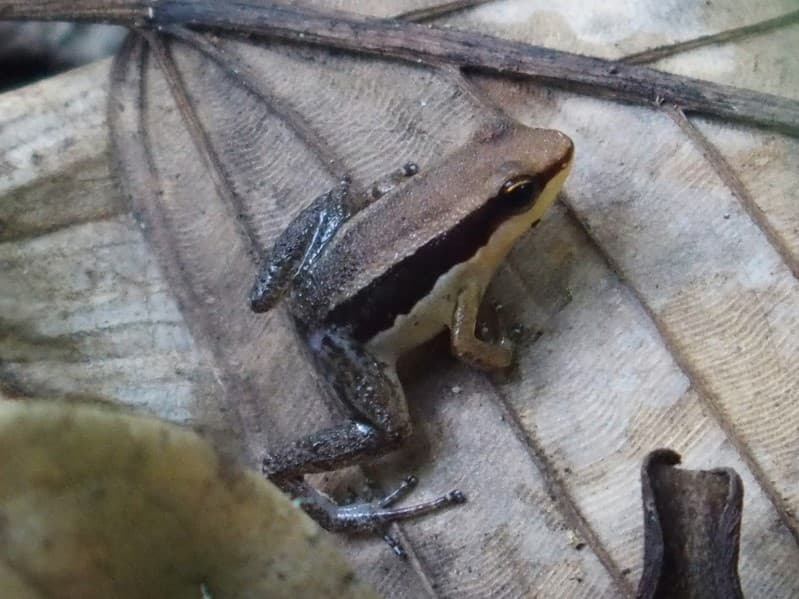
Allobates conspicuus
Allobates conspicuus is a species of frog native to western Brazil and eastern Peru. This diurnal amphibian inhabits bamboo and other forests, including disturbed and regenerating areas, at elevations between 250 and 550 meters. Despite facing threats from agriculture and logging, its conservation status is currently listed as Least Concern.
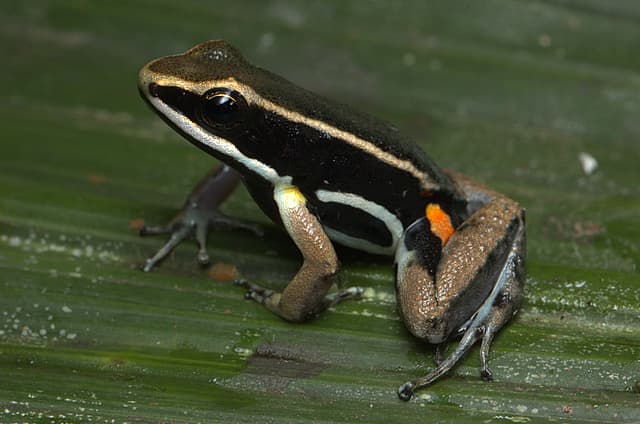
Allobates femoralis
Allobates femoralis, also known as the brilliant-thighed poison frog, is a species of terrestrial frog found in the Amazon basin and tropical eastern South America. This species is distinguished by its vibrant orange-yellow thigh patches and its complex reproductive behaviors, including extended male courtship and the male's role in guarding eggs and transporting tadpoles to water bodies.
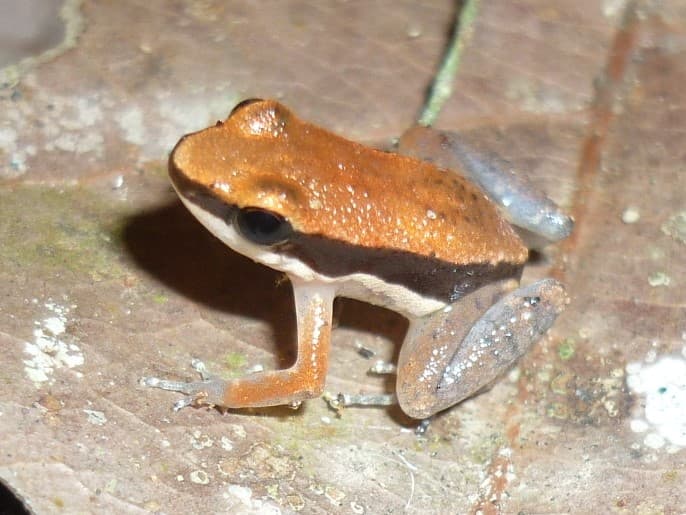
Allobates sumtuosus
Allobates sumtuosus is a small, terrestrial frog species found in the Amazon basin and surrounding Guiana Shield regions of South America. It is characterized by its solid tan-brown to copper dorsal coloration, dark brown flanks, and a distinctive white, iridescent ventrolateral stripe. This species is diurnal and exhibits a unique parental care strategy where males, and occasionally females, transport tadpoles to suitable aquatic environments.