
Allobates sumtuosus
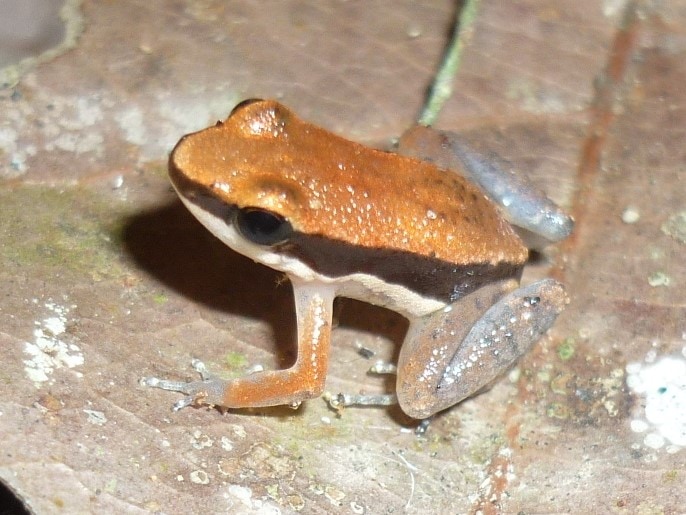
Allobates sumtuosus is a small, terrestrial frog species found in the Amazon basin and surrounding Guiana Shield regions of South America. It is characterized by its solid tan-brown to copper dorsal coloration, dark brown flanks, and a distinctive white, iridescent ventrolateral stripe. This species is diurnal and exhibits a unique parental care strategy where males, and occasionally females, transport tadpoles to suitable aquatic environments.
Key Facts
- ›Adult males typically measure between 13-16 MM in snout-vent length.
- ›Possesses a solid tan brown to copper dorsal coloration with dark brown flanks.
- ›Features a prominent white, iridescent ventrolateral stripe running from snout to groin.
- ›Diurnal and terrestrial, inhabiting primary and secondary forests.
- ›Males carry tadpoles on their backs until deposition in temporary pools or moist leaf litter.
- ›Classified as Least Concern by the IUCN due to its wide distribution and presence in protected areas.
Primary Forest, Secondary Forest, Flooded Forest, Well-Drained Forest
Pará, Amazonas, Roraima, Loreto Region, Guyana, Suriname, Colombia
Solid Tan Brown To Copper Dorsal Coloration, Solid Dark Brown Flanks, White, Iridescent Ventrolateral Stripe, Small Size
About Allobates sumtuosus
Allobates sumtuosus is a species of small, terrestrial frog belonging to the family Aromobatidae. This species is distributed across a significant portion of the Amazon basin and the Guiana Shield in South America, with documented occurrences in northern Brazil (Pará, Amazonas, and Roraima states), the Loreto Region of eastern Peru, central Guyana, and southern Suriname. It may also extend into Colombia and other intervening areas.
Description and Identification
Adult males of Allobates sumtuosus are notably small, typically measuring between 13 to 16 millimeters in snout-vent length. Their physical appearance is characterized by a robust body. The dorsal surface is a uniform tan brown to copper color, though some individuals may display small, darker brown spots. The flanks are a solid dark brown. A distinctive feature is the presence of a white, iridescent ventrolateral stripe that runs along the lower margin of the dark flanks, extending from the tip of the snout all the way to the groin, although this stripe can sometimes be interrupted. Below this prominent stripe, pale iridescent mottling is visible against an unpigmented background. The ventral side, including the throat, gular region, pectoral region, and abdomen, is uniformly unpigmented and appears light gray to translucent. Males possess a white to light gray vocal sac that becomes translucent when inflated. The iris of the eye is a striking golden copper color, flecked with tiny black spots.
Habitat and Behavior
Allobates sumtuosus is a diurnal and terrestrial species, meaning it is active during the day and lives primarily on the ground. Its habitat encompasses a range of forest types, including seasonally flooded primary forests (igapó) and unflooded terra-firme primary forests. The species has also been observed in both primary and secondary forests in Guyana, in areas varying from well-drained mixed forests on white sand to mixed forests on gravely clay laterite soil. This adaptability suggests a broad ecological tolerance within forested ecosystems.
Reproduction and Parental Care
Reproduction in Allobates sumtuosus involves the laying of small clutches of eggs, typically numbering between 5 to 11, which are deposited within the leaf litter. A remarkable aspect of their life cycle is the dedicated parental care provided by the male, and on rare occasions, the female. After hatching, the tadpoles are carried on the adult's back until they are transported to suitable locations for further development. These locations are usually small temporary pools or moist leaf litter. In some observed instances, tadpoles have been deposited in the foam nests of other frog species, such as Physalaemus sp. and Leptodactylus rhodomystax. This behavior is believed to be a strategy to ensure the tadpoles remain sufficiently moist during drier periods, rather than for nutritional benefit from the host eggs.
Vocalizations
Male Allobates sumtuosus communicate using two distinct types of advertisement calls. The first call consists of regular trills composed of 23 to 35 short notes, lasting approximately 5 seconds, with intervals of about 23 seconds between these trills. The individual notes within a trill are short and regularly spaced, with an interval of roughly 0.1 seconds, and the call has an average peak frequency of about 6325 Hz. The second type of call is characterized by continuously emitted notes separated by silent intervals of variable duration, averaging around 0.3 seconds, with an average peak frequency of approximately 6200 Hz.
Conservation Status
As of 2023, the International Union for Conservation of Nature (IUCN) classifies Allobates sumtuosus as a species of Least Concern. This classification is largely due to its wide distribution and the fact that its known range overlaps with numerous protected areas. These include reserves such as Rio Trombetas Biological Reserve in Brazil, several protected areas in Peru, Mabura Hill Forest Reserve in Guyana, and Sipaliwini Nature Reserve in Suriname. While logging activities may pose some localized threats in certain parts of its range, the species' overall population is considered stable and widespread, benefiting from conservation efforts in its habitat.
Source: Wikipedia ↗
Frequently Asked Questions
What is the typical size of an adult Allobates sumtuosus?
Adult males of Allobates sumtuosus typically measure between 13 to 16 millimeters in snout-vent length. This makes them a relatively small species of frog.
What are the distinguishing physical features of Allobates sumtuosus?
Allobates sumtuosus is recognized by its solid tan brown to copper dorsal coloration and solid dark brown flanks. A notable feature is the white, iridescent ventrolateral stripe that extends from the tip of the snout to the groin.
Where is Allobates sumtuosus found?
This species is known to occur in northern Brazil, including the states of Pará, Amazonas, and Roraima. It is also found in the Loreto Region of eastern Peru, central Guyana, and southern Suriname, with potential occurrences in intervening areas and Colombia.
What is the habitat of Allobates sumtuosus?
Allobates sumtuosus inhabits both primary and secondary forests, found in areas ranging from well-drained mixed forests on white sand to mixed forests on gravely clay laterite. It is also found in seasonally flooded (igapó) and unflooded (terra-firme) primary forests.
How does Allobates sumtuosus reproduce and care for its young?
Females lay small clutches of 5-11 eggs in leaf litter. After hatching, males (or rarely, females) carry the tadpoles on their backs until they are deposited in small temporary pools or moist leaf litter for further development.
What is the conservation status of Allobates sumtuosus?
Allobates sumtuosus is classified as Least Concern by the IUCN as of 2023. Its wide distribution and presence within numerous protected areas contribute to this status, although logging may pose a threat in some regions.
Related Frogs
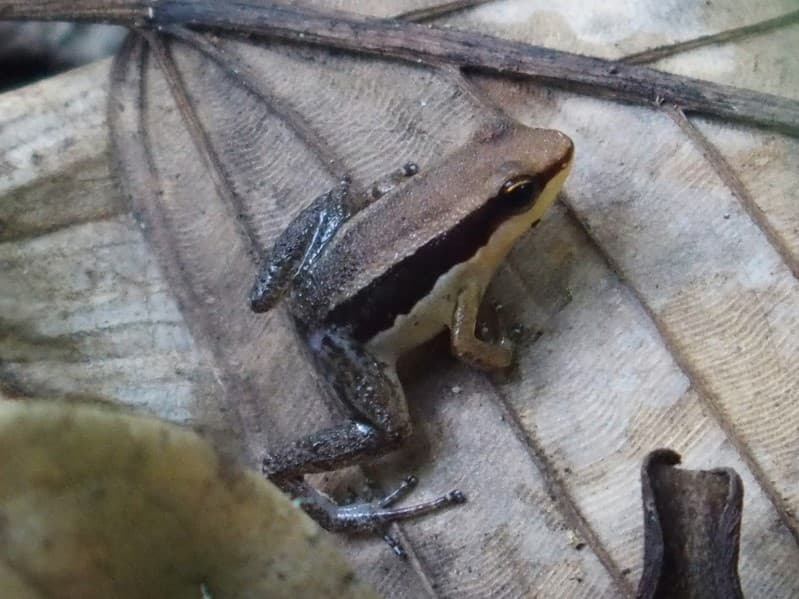
Allobates conspicuus
Allobates conspicuus is a species of frog native to western Brazil and eastern Peru. This diurnal amphibian inhabits bamboo and other forests, including disturbed and regenerating areas, at elevations between 250 and 550 meters. Despite facing threats from agriculture and logging, its conservation status is currently listed as Least Concern.
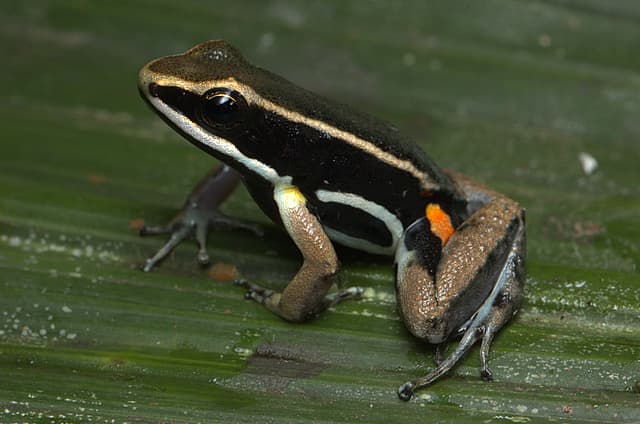
Allobates femoralis
Allobates femoralis, also known as the brilliant-thighed poison frog, is a species of terrestrial frog found in the Amazon basin and tropical eastern South America. This species is distinguished by its vibrant orange-yellow thigh patches and its complex reproductive behaviors, including extended male courtship and the male's role in guarding eggs and transporting tadpoles to water bodies.

Allobates fuscellus
Allobates fuscellus is a frog species native to the Amazon Basin in western Brazil, with potential presence in Peru. It is distinguished by its terrestrial egg-laying and the unique behavior of adult frogs carrying hatched tadpoles to streams for further development. The species is currently classified as least concern for extinction.