
Allobates goianus
Allobates·Near Threatened
Allobates goianus, also known as the Goias rocket frog or Cerrado rocket frog, is a species of frog endemic to the Goiás state of Brazil. This species is distinguished by its breeding behavior, where eggs are laid on land and tadpoles are transported by parents to streams for larval development. It inhabits the leaf litter of humid deciduous forests and gallery forests at elevations between 700 and 1,700 meters.
Key Facts
- ›Endemic to Goiás state, Brazil.
- ›Found in the leaf litter of humid deciduous forests and gallery forests.
- ›Breeding involves terrestrial egg-laying and parental transport of tadpoles to streams.
- ›Classified as near Threatened by the IUCN.
- ›Threatened by habitat loss due to deforestation, agriculture, and development.
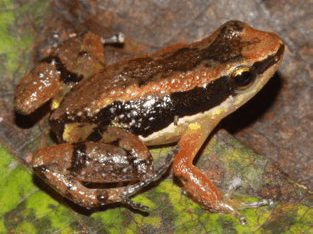
Goias Rocket Frog, Cerrado Rocket Frog
Deciduous Forest, Gallery Forest, Near Streams, Seasonal Ponds
GoiáS
Terrestrial Egg-Laying, Parental Transport of Tadpoles To Water
About Allobates goianus
Allobates goianus, commonly referred to as the Goias rocket frog or Cerrado rocket frog, is a species of frog that is native to the Goiás state of Brazil. This species belongs to the Aromobatidae family and is recognized for its unique reproductive cycle and specific habitat requirements.
Habitat and Distribution
The Goias rocket frog inhabits the leaf litter of humid deciduous forests and deciduous gallery forests. It is typically found in close proximity to streams or small ponds, which can be either permanent or seasonal. Observations have documented this species at elevations ranging from 700 to 1,700 meters above sea level. While it has been observed in protected areas such as Parque Nacional da Chapada dos Veadeiros and RPPN Reserva Natural Serra do Tombador, its presence has unfortunately disappeared from some formerly inhabited locations like Floresta Nacional de Silvania.
Reproduction
A distinctive characteristic of Allobates goianus is its breeding behavior. The eggs are laid on land, and subsequently, the parents actively carry the tadpoles to streams where the larval development is completed. This parental investment in safeguarding the early life stages is a key aspect of the species' life history.
Conservation Status
The International Union for Conservation of Nature (IUCN) has classified Allobates goianus as Near Threatened. The primary threats contributing to this status are habitat loss and degradation. These pressures stem from deforestation, often associated with fires, as well as the impacts of livestock grazing, dam construction, and expanding urban and rural development. Agricultural activities, including sericulture and the cultivation of soybean farms, also play a significant role in habitat alteration and fragmentation for this species.
Source: Wikipedia ↗
Frequently Asked Questions
Where is the Allobates goianus found?
Allobates goianus is endemic to the Goiás state in Brazil. It has been observed in various protected areas within this region, though it has disappeared from some locations.
What is the habitat of the Goias rocket frog?
This frog inhabits the leaf litter of humid deciduous forests and deciduous gallery forests. It prefers areas near streams or small permanent or seasonal ponds, typically at elevations between 700 and 1,700 meters above sea level.
How does Allobates goianus reproduce?
The reproduction of Allobates goianus involves laying eggs on land. After hatching, the parents carry the tadpoles to streams where they complete their larval development.
What are the main threats to the Cerrado rocket frog?
The primary threats to Allobates goianus are habitat loss and degradation. This includes deforestation caused by fires, livestock grazing, dam construction, urban and rural development, and agricultural activities like sericulture and soybean farming.
What is the conservation status of Allobates goianus?
The International Union for Conservation of Nature (IUCN) classifies Allobates goianus as Near Threatened. This status reflects the significant pressures on its habitat.
Related Frogs

Allobates brunneus
Allobates brunneus, commonly known as the Chupada rocket frog, is a small frog species found in the southern Amazon drainage of Brazil and northern Bolivia. It is distinguished by its varied dorsal coloration, distinct leg striping, and sexually dimorphic throat and belly colors. This species is classified as endangered primarily due to habitat loss.
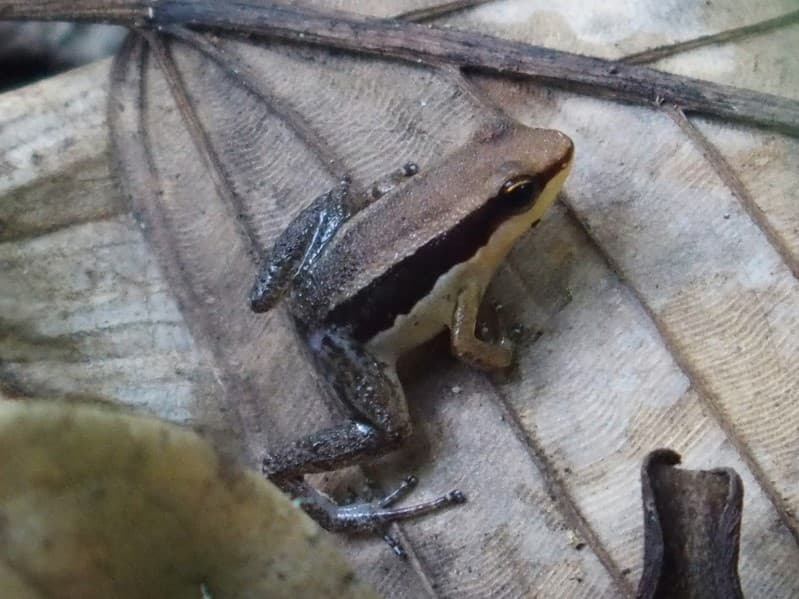
Allobates conspicuus
Allobates conspicuus is a species of frog native to western Brazil and eastern Peru. This diurnal amphibian inhabits bamboo and other forests, including disturbed and regenerating areas, at elevations between 250 and 550 meters. Despite facing threats from agriculture and logging, its conservation status is currently listed as Least Concern.
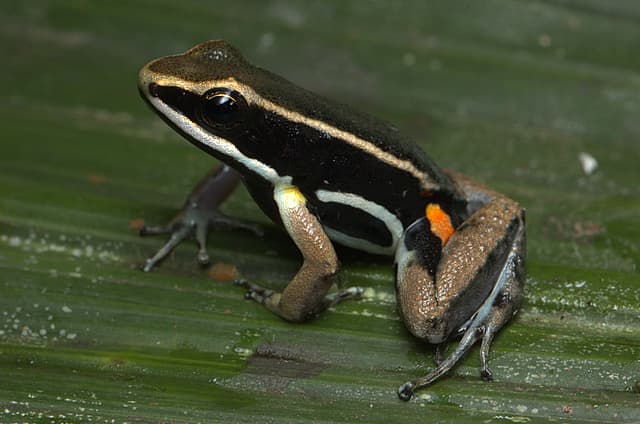
Allobates femoralis
Allobates femoralis, also known as the brilliant-thighed poison frog, is a species of terrestrial frog found in the Amazon basin and tropical eastern South America. This species is distinguished by its vibrant orange-yellow thigh patches and its complex reproductive behaviors, including extended male courtship and the male's role in guarding eggs and transporting tadpoles to water bodies.