
Allobates olfersioides
Allobates·Critically Endangered (potentially extinct in Rio de Janeiro subpopulation)
Allobates olfersioides, also known as the Rio rocket frog, is a species of frog native to the Atlantic Forest biome of eastern Brazil. This diurnal frog inhabits the forest floor of primary and secondary forests and is characterized by its parental care of tadpoles. Although historically common, it has experienced recent declines and is now considered critically endangered in some areas due to habitat loss and potential disease.
Key Facts
- ›Endemic to the Atlantic Forest biome of eastern Brazil.
- ›Diurnal frog living on the forest floor.
- ›Parents carry hatched tadpoles to water bodies for development.
- ›Threatened by habitat loss and potentially chytridiomycosis.
- ›Historically common, but has recently declined significantly in many areas.
- ›The species is confined to the Rio de Janeiro subpopulation, with no individuals found since the 1970s.

Rio Rocket Frog
Forest, Primary Forest, Secondary Forest
Rio De Janeiro
Diurnal Activity, Terrestrial Nest For Eggs, Parental Transport of Tadpoles
About Allobates olfersioides
Allobates olfersioides: The Rio Rocket Frog
Allobates olfersioides, commonly referred to as the Rio rocket frog, is a species of frog native to the Atlantic Forest biome of eastern Brazil. Belonging to the Aromobatidae family, this species is characterized by its diurnal habits, meaning it is active during the day, and its preference for living on the forest floor.
Habitat and Distribution
The natural habitats of Allobates olfersioides are primary and secondary forests found in the coastal regions of eastern Brazil. While historically widespread, recent declines have made it absent from many of its former locations.
Reproduction and Life Cycle
A notable aspect of Allobates olfersioides's life cycle is its parental care. Eggs are laid in a terrestrial nest, and once they hatch, the parents actively transport the tadpoles to puddles or small rivulets. These tadpoles then remain in these water bodies until they undergo metamorphosis.
Conservation Status
Once considered very common, Allobates olfersioides has experienced significant population declines. The species is threatened by habitat loss and potentially by the fungal disease chytridiomycosis. While the IUCN previously classified it as Least Concern, this assessment was based on a broader definition of the species. Following taxonomic revisions, the species is now confined to a subpopulation in Rio de Janeiro. No individuals have been observed in this specific region since the 1970s, leading to conclusions that this population is critically endangered, if not extinct. This highlights the urgent need for conservation efforts and further research into the status of the remaining populations.
Source: Wikipedia ↗
Frequently Asked Questions
What is Allobates olfersioides?
Allobates olfersioides is a species of frog found in eastern Brazil, belonging to the Aromobatidae family. It is commonly known as the Rio rocket frog and inhabits the forest floor of primary and secondary forests.
Where does Allobates olfersioides live?
This frog species is endemic to the coastal regions of the Atlantic Forest biome in eastern Brazil. Its natural habitats are primary and secondary forests.
What are the threats to Allobates olfersioides?
The primary threats to Allobates olfersioides are habitat loss and degradation. There is also a concern about the potential impact of chytridiomycosis, a fungal disease affecting amphibians.
How does Allobates olfersioides reproduce?
Allobates olfersioides lays clutches of up to 11 eggs in terrestrial nests. After hatching, the parents transport the tadpoles to puddles or small rivulets for further development.
What is the conservation status of Allobates olfersioides?
While the IUCN previously listed the species as Least Concern, recent assessments suggest it is critically endangered, if not extinct, specifically within the Rio de Janeiro subpopulation. This re-evaluation is due to the lack of sightings since the 1970s in this region.
Related Frogs

Allobates brunneus
Allobates brunneus, commonly known as the Chupada rocket frog, is a small frog species found in the southern Amazon drainage of Brazil and northern Bolivia. It is distinguished by its varied dorsal coloration, distinct leg striping, and sexually dimorphic throat and belly colors. This species is classified as endangered primarily due to habitat loss.
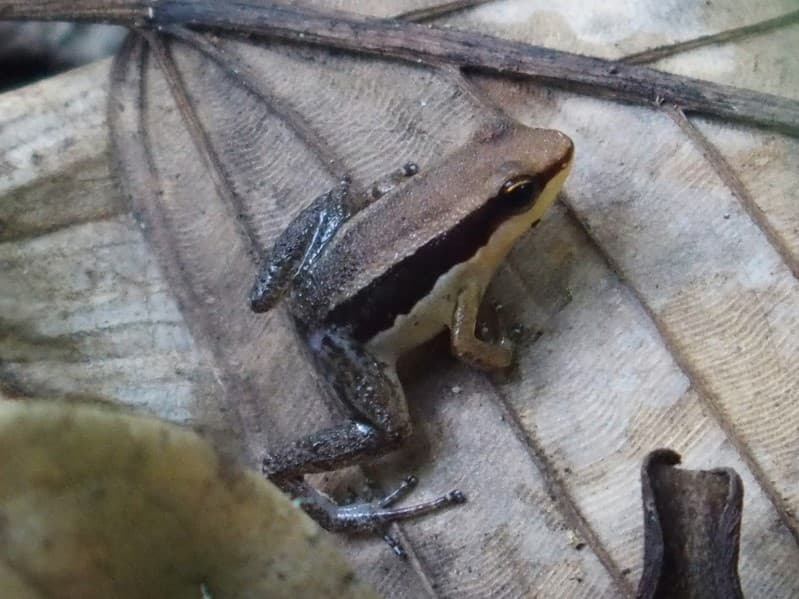
Allobates conspicuus
Allobates conspicuus is a species of frog native to western Brazil and eastern Peru. This diurnal amphibian inhabits bamboo and other forests, including disturbed and regenerating areas, at elevations between 250 and 550 meters. Despite facing threats from agriculture and logging, its conservation status is currently listed as Least Concern.
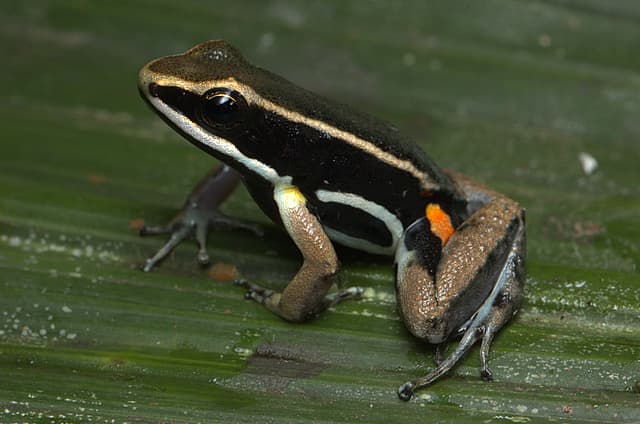
Allobates femoralis
Allobates femoralis, also known as the brilliant-thighed poison frog, is a species of terrestrial frog found in the Amazon basin and tropical eastern South America. This species is distinguished by its vibrant orange-yellow thigh patches and its complex reproductive behaviors, including extended male courtship and the male's role in guarding eggs and transporting tadpoles to water bodies.