
Allobates talamancae
The Allobates talamancae, also known as the Talamanca rocket frog, is a small, non-toxic amphibian native to northwestern Ecuador, western Colombia, Panama, Costa Rica, and southern Nicaragua. It is distinguished by its dark brown dorsum, black flanks bordered by tan/bronze and white lines, and unwebbed fingers and toes. Both parents participate in raising their young, carrying tadpoles to streams for development.
Key Facts
- ›Found in humid lowland and premontane habitats, often near streams.
- ›Males measure 17–24 MM and females 16–25 MM in snout-to-vent length.
- ›Diet consists of small arthropods.
- ›Eggs are laid in leaf litter, with both parents transporting tadpoles to water.
- ›Threatened by habitat loss, introduced predatory fish, and pollution.

Talamanca Rocket Frog, Striped Rocket Frog, Talamanca Striped Rocket Frog
Lowland Forest, Premontane Forest, Swampy Areas, Secondary Growth, Plantations, Near Streams
- Small Size
- Dark Brown Dorsum
- Black Flanks With Distinct Tan/Bronze and White Borders
- White Ventrum
- Unwebbed Fingers and Toes
About Allobates talamancae
What is it?
Allobates talamancae, commonly referred to as the Talamanca rocket frog, striped rocket frog, or Talamanca striped rocket frog, is a species of small, non-toxic frog belonging to the family Aromobatidae. This amphibian is found across a range in Central and South America, specifically in northwestern Ecuador, western Colombia, Panama, Costa Rica, and southern Nicaragua.
Description and Habitat
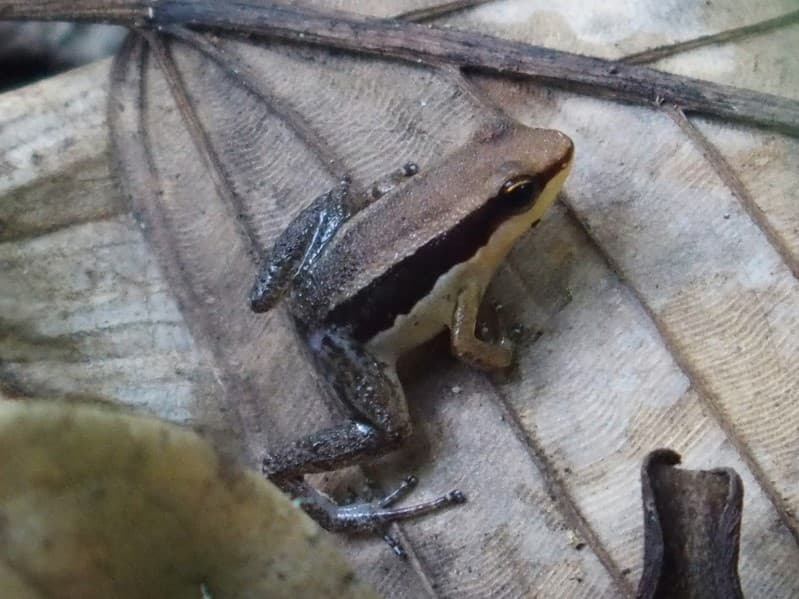
The Talamanca rocket frog is characterized by its smooth, dark brown dorsal surface, contrasting with black flanks that are bordered by a tan or bronze line above and a white line below. Its underside, or ventrum, is white. Adults are relatively small, with males measuring 17–24 mm and females 16–25 mm in snout-to-vent length. Their fingers and toes are unwebbed. This species prefers very humid lowland and premontane habitats, often found in secondary growth, plantations, and swampy areas within primary forests, typically close to streams. They can inhabit elevations up to 800 meters, and even higher in certain regions like Colombia.
Diet and Reproduction
Allobates talamancae feeds on small arthropods. Their reproductive strategy involves biparental care: eggs are laid in leaf litter, and both parents then transport the tadpoles to streams to complete their development in small water bodies. Adult frogs have been observed aggregating in small groups, which is believed to be an adaptation to deter predators.
Conservation Concerns
Despite being a common species in its range, Allobates talamancae faces threats to its survival. Habitat loss due to human activities is a significant concern. Additionally, the introduction of alien predatory fish into their aquatic environments and general pollution also pose risks to the species' long-term viability.
Source: Wikipedia ↗
Frequently Asked Questions
What are the common names for Allobates talamancae?
Allobates talamancae is commonly known as the Talamanca rocket frog, the striped rocket frog, and the Talamanca striped rocket frog.
What does Allobates talamancae eat?
The diet of Allobates talamancae primarily consists of small arthropods. These are typically insects and other small invertebrates found in their habitat.
How does Allobates talamancae reproduce?
Allobates talamancae lay their eggs in the leaf litter. Both male and female adults then carry the tadpoles to streams, where they complete their development in small, water-filled depressions.
What is the typical size of Allobates talamancae?
Adult Allobates talamancae are small frogs. Males typically range from 17 to 24 mm (0.67–0.94 in) in snout-to-vent length, while females are slightly larger, measuring 16 to 25 mm (0.63–0.98 in).
Where is Allobates talamancae found?
This species is distributed across northwestern Ecuador, western Colombia, Panama, Costa Rica, and southern Nicaragua. It prefers very humid lowland and premontane environments.
Related Frogs

Allobates brunneus
Allobates brunneus, commonly known as the Chupada rocket frog, is a small frog species found in the southern Amazon drainage of Brazil and northern Bolivia. It is distinguished by its varied dorsal coloration, distinct leg striping, and sexually dimorphic throat and belly colors. This species is classified as endangered primarily due to habitat loss.
Allobates conspicuus
Allobates conspicuus is a species of frog native to western Brazil and eastern Peru. This diurnal amphibian inhabits bamboo and other forests, including disturbed and regenerating areas, at elevations between 250 and 550 meters. Despite facing threats from agriculture and logging, its conservation status is currently listed as Least Concern.
Allobates femoralis
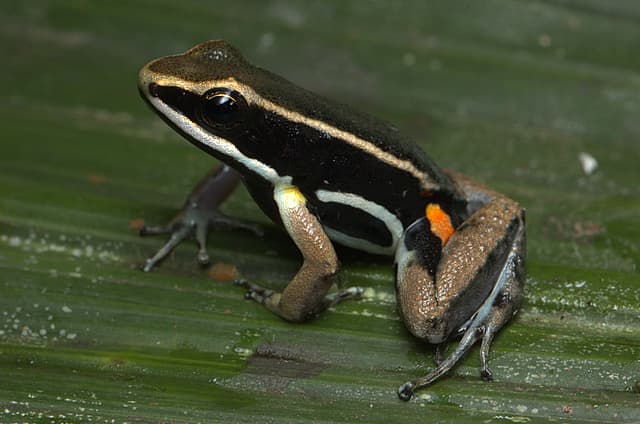
Allobates femoralis, also known as the brilliant-thighed poison frog, is a species of terrestrial frog found in the Amazon basin and tropical eastern South America. This species is distinguished by its vibrant orange-yellow thigh patches and its complex reproductive behaviors, including extended male courtship and the male's role in guarding eggs and transporting tadpoles to water bodies.