
Allophryne ruthveni
Allophryne·Least Concern
The Tukeit Hill frog, scientifically known as Allophryne ruthveni, is a small amphibian found in several South American countries including Guyana, Venezuela, Suriname, Brazil, and Bolivia. It is distinguished by its variable coloration, flat body and head, and enlarged toe pads, and its evolutionary relationship has been a subject of scientific interest, now placed in its own family, Allophrynidae.
Key Facts
- ›Found in Guyana, Venezuela, Suriname, Brazil, and Bolivia.
- ›Small frog with variable black or dull yellow/golden coloration, often with stripes and spots.
- ›Possesses a flat body and head, with a single submandibular vocal sac.
- ›Superficially resembles tree frogs but differs in the shape of its phalanges.
- ›Classified in its own family, Allophrynidae, with close evolutionary ties to glassfrogs.
- ›Semiarboreal, spending time both on the ground and in low trees (1-3 meters high).
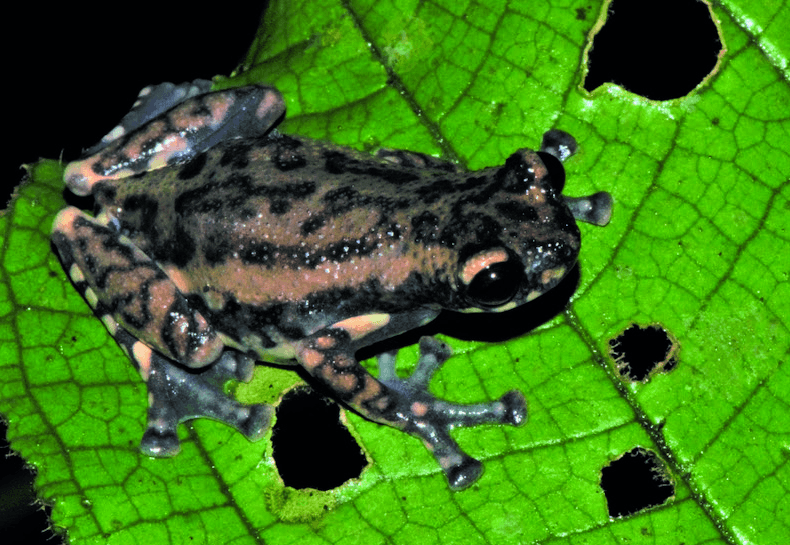
Tukeit Hill Frog
Forest, Rainforest
Bolivia, Brazil, Guyana, Suriname, Venezuela
- Variable Black Or Yellow/Golden Coloration With Stripes and Spots
- Flat Body and Head
- Enlarged Toe Pads Wider Than Fingers
- T-Shaped Terminal Phalanges of Fingers and Toes
About Allophryne ruthveni
Allophryne ruthveni: The Tukeit Hill Frog
The Tukeit Hill frog, scientifically known as Allophryne ruthveni, is a small amphibian species that inhabits parts of South America, including Guyana, Venezuela, Suriname, Brazil, and Bolivia. Its common name originates from the discovery of the holotype specimen at Tukeit Hill in Guyana, located below Kaieteur Falls.
Description and Appearance
This frog is characterized by its small size and a flat body and head. Its coloration is notably variable, presenting either a black base adorned with golden or dull yellow stripes and spots, or a dull yellow or golden ventral surface marked with black. A single, submandibular vocal sac is present. The Tukeit Hill frog has enlarged toe pads, which are wider than its fingers, and its tympanum is visible.
Taxonomy and Evolution
Once considered the sole member of the subfamily Allophryninae within the family Centrolenidae, Allophryne ruthveni is now recognized as the only genus in the monotypic family Allophrynidae. Its evolutionary history has been a subject of scientific debate, with past associations to families like Hylidae, Bufonidae, and Leptodactylidae. However, recent phylogenetic studies have confirmed its close relationship to glassfrogs, identifying Allophryne as the sister taxon to the glassfrog clade Centroleninae. This suggests it may represent a relict group, potentially more widespread in prehistoric times.
Behavior and Habitat
The Tukeit Hill frog exhibits semiarboreal behavior, spending time both on the ground and in low trees, typically at heights of 1 to 3 meters. They are known to be explosive breeders, a strategy where they rapidly reproduce by taking advantage of small water ponds that form on the forest floor after periods of rain. The species appears to be restricted to forested areas, avoiding cleared or open land.
Conservation Status
The conservation status of Allophryne ruthveni is currently listed as Least Concern, indicating that the species is not currently facing a high risk of extinction in the wild.
Source: Wikipedia ↗
Frequently Asked Questions
What is the scientific name for the Tukeit Hill frog?
The scientific name for the Tukeit Hill frog is Allophryne ruthveni. This name places it as the type species for the genus Allophryne.
Where do Tukeit Hill frogs live?
Tukeit Hill frogs inhabit Guyana, Venezuela, Suriname, Brazil, and Bolivia. The holotype specimen was discovered at Tukeit Hill in Guyana, which gives them their common English name.
What does the Tukeit Hill frog look like?
This frog is small and has a flat body and head. Its coloration is variable, appearing either black with golden or dull yellow stripes and spots, or dull yellow/golden on its underside with black markings.
What is the evolutionary relationship of Allophryne ruthveni?
The evolutionary relationships of Allophryne ruthveni have been debated, but recent studies suggest it is the sister taxon to the glassfrog clade Centroleninae. It is now considered the sole genus in the monotypic family Allophrynidae.
How does the Tukeit Hill frog breed?
They are known as explosive breeders, utilizing small water ponds that form on the forest floor after rain. This behavior allows them to take advantage of temporary breeding sites.
Related Frogs

Agalychnis callidryas
The red-eyed tree frog (Agalychnis callidryas) is a vibrantly colored amphibian native to the rainforests of Central America and northwestern South America. Despite its striking appearance with bright red eyes, green body, and blue and yellow side stripes, it is not poisonous. Its colors are thought to serve as camouflage and a startle display to deter predators, allowing it valuable escape time.

American green treefrog
The American green tree frog (Dryophytes cinereus) is a common, moderately-sized arboreal frog native to the central and southeastern United States. It is distinguished by its bright green to reddish-brown coloration, long legs, and a slender build, often featuring small golden spots on its dorsum. This nocturnal insectivore prefers habitats with permanent water sources and abundant vegetation, and plays a role as a bioindicator for aquatic contamination.
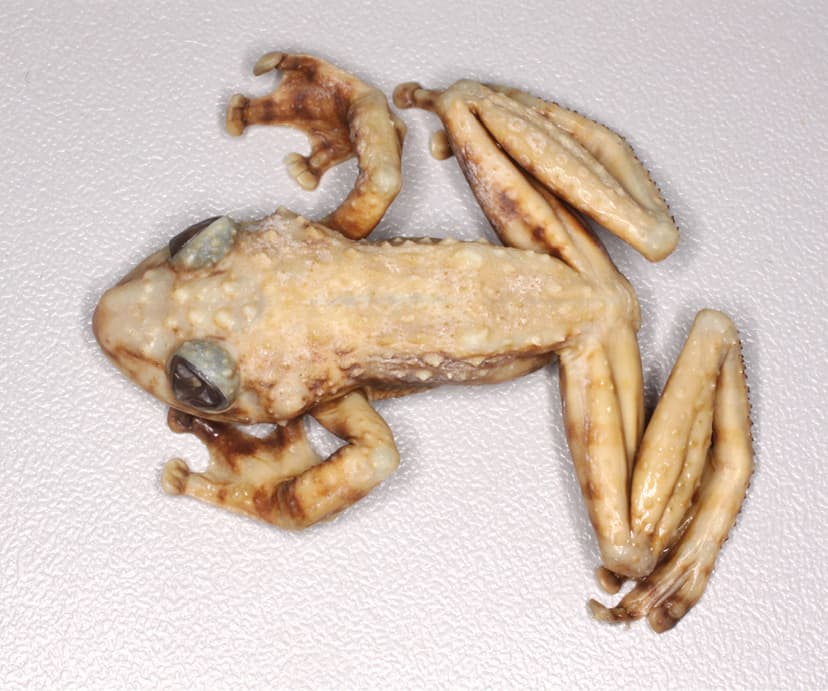
Acanthixalus
Acanthixalus, commonly known as African wart frogs, is a genus of frogs belonging to the family Hyperoliidae. These frogs are found in the rainforests of Western and Central Africa, spanning from Ivory Coast to Congo. They are distinctive for their habit of living in water-filled tree cavities and their apparent lack of vocalizations, possibly using olfactory cues for mating.