
American green treefrog
Dryophytes·Least Concern
The American green tree frog (Dryophytes cinereus) is a common, moderately-sized arboreal frog native to the central and southeastern United States. It is distinguished by its bright green to reddish-brown coloration, long legs, and a slender build, often featuring small golden spots on its dorsum. This nocturnal insectivore prefers habitats with permanent water sources and abundant vegetation, and plays a role as a bioindicator for aquatic contamination.
Key Facts
- ›Found in the central and southeastern United States, from Maryland to Florida and west to Texas.
- ›Prefers forests with permanent water sources and plentiful vegetation, including cypress ponds and marshes.
- ›Primarily nocturnal and insectivorous, feeding on flies, mosquitoes, grasshoppers, and other small invertebrates.
- ›Males use low-frequency advertisement calls to attract females, and engage in territorial disputes through vocalizations and wrestling.
- ›Females are typically larger than males, and clutch size can be influenced by female size and environmental conditions.
- ›Serves as a bioindicator for aquatic contamination due to its permeable skin.

Green Treefrog
Forest, Wetlands, Marshes, Ponds
Maryland, Delaware, New Jersey, Florida, Georgia, South Carolina, North Carolina, Texas
- Https://Upload.Wikimedia.Org/Wikipedia/Commons/Thumb/F/Fe/Hyla_cinerea_frog.Jpg/1024px-Hyla_cinerea_frog.Jpg
- Https://Upload.Org/Wikipedia/Commons/A/A0/Hyla_cinerea_adult.Jpg
- Https://Upload.Org/Wikipedia/Commons/F/Fa/Green_tree_frog_%28hyla_cinerea%29.Jpg
Snakes, Birds, Other Frogs, Sunfish, Bass, Dragonflies
Bright Green To Reddish-Brown Coloration, Prominent White Lateral Stripes, Small Golden Spots On Dorsum, Long Legs and Slender Build, Large, Protruding Eyes With Horizontal Pupils
About American green treefrog
American Green Tree Frog
What it is
The American green tree frog, scientifically known as Dryophytes cinereus (formerly Hyla cinerea), is a common species of New World tree frog. It is a member of the Hylidae family and is characterized by its moderately sized, slender body, long legs, and bright green to reddish-brown coloration. Sometimes, light yellowish spots are present on its dorsum. This species is primarily nocturnal and insectivorous.
Distribution and Habitat
This frog is indigenous to the central and southeastern United States, with a geographic range extending from the Eastern Shore of Maryland to southeast Florida, and populations as far west as central Texas. They are found in coastal plains and prefer open canopy forests with permanent water sources and abundant vegetation. Common habitats include cypress ponds, water lily prairies, and marshes. The American green tree frog is also adaptable, frequently being sighted in suburban environments such as backyards with ponds or garden structures.
Description and Behavior
The American green tree frog has smooth skin, large, protruding eyes with horizontal pupils, and ranges from 3.2 to 6.4 centimeters in length. Its coloration can vary, potentially leading to confusion with other species, and some evidence suggests it can change color in response to background or temperature. They are ectothermic and heterothermic. As a small and easily frightened species, they do not tolerate frequent handling well. They are arboreal, using toe pads to cling to vertical surfaces, and are most active at night. When defending territory, they may emit aggressive calls or engage in grappling.
Diet
Primarily insectivorous, the American green tree frog consumes a variety of small invertebrates including flies, mosquitoes, grasshoppers, cockroaches, spiders, beetles, and ants. Prey selection appears to be influenced by activity levels, with more active prey being favored. Ambush-style foraging is common, with most prey taken at night. It is also noted that they may ingest plant material.
Breeding and Reproduction
Male American green tree frogs attract females with low-frequency advertisement calls. Breeding occurs through amplexus, and males compete for mates by adjusting their call timing or using 'satellite' tactics to intercept females. Females lay clutches of eggs, typically around 400 eggs, in permanent bodies of water. Clutch size is positively correlated with female size. Breeding is strongly influenced by environmental factors such as day length, temperature, and precipitation, generally following rainfall.
Conservation and Threats
The American green tree frog faces threats from habitat loss due to urbanization and wildfires. Increased salinity and pesticide concentrations in their wetland habitats negatively impact reproductive success. Tadpoles are preyed upon by sunfish, bass, and dragonflies, while adults are predated by snakes, birds, and other frogs. Interestingly, this species is not easily susceptible to the chytridiomycosis pathogen, though the reasons for this are not fully understood.
Role as Bioindicators
Due to their permeable skin, American green tree frogs can absorb synthetic compounds from their aquatic environments, making them valuable bioindicators for measuring aquatic contamination, particularly from pesticides like polychlorinated biphenyls.
Source: Wikipedia ↗
Frequently Asked Questions
What is the scientific name for the American green tree frog?
The scientific name for the American green tree frog is Dryophytes cinereus, though it is also commonly referred to as Hyla cinerea in older literature. This binomial name is used to classify it within the Hylidae family.
What does the American green tree frog look like?
The American green tree frog is moderately sized with a slender build and long legs. Its coloration ranges from bright green to reddish-brown, and it often has small golden spots on its back. It possesses large, protruding eyes with horizontal pupils and prominent white lateral stripes.
Where does the American green tree frog live?
This species is found in the central and southeastern United States, inhabiting areas with permanent water sources and abundant vegetation. They are often found in forests, cypress ponds, water lily prairies, and marshes, and can even be sighted in suburban backyards.
What do American green tree frogs eat?
American green tree frogs are insectivores, feeding on a variety of small invertebrates. Their diet includes flies, mosquitoes, grasshoppers, spiders, beetles, crickets, and ants. They often select prey based on its activity level, with more active prey being more frequently consumed.
How do American green tree frogs breed?
Breeding occurs through amplexus, where the male grasps the female. Males attract females with advertisement calls, and competition among males can involve adjusting call timing or remaining silent to intercept rivals. Females lay clutches of eggs, typically in permanent bodies of water.
What are the main threats to the American green tree frog?
The primary threats to the American green tree frog include habitat loss due to urbanization and wildfires, which destroy forest canopy cover. Increased salinity and pesticide concentrations in wetlands also negatively impact reproductive success.
Related Frogs

Agalychnis callidryas
The red-eyed tree frog (Agalychnis callidryas) is a vibrantly colored amphibian native to the rainforests of Central America and northwestern South America. Despite its striking appearance with bright red eyes, green body, and blue and yellow side stripes, it is not poisonous. Its colors are thought to serve as camouflage and a startle display to deter predators, allowing it valuable escape time.

American green frog
The American green frog (*Lithobates clamitans*) is a species of true frog native to eastern North America, known for its green head and prominent dorsolateral ridges. It is a mid-sized amphibian that inhabits shallow freshwater bodies and is recognized for its territorial behavior, particularly among males who use vocalizations and physical displays to defend their breeding grounds. The species has two recognized subspecies: the bronze frog and the northern green frog.
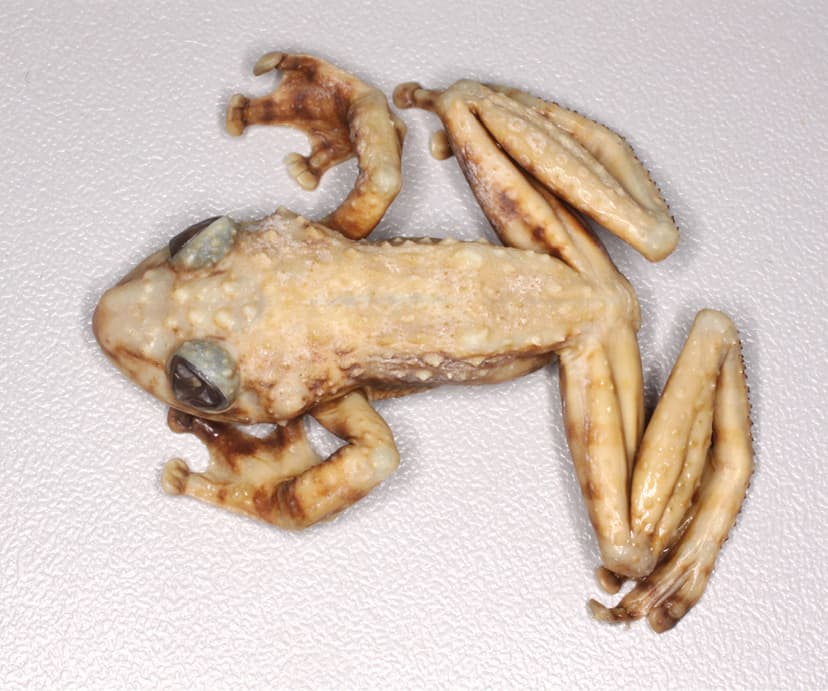
Acanthixalus spinosus
Acanthixalus spinosus, commonly known as the African wart frog, is a species of frog native to Africa, found from southeastern Nigeria to Gabon and the Democratic Republic of the Congo. It is distinctive for its warty, black or brownish-to-olive dorsum with an hourglass pattern, and the males' unique possession of strong tarsal spines and larger digital discs. This species primarily inhabits lowland rainforests, dwelling in water-filled tree holes and exhibiting predominantly aquatic behavior.