
American green frog
The American green frog (*Lithobates clamitans*) is a species of true frog native to eastern North America, known for its green head and prominent dorsolateral ridges. It is a mid-sized amphibian that inhabits shallow freshwater bodies and is recognized for its territorial behavior, particularly among males who use vocalizations and physical displays to defend their breeding grounds. The species has two recognized subspecies: the bronze frog and the northern green frog.
Key Facts
- ›Adult green frogs range from 5–10 CM (2.0–3.9 in) in snout-to-vent length.
- ›They exhibit sexual dimorphism, with mature females typically being larger than males.
- ›Males have a tympanum twice the diameter of the eye, while females' tympanum is similar to their eye size.
- ›Green frogs have prominent dorsolateral ridges, distinguishing them from bullfrogs.
- ›Their diet consists of a wide variety of small animals, including insects, spiders, fish, and other amphibians.
- ›Breeding occurs from spring through summer, with males establishing territories and using distinct calls to attract females.

Green Frog, American Green Frog, Bronze Frog, Northern Green Frog
Freshwater, Wetlands, Streams, Ponds, Lakes, Swamps, Vernal Pools
Florida, Texas, Canada
- Https://Upload.Wikimedia.Org/Wikipedia/Commons/Thumb/E/E0/Green_frog_%28lithobates_clamitans%29_-_flickr_-_andy_thesier_%281%29.Jpg/640px-Green_frog_%28lithobates_clamitans%29_-_flickr_-_andy_thesier_%281%29.Jpg
- Https://Upload.Wikimedia.Org/Wikipedia/Commons/Thumb/2/21/Lithobates_clamitans_-_green_frog_%283800748116%29.Jpg/640px-Lithobates_clamitans_-_green_frog_%283800748116%29.Jpg
- Https://Upload.Wikimedia.Org/Wikipedia/Commons/Thumb/4/4f/Lithobates_clamitans_clamitans_-_bronze_frog_%283800749570%29.Jpg/640px-Lithobates_clamitans_clamitans_-_bronze_frog_%283800749570%29.Jpg
- Https://Upload.Wikimedia.Org/Wikipedia/Commons/Thumb/3/3f/Lithobates_clamitans_melanota_%28northern_green_frog%29.Jpg/640px-Lithobates_clamitans_melanota_%28northern_green_frog%29.Jpg
Beetles, Water Bugs, Water Scorpions, Birds, Ducks, Herons, Crows, Turtles
- Prominent Dorsolateral Ridges
- Green Head
- Male Tympanum Twice the Diameter of the Eye
- Male Bright Yellow Throat During Breeding Season
About American green frog
American Green Frog (Lithobates clamitans)
The American green frog, scientifically known as Lithobates clamitans (formerly Rana clamitans), is a common species of true frog native to eastern North America. This mid-sized amphibian is easily recognized by its distinctive green head and the prominent, seam-like dorsolateral ridges that run down its back, a feature that distinguishes it from the bullfrog. Its body coloration can vary from brown to dark green, often with a white, black-mottled belly. The species exhibits sexual dimorphism, with females typically being larger than males, and males possessing a tympanum twice the size of their eye and a bright yellow throat during the breeding season.
Habitat and Distribution
Green frogs are intrinsically linked to aquatic environments and can be found in a variety of shallow freshwater habitats. These include ponds, lakes, swamps, streams, road-side ditches, and ephemeral pools. They establish small home ranges around these water bodies, dedicating a significant portion of their time to foraging in areas rich in leaf litter and dense vegetation, while always maintaining proximity to water for safety. Their preferred habitats often feature increased soil moisture, fine woody debris, and open environments near water sources.
Diet and Behavior
As opportunistic predators, American green frogs employ a 'sit-and-wait' hunting strategy, consuming any small animal that comes within reach. Their diet is diverse, encompassing insects, spiders, fish, crayfish, shrimp, other amphibians, tadpoles, small snakes, slugs, and snails. Tadpoles are omnivorous, feeding on organic matter and algae. Male green frogs are notably territorial, especially during the breeding season, which spans from spring through summer. They defend their territories through a complex array of vocalizations, including distinct advertisement calls, and through aggressive physical displays such as splashing, chasing, and wrestling with rivals. Females are generally less territorial, spending their days in vegetation and foraging at night.
Reproduction and Life Cycle
Male green frogs reach sexual maturity around one year of age, while females may take two to three years. During the breeding season, males establish territories and use vocalizations to attract females. Mating involves amplexus, where the male clasps the female for external fertilization. Females lay clutches of 1,000 to 7,000 eggs, typically attached to vegetation in shallow water. The larval stage, or tadpole, can last from 70 to 360 days, depending on when the eggs were laid. Interestingly, studies have shown that wild green frogs can undergo sex reversal, a natural phenomenon whose implications for reproduction are still being investigated.
Conservation and Threats
While generally considered 'Least Concern' by conservation bodies, American green frogs face threats including habitat loss due to development and agriculture, climate change, diseases like chytridiomycosis caused by the pathogen Batrachochytrium dendrobatidis (Bd), and chemical contaminants such as chloride, herbicides, and pesticides. These contaminants can severely impact larval development and survival. Temperature variations significantly influence their sensitivity to these contaminants and the prevalence of diseases like Bd, highlighting the delicate balance of their aquatic ecosystems.
Source: Wikipedia ↗
Frequently Asked Questions
What are the common names for *Lithobates clamitans*?
The most common name for *Lithobates clamitans* is the green frog. It is also sometimes referred to as the American green frog. Two of its subspecies are known as the bronze frog and the northern green frog.
What is the typical size of an adult American green frog?
Adult American green frogs are considered mid-sized true frogs. They typically range from 5 to 10 centimeters (2.0 to 3.9 inches) in body length, measured from snout to vent, excluding their hind legs.
What do American green frogs eat?
American green frogs are opportunistic predators and will attempt to eat any mouth-sized animal they can capture. Their diet includes insects, spiders, fish, crayfish, shrimp, other frogs, tadpoles, small snakes, slugs, and snails.
Where are American green frogs found?
This species is native to eastern North America. Its range extends from the St. Lawrence River Valley in southeastern Canada down to Northern Florida and Eastern Texas.
What are the main predators of the American green frog?
The eggs of green frogs are preyed upon by beetles, water bugs, and water scorpions. Adult frogs are typically threatened by various types of birds, such as ducks, herons, and crows.
How do male green frogs defend their territories?
Male green frogs are highly territorial and defend their breeding grounds through vocalizations and physical displays. They may engage in wrestling bouts, create loud splashing noises by jumping, or chase and attack intruders.
Related Frogs

American bullfrog
The American bullfrog (Lithobates catesbeianus) is a large true frog native to eastern North America, known for its deep, bellowing call that resembles a bull. These adaptable amphibians inhabit permanent water bodies like swamps, ponds, and lakes, and are significant predators with a varied diet. Due to their voracious appetite and prolific egg-laying, they have been introduced globally and are considered invasive in many regions, posing a threat to native ecosystems.

American green treefrog
The American green tree frog (Dryophytes cinereus) is a common, moderately-sized arboreal frog native to the central and southeastern United States. It is distinguished by its bright green to reddish-brown coloration, long legs, and a slender build, often featuring small golden spots on its dorsum. This nocturnal insectivore prefers habitats with permanent water sources and abundant vegetation, and plays a role as a bioindicator for aquatic contamination.
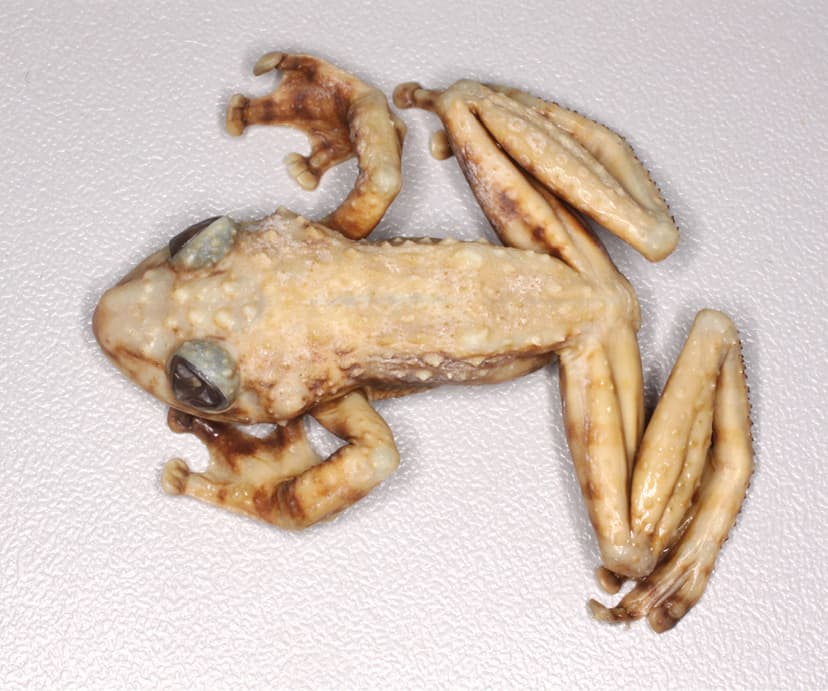
Acanthixalus spinosus
Acanthixalus spinosus, commonly known as the African wart frog, is a species of frog native to Africa, found from southeastern Nigeria to Gabon and the Democratic Republic of the Congo. It is distinctive for its warty, black or brownish-to-olive dorsum with an hourglass pattern, and the males' unique possession of strong tarsal spines and larger digital discs. This species primarily inhabits lowland rainforests, dwelling in water-filled tree holes and exhibiting predominantly aquatic behavior.