
Amietia angolensis
Amietia angolensis, also known as the Angola river frog or common river frog, is a widespread frog species found across southern and eastern Africa. It inhabits a diverse range of environments, from forests and savannas to grasslands and various freshwater bodies. This species is not considered threatened by the IUCN.
Key Facts
- ›Found in southern and eastern Africa, including South Africa, Mozambique, Zimbabwe, and Angola.
- ›Inhabits a wide variety of habitats, including lowland and montane forests, savannas, grasslands, rivers, and swamps.
- ›Feeds on invertebrates such as worms and insects like locusts.
- ›Prey for predators including crocodiles, shoebills, and snakes.
- ›Conservation status is not threatened according to the IUCN.
- ›Formerly classified in the family Ranidae before being moved to Pyxicephalidae.

Angola River Frog, Common River Frog
Forest, Savanna, Grassland, Wetlands, Rivers, Freshwater Lakes, Marshes, Agricultural Land, Urban Areas
South Africa, Democratic Republic of the Congo, Mozambique, Zimbabwe, Angola
Crocodiles, Shoebills, Snakes
About Amietia angolensis
Amietia angolensis: The Angola River Frog
The Angola river frog, scientifically identified as Amietia angolensis and also commonly known as the common river frog, is a widespread amphibian species found across southern and eastern Africa. Its adaptability allows it to thrive in a remarkably diverse range of natural and human-influenced habitats.
Distribution and Habitat
Amietia angolensis is distributed throughout significant portions of southern and eastern Africa, with confirmed populations in countries such as South Africa, the Democratic Republic of the Congo, Mozambique, Zimbabwe, and Angola. The species demonstrates a broad ecological tolerance, inhabiting numerous environments. These include subtropical and tropical moist lowland and montane forests, dry and moist savannas, and varied grasslands, ranging from dry to seasonally wet and high-altitude types. Its presence is also strongly associated with freshwater systems, including rivers, swamps, freshwater lakes, and marshes. Furthermore, the Angola river frog has successfully adapted to human-modified landscapes, being found in agricultural areas, pastures, rural gardens, and urban environments. It also occupies artificial watercourses like ponds, canals, and ditches, and can be found in heavily degraded former forest areas.
Diet and Predators
As an opportunistic predator, the diet of Amietia angolensis primarily consists of invertebrates. This includes a variety of worms and insects, with locusts specifically noted as a food source. The frog itself serves as prey for several larger animals within its ecosystem. Known predators include crocodiles, shoebills, and various species of snakes.
Taxonomy and Conservation
Historically, Amietia angolensis was classified within the family Ranidae. However, it has since been reclassified into the family Pyxicephalidae. According to assessments by the International Union for Conservation of Nature (IUCN), the Angola river frog is not considered threatened, indicating a relatively stable population status and a lack of immediate major conservation concerns.
Source: Wikipedia ↗
Frequently Asked Questions
What is the Angola river frog?
The Angola river frog, scientifically known as Amietia angolensis, is a species of frog native to southern and eastern Africa. It is also commonly referred to as the common river frog.
Where is Amietia angolensis found?
This frog species has a broad distribution across southern and eastern Africa. It can be found in countries such as South Africa, the Democratic Republic of the Congo, Mozambique, Zimbabwe, and Angola.
What kind of habitats does the Angola river frog prefer?
Amietia angolensis thrives in a diverse array of habitats. These include subtropical and tropical moist lowland and montane forests, dry and moist savannas, various types of grasslands, rivers, swamps, lakes, marshes, and even human-modified areas like farmlands and urban gardens.
What does the Angola river frog eat?
Like many frogs, Amietia angolensis is an opportunistic predator. Its diet consists mainly of invertebrates such as worms and insects, with locusts being specifically mentioned as a food source.
What are the predators of Amietia angolensis?
The Angola river frog is prey for several larger animals. Documented predators include crocodiles, shoebills, and various species of snakes.
What is the conservation status of the Angola river frog?
According to the IUCN, the Angola river frog (Amietia angolensis) is not considered threatened. This indicates a relatively stable population and no immediate major conservation concerns.
What is the scientific classification of the Angola river frog?
The scientific name for the Angola river frog is Amietia angolensis. It belongs to the family Pyxicephalidae, although it was formerly placed in the family Ranidae.
Related Frogs
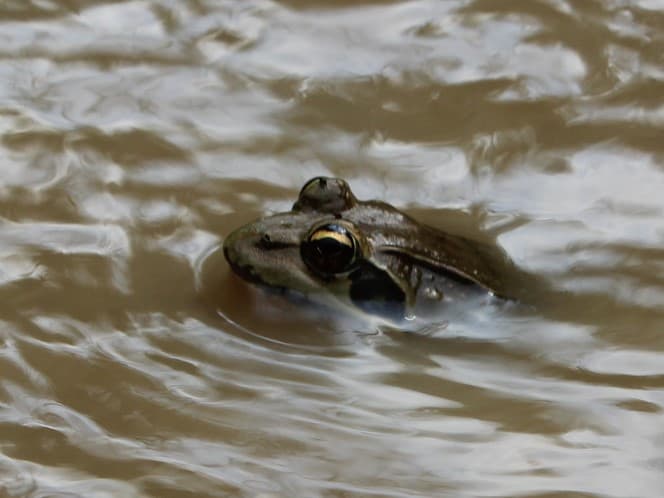
Amietia desaegeri
Amietia desaegeri is a frog species found west and south of the Rwenzori Mountains in the Democratic Republic of the Congo and northwestern Rwanda. Distinguished by its smooth skin with two dorso-lateral folds and a pale beige dorsum with brown infusions, it inhabits submontane and montane rainforests, often near streams. It is known for its ability to tolerate habitat disturbance and can be locally abundant.
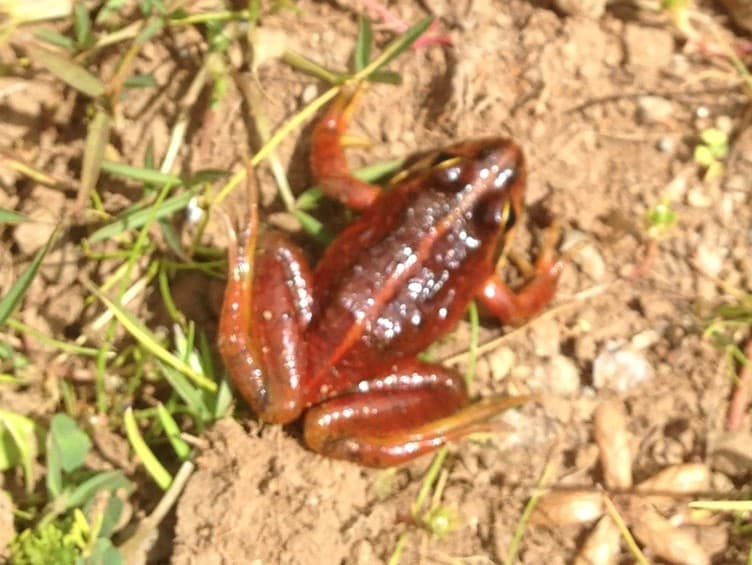
Amietia wittei
Amietia wittei, also known as the Molo frog or De Witte's river frog, is a species of frog found in the montane grasslands of Kenya and Tanzania. This species is distinctive for its dark brown dorsal coloration, which lightens on the flanks and becomes yellowish on the belly, and for the black dorsolateral folds that extend to the groin.
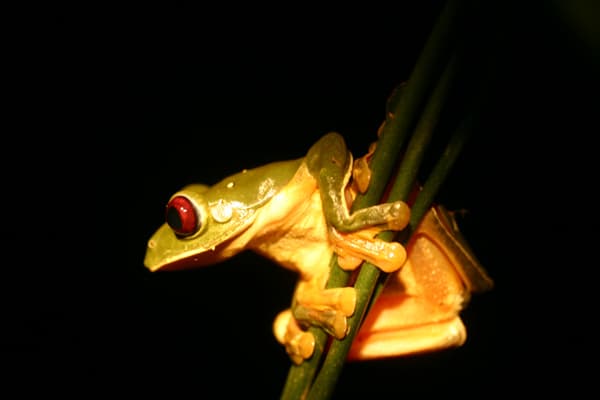
Agalychnis saltator
Agalychnis saltator, also known as the parachuting red-eyed leaf frog or misfit leaf frog, is a species of frog found in the humid and wet forests of Central America, from Honduras to Costa Rica. This arboreal and nocturnal species is distinctive for its bright red eyes with vertical pupils and its ability to 'parachute' by spreading webbing between its limbs and toes to glide between trees.