
Amietia desaegeri
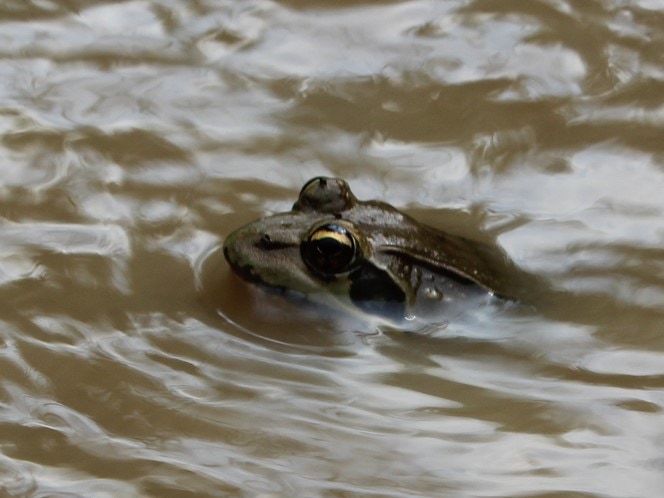
Amietia desaegeri is a frog species found west and south of the Rwenzori Mountains in the Democratic Republic of the Congo and northwestern Rwanda. Distinguished by its smooth skin with two dorso-lateral folds and a pale beige dorsum with brown infusions, it inhabits submontane and montane rainforests, often near streams. It is known for its ability to tolerate habitat disturbance and can be locally abundant.
Key Facts
- ›Inhabits submontane and montane rainforests at elevations of 1,000–3,500 meters.
- ›Found in and around streams, which are presumed to be its breeding habitat.
- ›Males can reach at least 78 MM and females 76.5 MM in snout-urostyle length.
- ›Dorsum is pale beige with brown infusions, lacking distinct markings or a vertebral stripe.
- ›Possesses two dorso-lateral folds running from the eyes to the inguinal region.
- ›Tolerates a high degree of habitat disturbance and can be locally abundant.
Byangolo Frog, De Saeger's River Frog
Rainforest, Montane Forests, Submontane Forests, Streams
Democratic Republic of the Congo, Rwanda
- Two Dorso-Lateral Folds Running From Eyes To Inguinal Region
- Pale Beige Dorsum With Brown Infusions, No Distinct Markings Or Vertebral Stripe
- Pale Band Between Eyes and From Tympanum To Eye
- Thin, Poorly Contrasted Transverse Bars On Femur and Tibia
About Amietia desaegeri
Amietia desaegeri, also known by the common names Byangolo frog and De Saeger's river frog, is a species of frog belonging to the family Pyxicephalidae. This species is geographically situated west and south of the Rwenzori Mountains, found in the eastern Democratic Republic of the Congo and extending into northwestern Rwanda.
Description and Habitat
Adult specimens of Amietia desaegeri exhibit distinct physical characteristics. Males can grow to at least 78 mm, while females reach up to 76.5 mm in snout-urostyle length. The frog's skin is smooth, notable for two prominent dorso-lateral folds that run from the eyes down to the inguinal region. The dorsal coloration is pale beige, occasionally infused with brown, but it lacks any distinct markings or a vertebral stripe. A pale band is present between the eyes and also extends from the tympanum to the eye. The nostrils are dark, and a thin dark line connects the nostril to the eye. The tympanum itself is pale at its center, and the supratympanic fold is cream-colored. Poorly contrasted, thin transverse bars can be observed on the femur and tibia.
Amietia desaegeri inhabits submontane and montane rainforests, typically found at elevations ranging from 1,000 to 3,500 meters above sea level. It lives in and around streams, which are presumed to be its primary breeding habitat. The species can be locally abundant and demonstrates a notable tolerance for a high degree of habitat disturbance. It is found within protected areas such as Virunga National Park in the Democratic Republic of the Congo and the Gishwati Forest Reserve in Rwanda. No major threats are currently known for this species.
Source: Wikipedia ↗
Frequently Asked Questions
What are the common names for Amietia desaegeri?
Amietia desaegeri is also known by the common names Byangolo frog and De Saeger's river frog. These names are used to refer to this particular species of frog.
Where is Amietia desaegeri found?
This frog species is located west and south of the Rwenzori Mountains. Its range extends across the eastern Democratic Republic of the Congo and into northwestern Rwanda.
What is the appearance of Amietia desaegeri?
Amietia desaegeri has smooth skin with two prominent dorso-lateral folds from the eyes to the groin. Its dorsum is pale beige with brown tones but no clear markings, and it lacks a vertebral stripe. A pale band is present between the eyes and from the tympanum to the eye.
What is the habitat of Amietia desaegeri?
This species lives in submontane and montane rainforests, typically at elevations between 1,000 and 3,500 meters above sea level. It is found in and around streams, which are believed to be its breeding grounds.
Are there any major threats to Amietia desaegeri?
Currently, no major threats are known for Amietia desaegeri. The species is noted for its ability to tolerate significant habitat disturbance and can be locally abundant within its range.
Related Frogs

Amietia angolensis
Amietia angolensis, also known as the Angola river frog or common river frog, is a widespread frog species found across southern and eastern Africa. It inhabits a diverse range of environments, from forests and savannas to grasslands and various freshwater bodies. This species is not considered threatened by the IUCN.
Amietia wittei
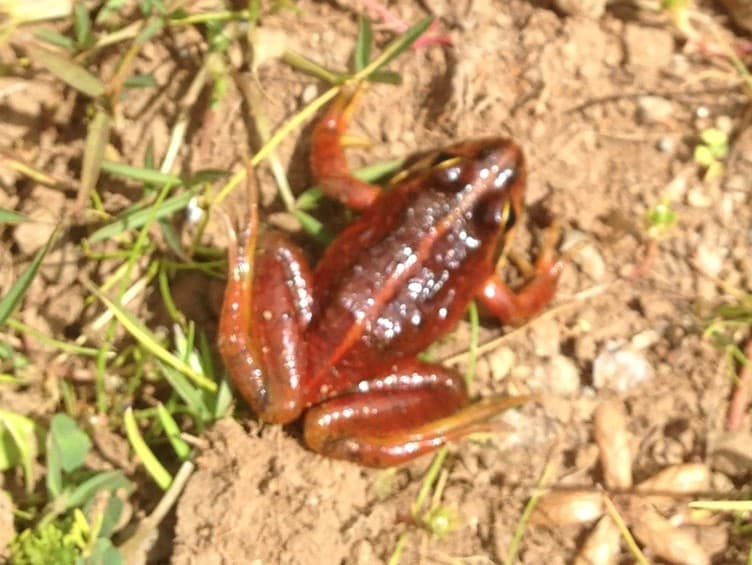
Amietia wittei, also known as the Molo frog or De Witte's river frog, is a species of frog found in the montane grasslands of Kenya and Tanzania. This species is distinctive for its dark brown dorsal coloration, which lightens on the flanks and becomes yellowish on the belly, and for the black dorsolateral folds that extend to the groin.
Acanthixalus
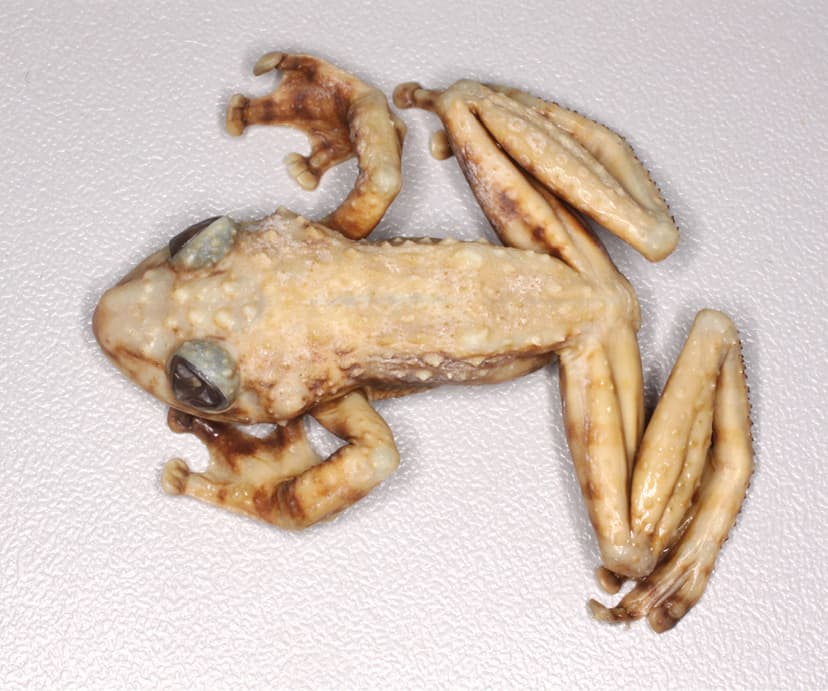
Acanthixalus, commonly known as African wart frogs, is a genus of frogs belonging to the family Hyperoliidae. These frogs are found in the rainforests of Western and Central Africa, spanning from Ivory Coast to Congo. They are distinctive for their habit of living in water-filled tree cavities and their apparent lack of vocalizations, possibly using olfactory cues for mating.